
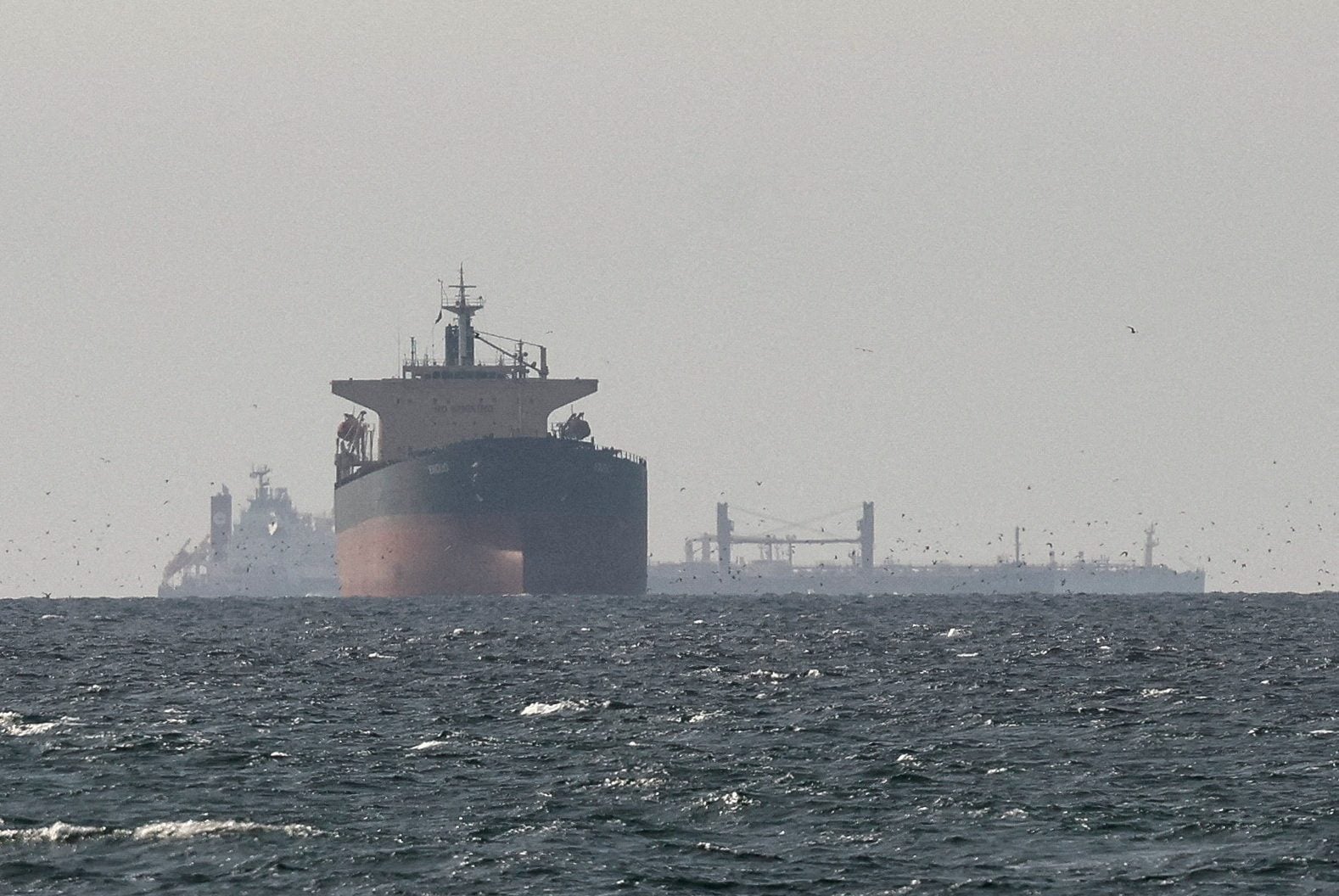
After a two-week ceasefire was announced between the United States and Iran, along with a partial reopening of the Strait of Hormuz, shipping industry leaders report that vessels stuck in the Persian Gulf want to leave. However, they are likely to wait for clearer instructions before taking action.
BIMCO, an industry organization, indicates that companies are in a holding pattern, waiting for specific guidance from both Washington and Tehran on how shipping operations will proceed.
“Ships trapped in the Persian Gulf are eager to leave as soon as it's safe,” said Jakob Larsen, BIMCO’s Chief Safety & Security Officer. “However, leaving without coordinating with the U.S. and Iran carries increased risks and is not recommended.”
This caution stems from the reality that, despite the ceasefire, the Strait remains a precarious area for navigation.
Larsen cautioned that if too many ships try to leave at once, the crowded waterway could quickly become dangerous, increasing the chances of collisions or groundings. Additionally, Iran's intention to manage shipping movements adds further uncertainty.
More concerning is the potential for mistakes to occur.
Weeks of military strikes have weakened Iran's military command structure, raising the risk of miscommunication between those approving vessel movements and those in charge of weapons systems. In a worst-case scenario, this could result in ships being mistakenly targeted, even if they have received clearance to transit.
“Iran still possesses significant capabilities to control shipping through the Strait,” Larsen pointed out, mentioning their anti-ship missiles, drones, fast attack boats, coastal artillery, and naval mines.
Currently, shipowners seeking naval protection might be disappointed.
BIMCO does not foresee military escorts returning soon, highlighting the fragile ceasefire and the risks associated with deploying warships in such a contested area. Escort operations could be considered later if the ceasefire stabilizes, but for now, uncertainty remains too high.
On the commercial front, the immediate goal is clear: to escape if possible.
BIMCO Chief Shipping Analyst Niels Rasmussen stated that vessels currently stuck in the Gulf will likely try to depart as soon as conditions improve, often loading cargo first, but only if it does not jeopardize their chance to leave within the narrow two-week timeframe.
However, this limited window may hinder a broader recovery in shipping traffic.
“Unless the two-week window is quickly extended, I doubt there will be a significant influx of ships into the Persian Gulf,” Rasmussen said, mentioning that many vessels have already redirected to other areas and may be hesitant to risk becoming trapped again.
Even in the best-case scenario, disruptions are far from over.
“We welcome the conditional ceasefire between the United States and Iran and hope this marks the beginning of a return to stability in the region,” stated Thomas A. Kazakos, Secretary General of the International Chamber of Shipping.
“This news will bring relief to the 20,000 seafarers who have been at the forefront of this crisis. Our thoughts are with those civilians and seafarers who have already suffered injuries or lost their lives,” he added.
“An immediate return to freedom of navigation is essential, and states should collaborate with shipping companies to ensure smooth passage through the Strait. This requires coordination between industry and government from both within and outside the Gulf region, and ICS is ready to support this process in any way we can,” Kazakos concluded.
Oil exports are expected to remain limited in the near future as production restarts and damaged infrastructure is repaired following weeks of conflict.
For the maritime sector, BIMCO's message is clear: while the Strait of Hormuz may be reopening, safe passage will depend on coordination, discipline, and a ceasefire that is still under scrutiny.