
LONDON/SINGAPORE, June 17 (Reuters) – Recently, U.S. President Donald Trump celebrated the return of oil shipments from Gulf allies, while Iran seems ready to restart its own oil exports and trade.
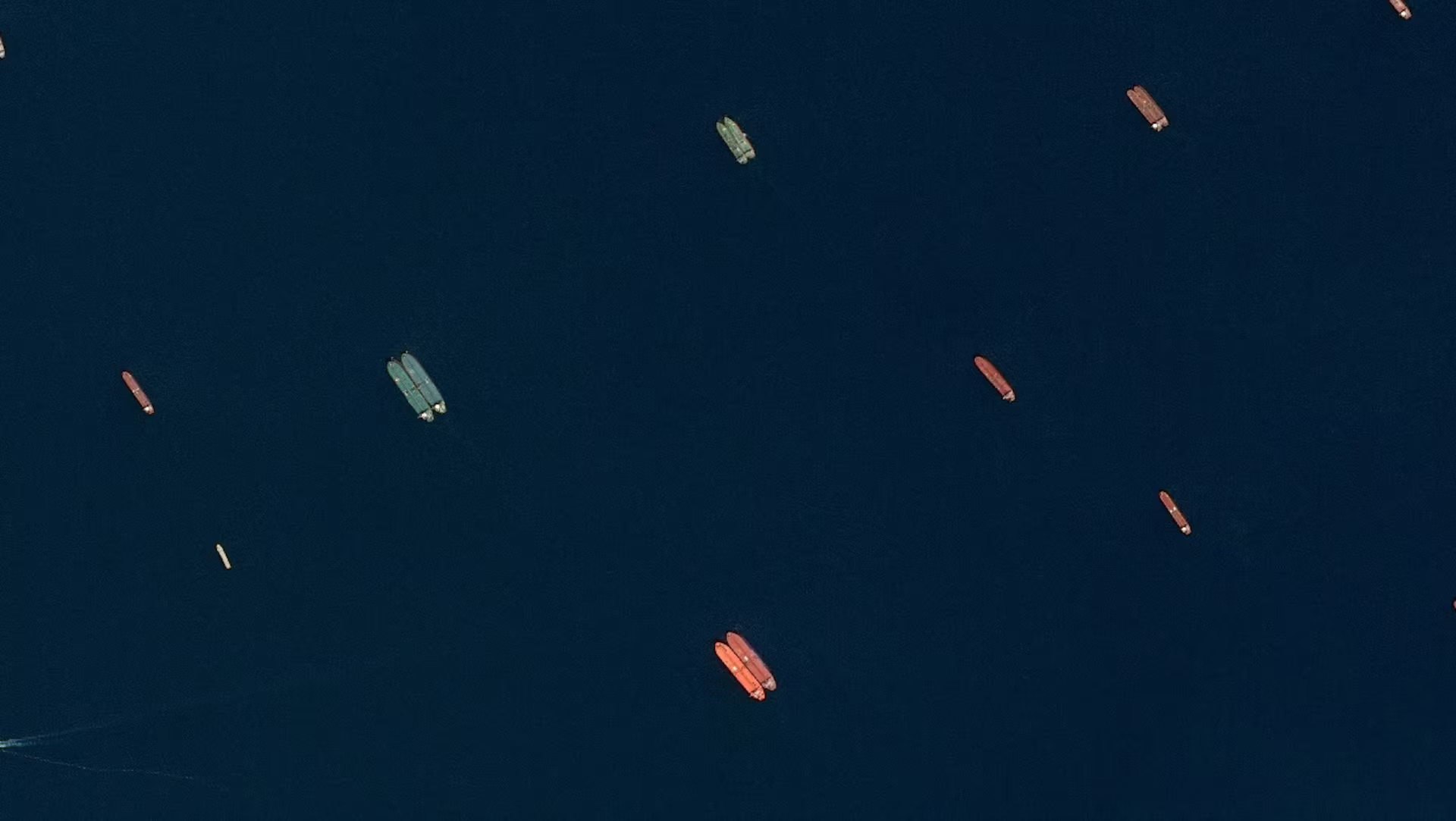
This week, at least three tankers carrying around five million barrels of Iranian oil have navigated through the U.S. naval blockade, according to shipping data. This is happening even though the U.S. military announced that its operations against Iran-related shipping would remain active until Friday.
The oil market is paying close attention to a deal aimed at ending the conflict with Iran, which Trump announced on June 14 and is set to be signed on Friday in Switzerland.
On Sunday, Trump posted on his Truth Social platform, “The Deal with the Islamic Republic of Iran is now complete. Ships of the World, start your engines. Let the oil flow!”
Iran’s deputy foreign minister mentioned that they would negotiate a broader agreement during a 60-day ceasefire period.
Torbjorn Soltvedt, a principal Middle East analyst at the risk intelligence company Verisk Maplecroft, noted, “The gap between the announcement and the expected signing on June 19 gives both sides room to issue conflicting statements about the agreement.”
Regarding ship movements, two very large crude carriers, Hero II and Diona, each carrying 2 million barrels of oil, have passed through the Gulf of Oman and are heading to Asia, according to tracking data from Kpler and Vortexa.
The Sonia I, which has 1 million barrels on board, has also managed to bypass the blockade and is headed towards Singapore, as indicated by Kpler, Vortexa, and LSEG data.
Meanwhile, an empty Iranian-linked VLCC named Stream is making its way back towards the U.S. blockade, as per Kpler and LSEG data. Additionally, the partly loaded Iranian-flagged supertanker Herby was seen trailing closely behind, according to separate LSEG data from Wednesday.
Charlie Brown, a senior advisor at the U.S. advocacy group United Against Nuclear Iran (UANI), stated, “The signal has gone out, and they are repositioning in anticipation of the end of the U.S. blockade. Clearly, a system reboot is in progress.” This organization monitors tanker traffic related to Iran.
The U.S. military's Central Command has not yet responded to a request for comments regarding the movements of Iranian-linked tankers.