
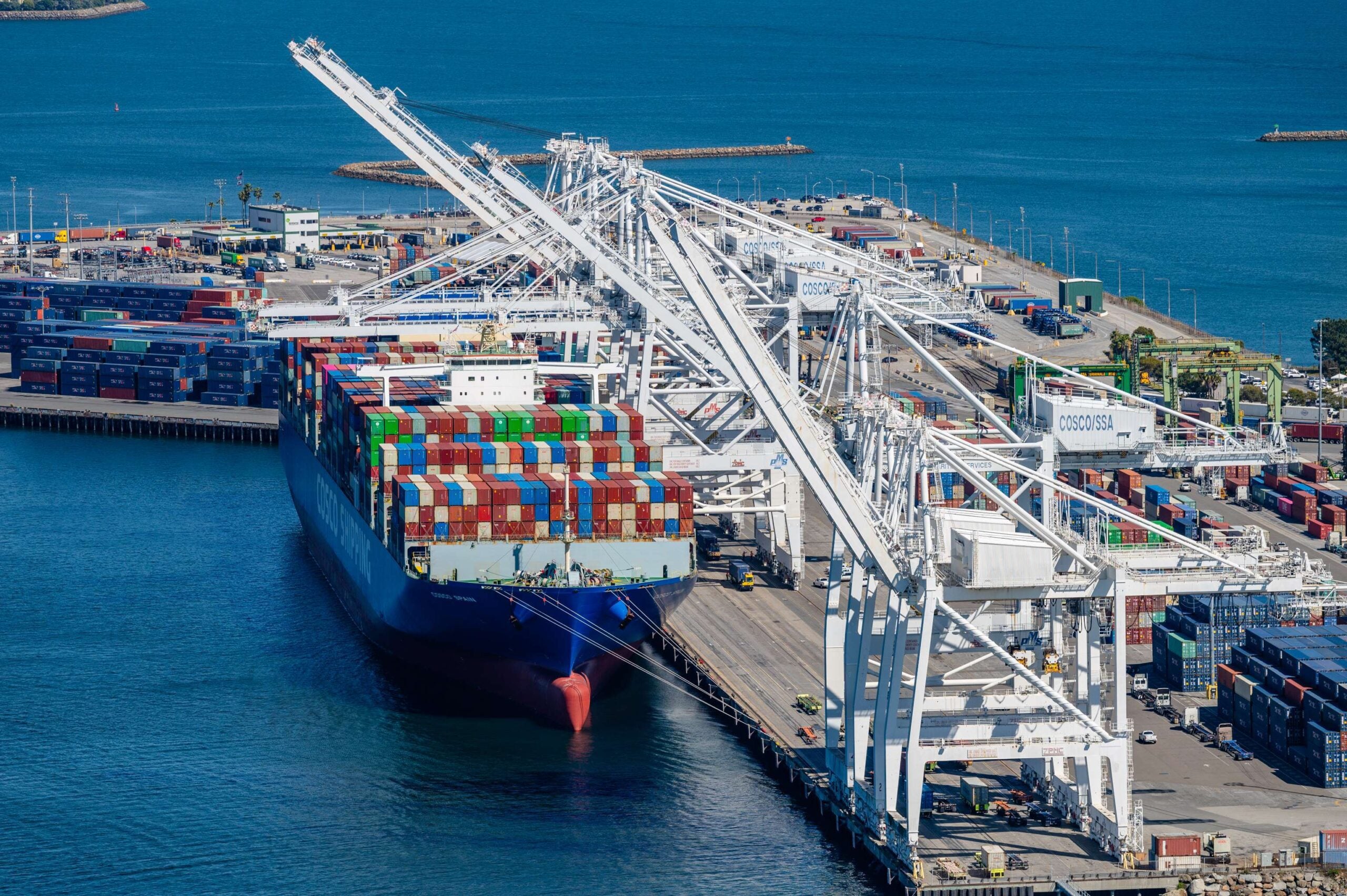
The two busiest container ports in the country saw cargo volumes drop significantly in January. However, industry leaders believe this decrease is due to comparisons with historic highs rather than any lasting issues, especially with new uncertainties arising from Supreme Court decisions and rapid changes in tariff policies affecting trans-Pacific trade.
In January, the Port of Long Beach processed 847,765 TEUs, which is an 11% decrease compared to last year, but it still ranks as the second-busiest January on record for the port. Meanwhile, the Port of Los Angeles handled 812,000 TEUs, marking a 12% drop from the previous year's elevated numbers.
These ports are measuring their performance against last January, when importers rushed to bring in cargo ahead of expected tariff increases. Gene Seroka, Executive Director of the Port of Los Angeles, stated, "We’re comparing to heightened cargo levels from last January when importers were eager to avoid tariffs. Inventories are still a bit higher, reflecting that earlier surge and a more careful restocking approach."
Long Beach's notable performance happened even during a year filled with policy changes. The port managed to handle 9.9 million TEUs in 2025. According to Port CEO Dr. Noel Hacegaba, "Uncertainty pushed shippers to move goods before tariffs and retaliatory tariffs took effect last spring."
"We are leading trade in the nation, providing a safe haven amid tariff and trade uncertainty for our customers and the goods movement industry," said Hacegaba during a virtual media briefing. "Regardless of fluctuations in cargo volume, the Port of Long Beach has the capacity, infrastructure, and workforce to move goods quickly and reliably."
This confidence comes as trade policies continue to evolve, leaving carriers and cargo owners uncertain. The Supreme Court’s ruling on February 20 overturned tariffs set under the International Emergency Economic Powers Act, which may lead to refunds exceeding $90 billion. Shortly after, President Trump announced a new 10% global tariff based on different legal grounds.
Moody's Ratings warned that any increase in imports due to the court's decision might be temporary. "We think the Trump administration will find other ways to keep tariffs in place to achieve its trade goals, which may drive up costs again," the rating agency stated in a recent analysis.
Andrei Quinn-Barabanov, Moody's Supply Chain Industry Practice Lead, mentioned that the changing policies cause significant challenges for businesses. "The ongoing uncertainty about tariff rates, their duration, and any potential exemptions complicates long-term planning," she explained.
The export scene appears particularly weak, with Los Angeles recording its lowest outbound volume in almost three years at 104,297 loaded TEUs. Both ports saw a decline in empty container repositioning, down 11.5% at Long Beach and 12% at Los Angeles.
Despite these challenges, port officials highlighted signs of stable underlying demand. Seroka noted that purchase orders from Asian manufacturers appear steady, placed about three months ahead of time. "U.S. trade policy keeps everyone on alert," he said. "However, the American consumer has shown great resilience."
If the IEEPA tariffs aren't replaced or if new ones remain moderate, Moody's expects major ports like Los Angeles and Long Beach could experience a rapid increase in cargo volumes soon. This may lead to congestion, longer storage times, and equipment shortages as shipping schedules adjust.
"The Port of Los Angeles and its supply chain partners are prepared to handle any fluctuations in cargo and ensure quick processing through the system," said Seroka.
Frank Colonna, President of the Long Beach Harbor Commission, shared a similar optimistic perspective: "Our cargo numbers confirm that the Port of Long Beach remains the preferred choice for our customers. We are on track for another busy year ahead."