
By Lucia Kassai
January 5, 2026 (Bloomberg) - Venezuelan oil exports reached a 17-month low in December, measured by ship loadings, due to a US naval blockade aimed at halting the illegal oil trade.
The situation appears to be even worse than it seems. Although ships loaded 423,000 barrels a day, over half of that amount never left Venezuelan waters due to the risk of being seized by US forces, according to shipping reports, data from Kpler, and vessel movements tracked by Bloomberg.
It's unclear when the oil can head to its final destination in China, as the US has stated that the naval blockade continues, even after the recent removal of President Nicolas Maduro. Currently, there are 7.33 million barrels waiting to be shipped, in stark contrast to the zero barrels stored in floating facilities in November, according to the data.
Click here for a link to the document with ship loadings and destinations.
| Destination | MoM Change | Dec. | Nov. | Oct. | Sept. |
|---|---|---|---|---|---|
| (Thousand barrels per day) | |||||
| China | 64 | 419 | 256 | 631 | |
| US | 123 | 181 | 155 | 130 | |
| Floating Storage | 236 | 0 | 0 | 0 | |
| All destinations | 423 | 600 | 428 | 815 | |
The volume of oil stranded near the coast is significant, nearly double what was shipped to the US in December.
The ships accumulating near Venezuela arrived before December 10, when the US intensified its campaign to seize sanctioned vessels, starting with the capture of the tanker Skipper. Since then, a second ship has been boarded by US forces, while a third managed to escape.
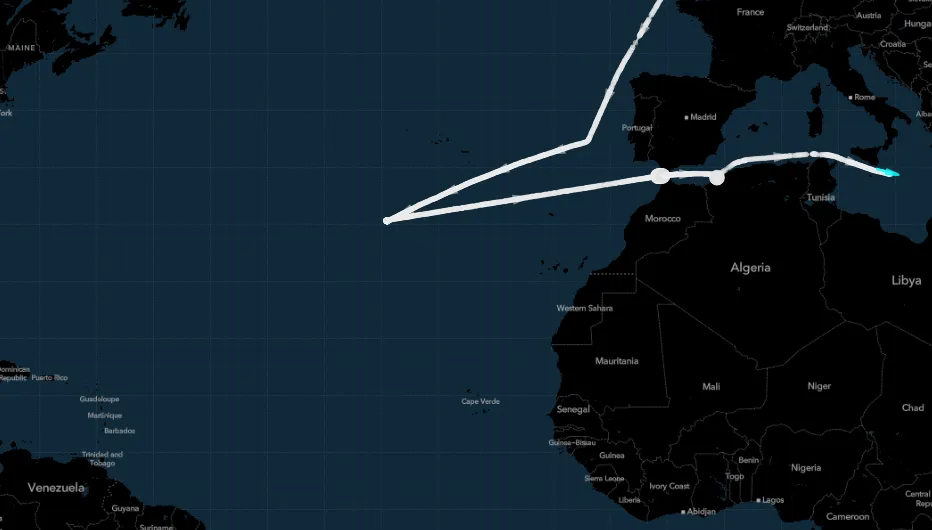
A heavy US military presence in Caribbean waters has led at least 12 ships to abandon their plans to head to Venezuela. Some of these vessels were sanctioned, while others are part of a ghost fleet that turns off or alters their transponder signals to hide their actual locations.
The last ship observed turning away was the sanctioned vessel Leo, which had loaded in Russia before reversing course on December 22, just days after the US apprehended the second tanker.
Due to the inability to export a vital part of their economy, Petroleos de Venezuela SA has had to shut down some wells in the Orinoco basin. Oil production has dropped by 25% by the end of the year compared to mid-December, according to PDVSA data reviewed by Bloomberg.