
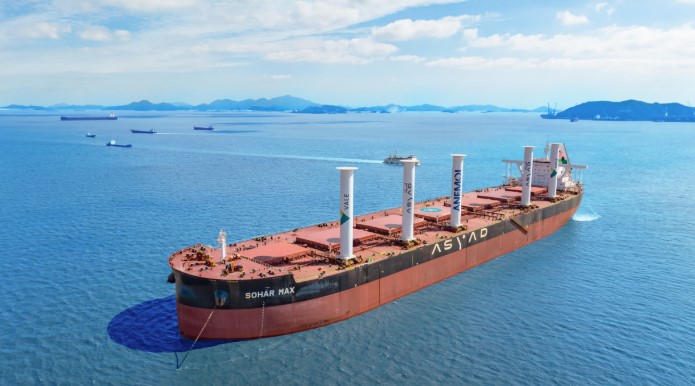
Brazil's mining giant, Vale, is taking a big step towards making shipping greener. The company plans to introduce the world's first ocean-going ship mainly powered by ethanol, a move that could reduce greenhouse gas emissions by up to 90%.
Vale has signed a deal with Shandong Shipping Corporation to create a new type of “Guaibamax” bulk carrier. This will be the first time ethanol serves as the primary fuel for deep-sea vessels. The first ship from this project is set to be in operation by 2029.
These ships will be quite large, measuring 340 meters long and able to carry 325,000 tonnes. They will have a flexible fuel system, capable of using ethanol, methanol, and traditional bunker fuel, with future upgrades for LNG and ammonia.
Vale points out that the real advantage of using ethanol lies in its environmental benefits. When considering the entire lifecycle of the fuel, second-generation ethanol could reduce carbon emissions by about 90% compared to the traditional heavy fuel oil that is commonly used.
This project is part of Vale's wider goal to make its logistics and shipping operations more sustainable, as shipping accounts for a large portion of its Scope 3 emissions. The company aims to cut these emissions by 15% by 2035.
Rodrigo Bermelho, Vale’s Director of Shipping, emphasized, “This is about combining flexibility and efficiency. Using ethanol together with wind assistance positions us well for energy transition.”
Each ship will feature five rotor sails to capture wind energy, along with various updates for efficiency, including a better hull design, shaft generators, advanced coatings, and controlled systems. These improvements are expected to further reduce emissions by 15% compared to current Very Large Ore Carriers (VLOCs).
The ethanol-powered vessels will be developed alongside a series of 10 dual-fuel ships (using methanol and heavy fuel oil) already ordered from Shandong, which are expected to be delivered starting in 2027.
This initiative is part of Vale’s “Ecoshipping” program, a long-term research and development project aimed at promoting greener shipping. Since 2020, Vale has invested about $1.4 billion in measures to cut emissions across its operations, including testing ethanol use in trucks and trains.
While fuels like ammonia and methanol have often been in the spotlight, Vale's focus on ethanol brings a new option that could utilize existing biofuel supply chains while providing immediate reductions in emissions.
If successful, this project could pave the way for a new approach to energy transition in bulk shipping—one that is powered not just by new technology, but by an unexpected source: alcohol.