
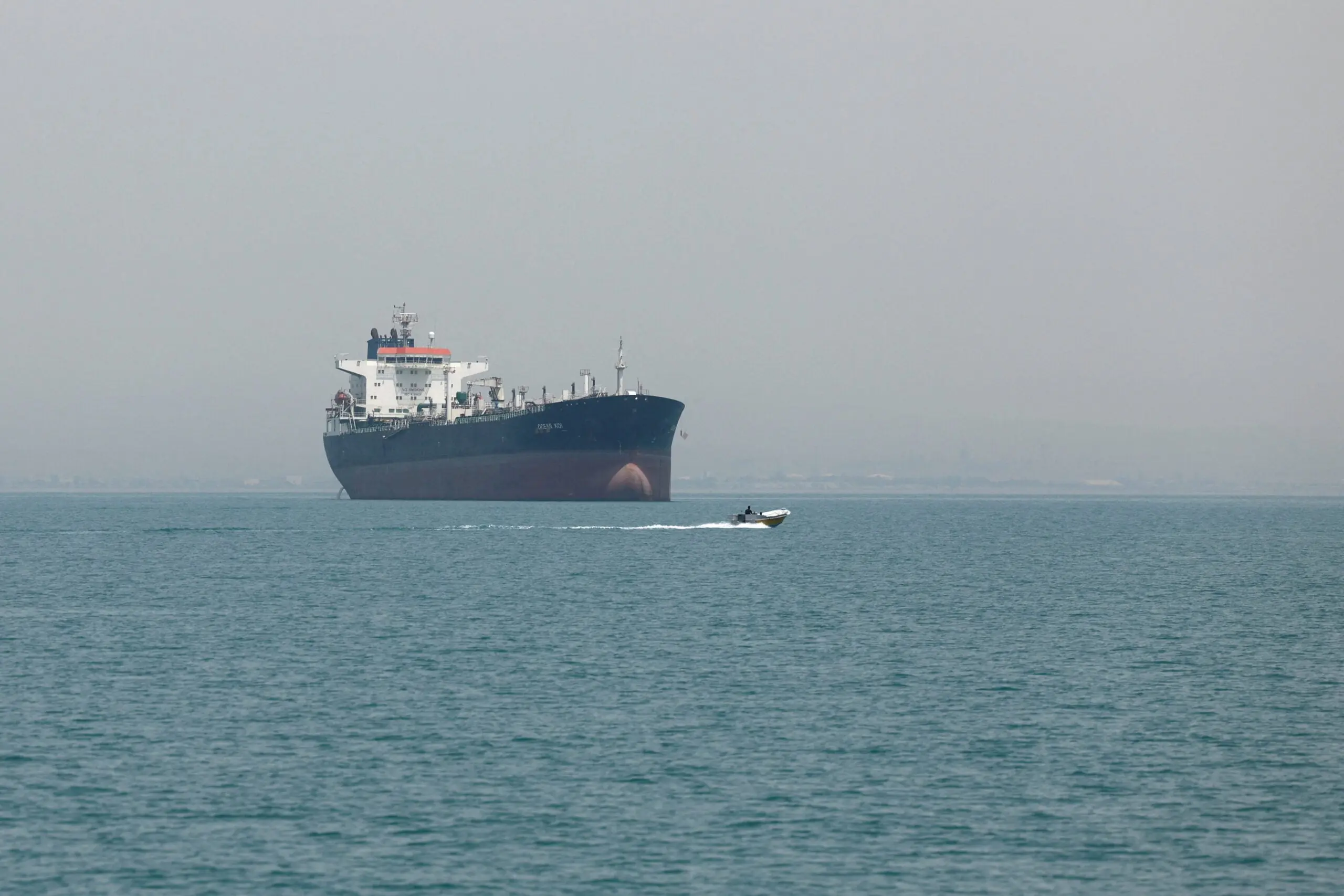
On Wednesday, the U.S. Treasury Department officially imposed sanctions on Iran's Persian Gulf Strait Authority (PGSA). They accused the group of collaborating with the Islamic Revolutionary Guard Corps (IRGC) to extort money from commercial ships passing through the Strait of Hormuz.
This action by the Office of Foreign Assets Control (OFAC) represents a significant step in the U.S. response to Iran's efforts to control shipping in this critical waterway.
The Treasury stated that the PGSA is working directly with the IRGC and the IRGC Navy to force ships to follow designated routes near Iran's coast. They are also allegedly charging illegitimate fees to allow safe passage through the strait.
“Anyone working with this authority could be supporting the IRGC,” Treasury warned, stating that such actions might put companies at risk of facing U.S. sanctions.
Treasury Secretary Scott Bessent highlighted that this move reflects increasing financial pressure on Iran due to the Trump administration's sanctions campaign, labeled “Economic Fury.”
“Iran's military is trying to squeeze global maritime trade for money, which shows how desperate they are for cash,” Bessent said.
“Under President Trump, we will continue our efforts to disrupt the networks that help Iran export its oil and spread its harmful activities,” he added.
This sanctions announcement follows weeks of growing concern in the shipping industry regarding Iran's attempts to take control over shipping in the Strait of Hormuz.
Earlier this month, the PGSA created a public profile on X, claiming to be the legal authority for managing transit through the Strait of Hormuz and warning that unauthorized passage might be deemed "illegal."
The organization insisted that vessels must coordinate with Iranian authorities and military forces to get permission to pass.
Shipping executives and maritime security companies noted that this development appears to be an effort by Tehran to establish a toll system and exert control over international shipping lanes.
The Treasury's statement provided clear details on how this alleged system operates.
According to OFAC, ships must provide sensitive operational data to Iranian authorities and adhere to routing instructions from the IRGC Navy to secure “safe passage.” The fees from this system are said to benefit the IRGC, which is designated as a Foreign Terrorist Organization.
The sanctions also expand previous U.S. warnings about “toll” payments related to Hormuz.
Treasury mentioned that prohibited transactions could involve not only cash payments but also digital assets, offsets, informal swaps, charitable donations, and other in-kind arrangements associated with Iranian entities.
This guidance increases pressure on shipowners, insurers, brokers, port agents, banks, and maritime service providers operating in the area.
OFAC cautioned that non-U.S. companies and foreign financial institutions could also face secondary sanctions for significant transactions with the PGSA or related Iranian groups.
The designation was made under Executive Order 13224, which targets organizations linked to terrorist activities and their financial support networks.
This development occurs while commercial shipping traffic through the Strait of Hormuz remains significantly lower than before, despite occasional diplomatic signals suggesting possible easing of tensions.
Industry groups and security experts have repeatedly stated that traffic will not normalize until shipowners receive credible assurances regarding mine clearance, freedom of navigation, insurance, and legal protections against Iranian demands for transit.
The Strait of Hormuz typically handles about one-fifth of the world's oil and LNG trade, making this situation one of the most significant maritime disruptions in recent decades.