
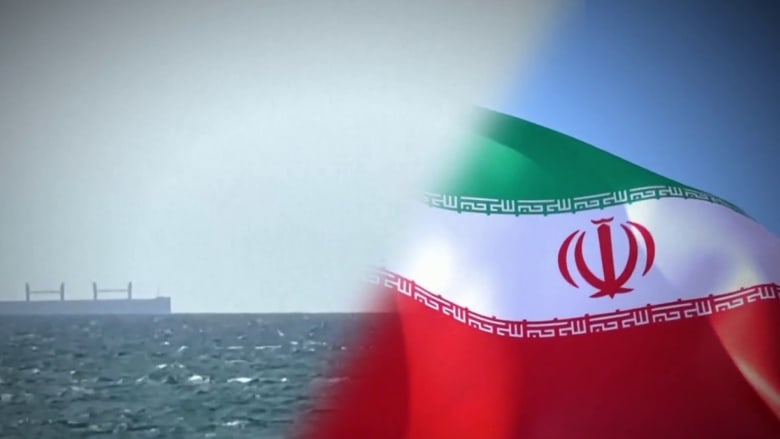
The United States has officially ended its maritime blockade of Iran. U.S. Central Command (CENTCOM) announced on Wednesday that all operations targeting vessels going to and from Iranian ports have stopped. A new maritime advisory confirms that the Strait of Hormuz is open for commercial shipping.
“Today, U.S. forces lifted the blockade on all maritime traffic entering and exiting Iranian ports and coastal areas, following the President’s direction,” CENTCOM stated. “American forces are not hindering the movement of vessels to or from Iranian ports in the Arabian Gulf and Gulf of Oman. All U.S. military enforcement of the blockade has stopped.”
This announcement represents a significant change following a memorandum of understanding between Washington and Tehran, which aimed to resolve months of conflict affecting one of the world's most vital waterways.
Despite the lifting of the blockade, CENTCOM mentioned that U.S. naval forces will remain in the region to ensure the agreement is followed.
“Our naval ships will stay in the area to ensure that all parts of the agreement are respected and implemented,” the statement added.
Additionally, the Joint Maritime Information Center (JMIC) released a new advisory stating that the Strait of Hormuz is open and that blockade operations have ended. The advisory lowered the regional maritime security threat level to MODERATE, based on the commitments from both the United States and Iran to reopen the waterway.
However, JMIC warned that reopening does not mean everything has returned to normal. Mariners are advised that mine-clearance operations are still ongoing and that they should avoid the International Traffic Separation Scheme, the main shipping route through the strait, due to the presence of mines. JMIC has identified one confirmed mine location and updated charts of likely mined areas are available upon request.
The recommended route for vessels is now the southern pathway through Omani territorial waters, which has been confirmed to be clear of mines. JMIC has also published additional safe routes and waypoints for commercial transits.
This guidance formalizes what was previously an improvised arrangement during the conflict. Commercial ships used a designated Deep South Route close to Omani waters, coordinated closely with U.S. naval forces. This route is expected to remain the main shipping lane as mine-clearance efforts continue in the traditional channel.
As of June 14, CENTCOM forces had redirected 142 commercial ships that complied with blockade orders and had disabled nine vessels that did not.
While lifting the blockade removes some military restrictions on commercial shipping, the latest advisory emphasizes that navigation through the Strait will continue to be a carefully managed process.
Mariners are advised to stay in contact with NAVCENT's Naval Cooperation and Guidance for Shipping office for information on safe transit routes and should anticipate naval activity and congestion as vessels begin to return to the waterway.