
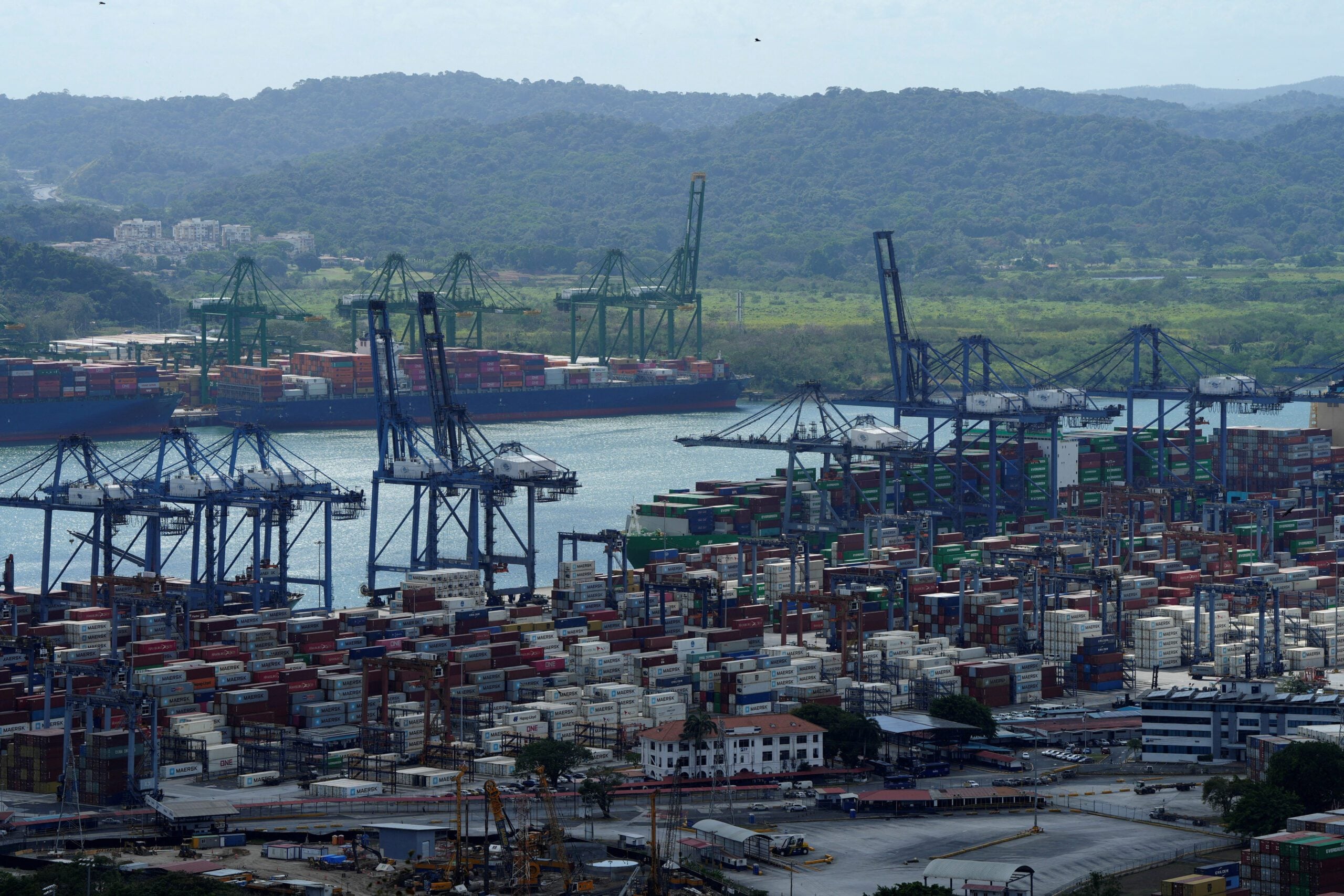
On Monday, Secretary of State Marco Rubio announced a joint statement with five countries from Latin America and the Caribbean. They expressed support for Panama’s sovereignty and condemned recent pressures related to actions against Panama-flagged ships. This situation is intensifying a maritime dispute that is expanding from port agreements to involve global shipping and geopolitical issues.
The statement was released by the United States, Bolivia, Costa Rica, Guyana, Paraguay, and Trinidad and Tobago. It mentioned that these governments are closely watching what they refer to as China’s "targeted economic pressure" after Panama decided earlier this year to remove CK Hutchison Holdings from managing the Balboa and Cristóbal terminals that border the Panama Canal.
The officials said that recent actions impacting Panama-flagged vessels represent “a blatant attempt to politicize maritime trade and infringe on the sovereignty of nations in our hemisphere.”
“Panama is a key part of our maritime trading system and must be free from any undue external pressure,” the statement emphasized. “Attempts to undermine Panama’s sovereignty pose a threat to all of us.”
This coordinated statement comes as concerns rise about a noticeable increase in pressure on Panama-flagged shipping, according to U.S. officials and shipping industry observers.
In March, Laura DiBella, the Chair of the Federal Maritime Commission, warned that China was using port state control inspections to pressure Panama following the dispute over the canal ports.
Analysis from The Loadstar highlighted that in March, Panama-flagged vessels made up 91 out of 123 ship detentions in Chinese ports under the Tokyo MOU regime. This marked a significant rise compared to January and February, drawing attention throughout the shipping industry.
While port state control detentions are usually linked to safety and compliance issues, the timing of the recent spike—following Hutchison’s removal and during escalating diplomatic tensions—has led to suspicions that maritime regulations are being used as leverage in a larger geopolitical struggle.
This ongoing dispute began in January when Panama’s Supreme Court overturned the legal framework that supported Hutchison’s long-standing concessions, leading authorities to take control of the two key terminals.
Currently, under temporary arrangements, APM Terminals, a part of A.P. Moller – Maersk, has taken over Balboa, while Terminal Investment Limited, under Mediterranean Shipping Company, is managing Cristóbal until a new concession agreement is established.
Since then, Hutchison has initiated arbitration against both Panama and Maersk, while Beijing has criticized the removal of the Hong Kong-linked operator and dismissed U.S. claims regarding ship detentions.