
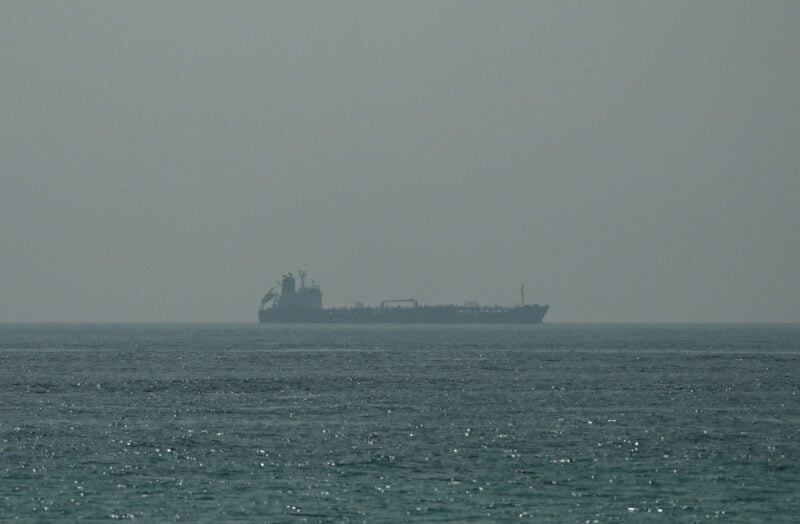
On Sunday, the United States launched a fourth round of military strikes against Iran, aiming to weaken Tehran's military capabilities after a series of attacks on commercial ships in the Strait of Hormuz.
U.S. Central Command (CENTCOM) reported that this latest operation targeted dozens of locations, including Iranian air defense systems, coastal radar sites, missile and drone facilities, and small boats operated by the Islamic Revolutionary Guard Corps.
For the first time during this campaign, U.S. forces used one-way attack sea drones, alongside fighter planes, naval ships, and one-way attack aerial drones.
CENTCOM emphasized, “The Strait of Hormuz is a crucial maritime route for global trade. Iran doesn't control it. U.S. forces are prepared to ensure the freedom of navigation for commercial shipping against Iran's unwarranted aggression, threats, and arbitrary claims.”
This latest round of strikes occurred less than a day after U.S. forces conducted a third wave of attacks in response to an Iranian strike on the Cyprus-flagged container ship GFS Galaxy. The ship caught fire and sustained serious damage to its engine room after being hit about 9 nautical miles east of Oman.
The crew abandoned the vessel and was rescued by local authorities, but one crew member is still missing. Both the UK Maritime Trade Operations (UKMTO) and the Joint Maritime Information Center (JMIC) confirmed the incident.
CENTCOM stated that the operation on Saturday targeted around 140 Iranian military sites, which increased the total number of targets hit in the first three nights of operations to over 300. Sunday's follow-up strikes further extended the campaign against Iran's ability to attack civilian ships and commercial vessels in one of the world's busiest oil shipping routes.
Iran's Persian Gulf Strait Authority (PGSA) declared on social media that, "because of recent hostile actions by U.S. forces," passage through the Strait of Hormuz is "currently unfeasible," and that transit permit requests would not be processed until stability returns. This marks another attempt by Tehran to assert control over commercial traffic in the international waterway, a claim the United States does not accept.
In an interview with Fox News on Monday, President Donald Trump stated that Iran had violated the June memorandum of understanding and promised a strong military response. "We’re going to guard it, and we’re going to get paid for guarding it," Trump said, indicating that the U.S. might "run the Strait" as its "guardian angel" and should be compensated for protecting commercial shipping.
This recent escalation follows a week of rising attacks on commercial shipping. Earlier last week, U.S. forces targeted more than 80 Iranian military sites after assaults on the Marshall Islands-flagged tanker Al Rekayyat, the Saudi Arabia-flagged tanker Wedyan, and the Liberia-flagged Cyprus Prosperity. Washington has since revoked the temporary sanctions relief provided under the June agreement, while President Trump stated that the ceasefire was effectively over.
Despite the military escalation, the U.S. military claims that commercial shipping continues to pass through the strait. Since early May, CENTCOM reports that U.S. forces have helped facilitate the transit of over 800 commercial vessels carrying about 400 million barrels of crude oil.
However, the security situation remains very unstable. In its latest advisory, JMIC maintained a SEVERE threat level for the Strait of Hormuz, citing ongoing Iranian attacks, interference with navigation, mine hazards, and continued harassment of merchant ships by the IRGC. As a result, commercial traffic is still well below normal levels as shipowners remain cautious.
This recent exchange has further widened the gap between Washington and Tehran from the June memorandum of understanding, which had briefly paused hostilities, reopened the Strait of Hormuz to commercial traffic, and offered limited sanctions relief for Iranian oil exports, before the agreement fell apart due to renewed attacks on merchant shipping.