
Tensions between the US and Iran are escalating over the Strait of Hormuz, as both sides continue to block this crucial waterway, leading to a tense situation with no prospects for peace talks.
On Thursday, US President Donald Trump ordered the US Navy to destroy any boats that attempt to lay mines in the strait. Additionally, the military intercepted two oil supertankers trying to bypass their efforts to control access to Iranian ports. The Pentagon reported that US forces boarded a "sanctioned stateless vessel" that was transporting oil from Iran in the Indian Ocean overnight.
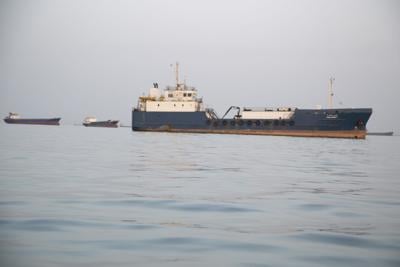
On Wednesday, Tehran targeted at least three vessels, maintaining its grip on this vital shipping lane for oil and gas for the eighth consecutive week.
This escalation followed Trump’s announcement on Tuesday evening that he would extend a ceasefire with Iran indefinitely, awaiting their response before any formal peace discussions can begin.
The US blockade of the Strait of Hormuz will stay in place until an agreement is reached, while Iran has stated that it will not engage in negotiations until the blockade is lifted. Iranian state television reported that the foreign ministry announced its military is prepared to respond to further threats.
White House Press Secretary Karoline Leavitt indicated that Trump wants Iran to surrender its stockpiles of highly enriched uranium, which Iran has refused to do. The US and Israel initiated the conflict by bombing Iran in late February, citing concerns that Tehran could use this material to develop nuclear weapons.
Trump remarked that Iran is not pursuing peace due to disagreements within its leadership, pointing out a power struggle between hardliners and moderates. He emphasized that “no ship can enter or leave without the approval of the United States Navy” in the Strait of Hormuz, declaring it “Sealed up Tight” until Iran agrees to a deal.
The conflict has now effectively shut down the Hormuz Strait for nearly two months, raising worries about its impact on the global economy. Approximately one-fifth of the world's oil and liquefied natural gas travels through this route, along with aluminum, fertilizers, and other agricultural goods.
Analysts from Bloomberg Economics noted that the conflict is entering a new phase focused on the Strait of Hormuz. They suggested that while the US blockade is likely to persist, it may not achieve its goal of forcing Iran into submission, as Iran can endure significant economic hardships while fighting for its survival.
Trump asserted that the blockade will only be lifted when Iran agrees to a deal that concludes the war, which has already resulted in thousands of fatalities, widespread destruction in the Middle East, and rising fuel costs.
As the standoff continues, Brent crude prices have surged for the fourth consecutive day, exceeding $102 a barrel, while stock markets have reacted negatively, fearing that a prolonged closure of the strait could drive up inflation and hinder economic growth.
The White House claims that the blockade is severely restricting Iran's oil exports, estimating that Iran is losing around $500 million daily, although they have not provided evidence to support this claim.
“The point of this is the economic leverage we have over Iran now,” Leavitt explained. “And central to this leverage is the naval blockade. We are cutting off their main source of revenue.”
Meanwhile, Iran’s President Masoud Pezeshkian stated that while Iran is open to negotiations, the blockade and threats pose significant barriers to meaningful dialogue.
Some vessels linked to Iran seemingly navigated past the US naval line in the Gulf of Oman, outside the Strait of Hormuz. Reports indicate that at least two fully loaded Iranian tankers left the Persian Gulf this week, according to data from Vortexa, an intelligence firm.
However, the US military denied these reports, asserting that the tankers Hero II and Hedy were intercepted earlier in the week and are currently anchored in Chabahar, an Iranian port on the Gulf of Oman. Additionally, the Dorena tanker is under the escort of a US Navy destroyer in the Indian Ocean, as noted in a recent update.
Data from Vortexa suggests that at least 34 Iranian-linked tankers have successfully traversed the Strait and bypassed the US blockade.
Trump's extension of the ceasefire represented a shift from his previous threats to resume bombings if a deal was not reached by a Wednesday deadline. This decision followed Vice President JD Vance's cancellation of plans to travel to Pakistan for discussions, as it became evident that Iran would not participate.
While the immediate threat of renewed fighting has diminished, the long-term issues related to Iran's nuclear program and its support for militant groups in the region remain unresolved.
In parallel developments, Israel and Lebanon are scheduled to continue talks in Washington on Thursday, with US Ambassador Mike Huckabee expected to attend.
The conflict between Israel and Hezbollah began in March, and a ceasefire established last week is set to last until April 26, having largely held despite mutual accusations of attacks. Trump is advocating for a more comprehensive agreement.
A return to large-scale fighting in Lebanon would likely complicate prospects for negotiations with Iran, a key supporter of Hezbollah.