
The US and Iran are getting ready to officially sign a temporary peace deal, with both sides claiming it as a win. However, details of the agreement are still being revealed, and energy experts doubt how quickly the Strait of Hormuz can be reopened.
The specific text of what’s called a memorandum of understanding, which paves the way for two months of talks on Iran's nuclear program and other topics, has not yet been made public. A nearly finalized draft reviewed by Bloomberg News indicates that Iran will get waivers from sanctions to begin selling oil right away, but other financial incentives will come later.
A US official mentioned that the complete agreement might be released in the next couple of days before an official signing ceremony. This event is planned for Bürgenstock, a mountain resort with views of Lake Lucerne, as confirmed by the Swiss foreign ministry. Vice President JD Vance is expected to lead the US delegation, while Iran is likely to be represented by Parliament Speaker Mohammad Bagher Ghalibaf.
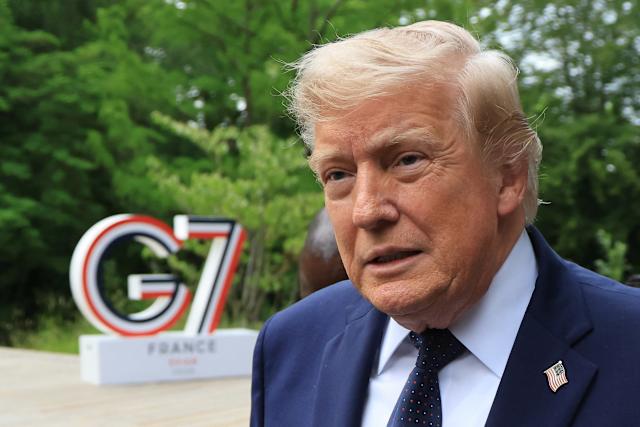
Meanwhile, President Donald Trump is attending the Group of Seven summit in France, where the ongoing conflict with Iran, which has driven up energy prices, is a major topic. European nations like France, the UK, and Italy are prepared to assist in clearing mines from the Strait of Hormuz, but they have concerns about the safety of their ships and doubt that the strait can be fully reopened by Friday as Trump has promised.
During his remarks at the summit on Tuesday, Trump declared that the agreement is a “done deal” that will stop Iran from developing nuclear weapons. He stated that the US would not provide war reparations or invest in Iran, adding that leaders in Tehran need to “prove themselves” before any action is taken.
On the same day, Trump met with UAE President Sheikh Mohamed bin Zayed and Qatar’s Emir Sheikh Tamim bin Hamad. These nations may help the US establish a $300 billion fund for Iran's recovery after the conflict.
The draft reviewed by Bloomberg reveals that the US and its regional partners will create a plan to provide this financing for Iran’s economic rehabilitation and growth.
According to the American official, the US will seek investments from other countries and the private sector. Iran claims that the conflict, which began on February 28 with US-Israeli bombings, has led to over $250 billion in economic losses.
Iranian officials have stated that this memorandum of understanding will give them access to billions of dollars in frozen assets in places like Qatar. The draft indicates that the US has committed to releasing these funds and making them fully available, although no timeline is specified.
Iran has faced US sanctions since the revolution that ousted the shah in 1979, resulting in around $12 billion in Iranian assets being frozen at that time, according to an analysis by the Atlantic Council. Over the years, more sanctions have been added, especially leading up to the Joint Comprehensive Plan of Action (JCPOA) regarding Iran's nuclear program, which was implemented in 2015.
Estimates of Iranian government assets in international accounts vary greatly, from about $24 billion to over $100 billion. In 2023, the Biden administration planned to allow $6 billion of Iranian oil revenue to be accessible through a humanitarian aid account managed by Qatar, but this plan was put on hold following the October 7, 2023 attacks on Israel by Hamas.
Since Trump announced that an agreement was near last week, oil prices have dropped significantly. Brent crude rose slightly early Wednesday after declining about 5% on the previous day to end under $79.
Declining demand in China, along with the US and other countries depleting their emergency oil reserves, have also contributed to falling prices. These reserves will likely need to be replenished once the Strait of Hormuz is reopened.
Many European governments, energy investors, and shipping firms have doubts about how quickly the strait — a key route for a large portion of the world’s oil, liquefied natural gas, and aluminum — can return to its normal state.
In addition to possibly needing to clear the waterway, there's an ongoing concern about whether Iran will permit free navigation.
Iran has indicated that it will impose fees on ships passing through after the 60-day negotiation period of the new US-Iran discussions. Trump stated during his meeting with the UAE leader that the strait would remain open without tolls. However, a senior US official said the status of the strait after the 60 days would be up for negotiation.
Vance defended the agreement on Monday, noting that it would include a verification system to ensure Iran meets its obligations. Senate Republicans are pushing the Trump administration for more details and hinted that Congress will ultimately vote on the final deal.
Both the US and Iran have shown their distrust towards each other. The White House insists that Trump will not hesitate to take military action if he believes Tehran is not complying with the agreement. Iranian officials have cautioned that the US carried out attacks on their country twice in the past year while negotiations were occurring.
Trump’s growing irritation with the war he started almost four months ago has become more apparent, and he has often shifted his focus to other matters, including renovations in Washington and the upcoming celebrations for the 250th anniversary of US independence. The president, who celebrated his 80th birthday on Sunday, appeared fatigued upon his arrival at the G-7 summit on Monday after attending a mixed martial arts event at the White House that ended late into the night.
The conflict between Israel and Iran-backed Hezbollah in Lebanon also poses a possible obstacle to finalizing the deal. The memorandum is expected to require a ceasefire on “all fronts,” including Lebanon.
Israeli politicians have advocated for continuing the fight against Hezbollah, which has been targeting Israel with missiles and drones in support of Iran.