
By Eltaf Najafizada and Omar Tamo
May 5, 2026 — The fragile ceasefire between the US and Iran remained intact on Tuesday morning following a day of clashes in the Strait of Hormuz and missile attacks targeting the United Arab Emirates.
After US and Iranian forces engaged in exchanges of fire on Monday, the Persian Gulf saw a return to relative calm. This violence marked the most severe escalation since the ceasefire took effect less than a month ago.
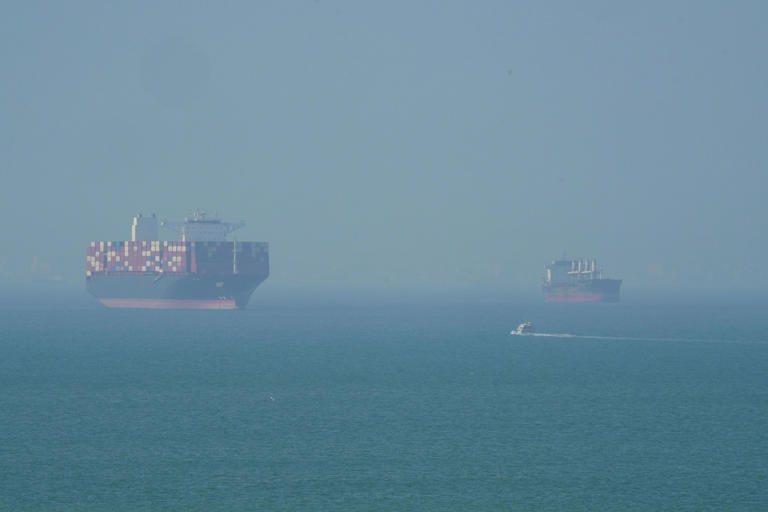
The conflict was sparked by US President Donald Trump's announcement of "Project Freedom." He described it as a humanitarian initiative aimed at assisting neutral ships that were stuck in the Gulf. With US support, at least two merchant vessels were able to pass through the waterway while two American warships entered the Gulf.
Iran issued a warning to all ships against navigating through Hormuz without its approval. It targeted a South Korean bulk carrier and attacked an empty tanker owned by the Abu Dhabi National Oil Company. Fortunately, there were no reports of injuries on either vessel.
The US military defended against attacks from Iranian drones, missiles, and armed boats while facilitating the passage of the merchant vessels, according to US Central Command chief Brad Cooper.
This situation developed amid a deadlock between Iran and the US, with both sides showing little willingness to engage in new peace talks anytime soon. Tehran demands that the US lift a naval blockade on its ports as a condition for negotiations, while the US claims the blockade is stifling Iran's oil exports and impacting its economy, therefore forcing it to make concessions.
“We see ‘Project Freedom’ as an attempt to break the deadlock in the strait, which has significant implications for the global economy,” said Becca Wasser, an analyst with Bloomberg Economics. “However, it also carries risks of escalation, as the recent fighting demonstrates.”
On Tuesday, oil prices fell, with Brent crude trading down about 1.5% at $112.60 a barrel as of 9:36 a.m. in London, after a nearly 6% surge on Monday.
The UAE reported that it intercepted almost all of the approximately 20 projectiles fired from Iran, marking the first such attack on the country since the truce began. However, three Indian workers were injured in an attack on an oil terminal partially owned by the Vitol Group in Fujairah. Residents in cities like Dubai and Abu Dhabi received missile alerts, and schools switched to distance learning for the remainder of the week.
Iran characterized the US initiative as "Project Deadlock" and claimed it violated the ceasefire. Iran also mentioned that discussions mediated by Pakistan are progressing.
“The events in Hormuz illustrate that a military solution cannot resolve a political crisis,” stated Foreign Minister Abbas Araghchi.
Here’s more related to the war:
- Iraq is offering significant discounts on crude oil to buyers this month, but tankers must navigate the Strait of Hormuz to collect the oil from deep within the Persian Gulf. The country has had to reduce its production since the conflict began.
- Chevron Corp. remains concerned about the safe passage of ships through the strait, according to Chief Executive Officer Mike Wirth. “It appears we still need to address some issues,” he told Bloomberg TV.
- The UAE indicated that its currency swap discussions with the US are aimed at obtaining access to Federal Reserve liquidity lines, rather than a necessity for external financing.