
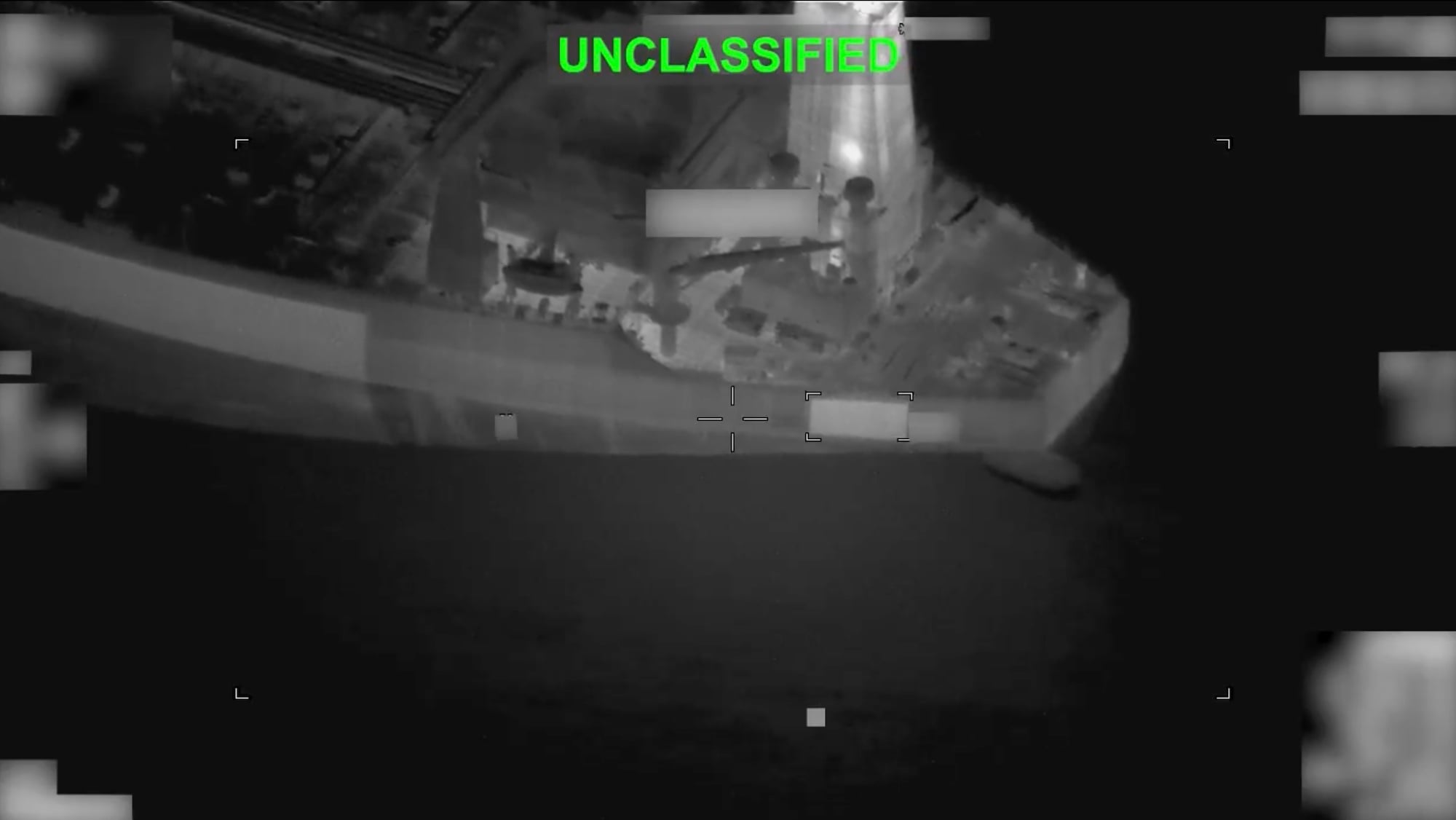
On Tuesday, U.S. forces disabled an oil tanker that was trying to reach an Iranian port, marking the sixth commercial ship stopped since the U.S. set up a maritime blockade on Iran nearly two months ago.
The U.S. Central Command (CENTCOM) reported that the tanker, flagged in Botswana and named M/T Lexie, was intercepted after its crew reportedly ignored several warnings while moving through international waters toward Kharg Island, which is Iran's main oil export terminal in the Persian Gulf.
CENTCOM stated that the ship did not follow the instructions from U.S. forces multiple times over a 24-hour period. Eventually, a U.S. aircraft launched a Hellfire missile into the ship's engine room, which disabled the tanker and stopped it from entering Iranian waters. No injuries have been reported so far.
This incident happens as diplomatic efforts are ongoing to resolve the conflict and reopen the Strait of Hormuz. On Tuesday, Reuters reported that Iran is considering a proposed deal with the U.S., but hasn't communicated with Washington for several days, according to Iranian media. President Donald Trump challenged those claims, saying that negotiations have been ongoing without pause.
The disabled tanker is reportedly the same one that the U.S. Treasury Department identified as LEXI (also known as LEXIE, IMO 9203277). This vessel, previously flagged in Cameroon, was sanctioned by the Office of Foreign Assets Control (OFAC) in March 2025 for allegedly carrying Iranian crude oil through ship-to-ship transfers. The Treasury linked the vessel to Suriname-based Sea Services Providers NV and classified it as part of Iran's so-called “shadow fleet,” which is used to transport oil exports despite sanctions.
This action highlights that the enforcement of the blockade is still active, even as ceasefire talks are taking place.
CENTCOM also reported that it has disabled six commercial vessels and redirected 122 others since it started the blockade operations on April 13.
The latest event follows a previous incident last week involving the cargo ship Lian Star, which was disabled after allegedly ignoring over 20 warnings while it was headed for an Iranian port.
U.S. military advisories from the Joint Maritime Information Center have frequently warned that ships trying to enter or leave Iranian ports are subject to blockade enforcement, which may include “disabling and destructive fires” if they do not follow military orders.
As discussions continue on a temporary agreement, maritime industry groups have cautioned that confidence in the region will rely heavily on effective mine-clearing operations, well-defined rules for commercial traffic, and guarantees that vessels can navigate without facing military action.
For now, ships attempting to dock at Iranian ports still risk direct U.S. enforcement, even as broader settlement talks proceed.