
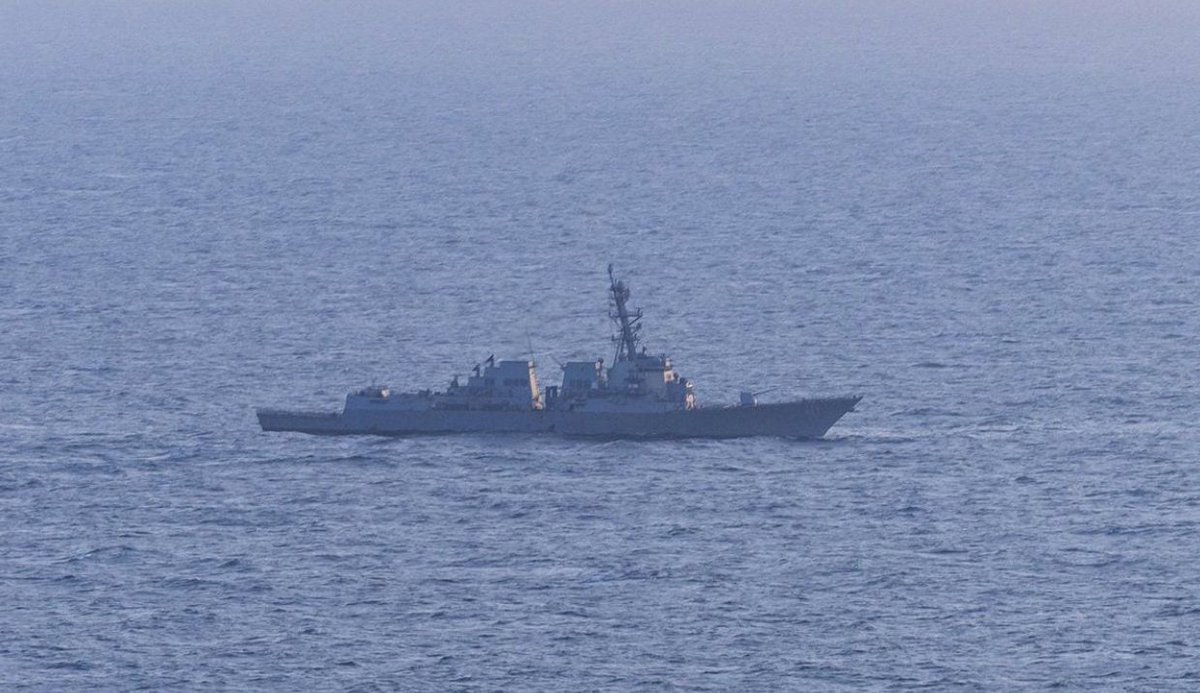
The maritime blockade of Iranian ports led by the U.S. has taken a new and more aggressive turn. Fresh guidance now allows American forces to stop, board, and even seize ships well beyond the immediate area around Iran.
A new notice from the Joint Maritime Information Center (JMIC), issued on April 16, outlines a significant expansion of enforcement powers. This means the blockade, which initially focused on ports, is now part of a larger maritime operation affecting major global shipping routes.
With the updated guidance, Iranian-flagged ships, vessels under U.S. sanctions, and any ships suspected of carrying "contraband" cargo can now be boarded under the "belligerent right to visit and search." This legal framework permits boarding and seizure operations no matter where the ships are located.
This represents a major escalation from the earlier rules that mainly targeted ships entering or leaving Iranian ports.
The change has already garnered attention within the shipping industry, as reports indicate that U.S. forces can now target ships worldwide if they are linked to Iranian trade or suspect cargo.
From Blockade to Interdiction
On Thursday, U.S. Central Command stated that American forces have redirected 14 vessels within the first 72 hours of the blockade.
The advisory confirms that the blockade, which began on April 13, is now active across the Gulf of Oman and Arabian Sea, covering all of Iran’s coastline, including its major oil terminals.
Any vessel trying to enter or leave Iranian waters without authorization can be intercepted, diverted, or captured.
However, the new guidance clarifies that enforcement is no longer limited to those waters.
Instead, U.S. forces now assert their authority to track and interdict suspect vessels on the high seas, significantly expanding their operational range and increasing uncertainty for shipowners, charterers, and insurers.
A Sweeping Definition of “Contraband”
A key aspect of the new guidance is its broad definition of contraband cargo. The advisory divides contraband into two types, greatly expanding what can be targeted at sea.
Absolute contraband includes weapons, ammunition, military vehicles, aircraft, naval systems, and military electronics—goods traditionally considered legitimate targets during wartime operations. The notice states that “all weapons and weapon systems of any type are absolute contraband,” as well as “all ammunition and explosives,” along with military platforms and specialized electronics.
More importantly for commercial shipping is the category of conditional contraband, which goes beyond traditional military items. The advisory includes “Petroleum, Oil, and Lubricants (POL)”—which covers “crude oil” and “refined petroleum products”—highlighting their role in supporting Iran’s war economy.
It further identifies metals like “iron, steel, aluminum,” industrial machinery such as “machine tools” and manufacturing equipment, and a range of “dual-use electronics and components” as being subject to seizure if linked to military uses. Chemicals, vehicles, and even “energy and power generation equipment” are also included, showing a wide interpretation of goods that could aid Iran’s military or industrial capabilities.
The inclusion of energy cargoes is particularly significant, as it effectively brings large parts of Iran-linked oil trade under the potential seizure framework, reinforcing the shift from a narrow blockade to a much broader interdiction strategy.
Strait Remains “Open”—But Controlled
Even with the broad enforcement, U.S. officials emphasize that the Strait of Hormuz remains open for vessels not calling on Iranian ports.
The JMIC advisory states that neutral transit is allowed, although ships may still undergo boarding and inspection to confirm their cargo.
At the same time, the maritime security threat level in the region remains classified as CRITICAL, with mariners warned to expect increased naval presence, VHF communications, and heightened operational risks, including possible mine threats and congestion near anchor points.
The United Nations Convention on the Law of the Sea guarantees freedom of navigation and limits boarding rights on the high seas. However, in situations of armed conflict, these peacetime rules are augmented by naval warfare laws, which permit blockades and the seizure of vessels carrying contraband.
Shipowners now face a complicated risk environment where cargo type, ownership structure, and destination may trigger interdiction, even outside the immediate blockade area.
This new advisory creates added uncertainty for insurers and compliance teams, as routine commercial shipments—from fuel to industrial goods—might come under scrutiny if they are linked to Iran.