
The United States has announced that its new maritime blockade aimed at Iranian ports is having an immediate effect. According to U.S. Central Command (CENTCOM), no ships were able to enter or leave Iranian ports during the first 24 hours of the blockade.
CENTCOM stated that over 10,000 U.S. personnel, supported by more than a dozen warships and numerous aircraft, are actively involved in this operation throughout the region.
“In the first 24 hours, all ships were stopped by the U.S. blockade,” CENTCOM reported, noting that “six merchant vessels followed U.S. orders to turn back and return to an Iranian port in the Gulf of Oman.”
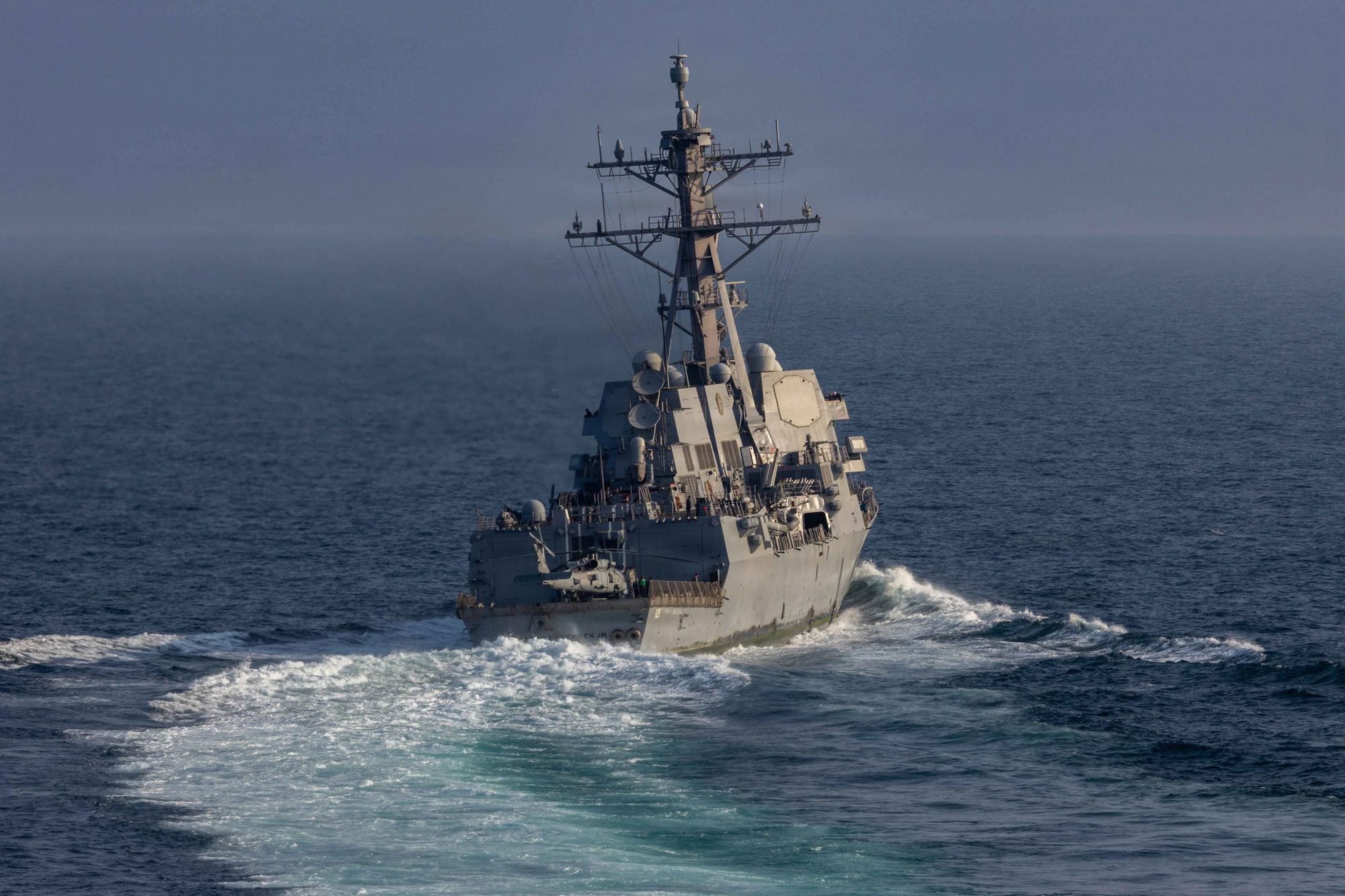
The operation consists of a large joint force including an aircraft carrier strike group, guided-missile destroyers, and amphibious ships, along with surveillance aircraft and drones, ensuring comprehensive air and sea coverage in the Gulf of Oman and near the Strait of Hormuz.
This enforcement represents a significant escalation, moving from indirect actions to direct enforcement at sea. CENTCOM emphasized that the blockade is being applied broadly, regardless of the ship's flag.
“The blockade is being enforced equally against vessels of all nations entering or leaving Iranian ports and coastal areas,” they stated, adding it includes “all Iranian ports on the Arabian (Persian) Gulf and Gulf of Oman.”
U.S. officials are making it clear that while they are limiting trade with Iran, they still support the flow of international shipping through this crucial region.
“U.S. forces are ensuring freedom of navigation for ships moving through the Strait of Hormuz to and from non-Iranian ports,” CENTCOM said.
At the same time, a U.S.-sanctioned tanker, Rich Starry, associated with Chinese interests, was seen leaving the Strait of Hormuz and entering the Gulf of Oman after initially turning back when the blockade started. The tanker departed from the UAE and was blacklisted in 2023 for its involvement in Iran’s oil trade. It is closely monitored by shipowners and traders trying to understand how far U.S. forces will enforce the blockade, especially with unclear cargo origins and inconsistent signals from ships.
On Monday, the Rich Starry appeared to have stopped moving on AIS in the north-western part of the Gulf of Oman after it had been redirected from exiting Hormuz.
An additional sanctioned tanker, Elpis, which had previously docked at an Iranian port, was also seen entering the Strait before stopping near the Iranian coast. Recent AIS data shows it too has halted in the same area as the Rich Starry.
U.S. President Donald Trump has indicated that enforcement will focus more on a vessel’s connection to Iranian trade than on its flag or ownership status. Ships entering or exiting Iranian ports—or aiding those trade routes—are considered for interception.
CENTCOM clarified that this policy will be implemented “without distinction,” with Trump adding that ships paying tolls to Iran could also face action. "I have directed our Navy to intercept any vessel in international waters that has paid a toll to Iran. No one who pays an illegal toll will have safe passage on the high seas," Trump stated on Truth Social.
While transit to non-Iranian destinations is not officially banned, this leaves a broad and discretionary enforcement policy for vessels operating in the area.
This distinction is already being challenged, as early vessel movements show increased caution near the Strait, with some ships turning back to avoid potential interception.