
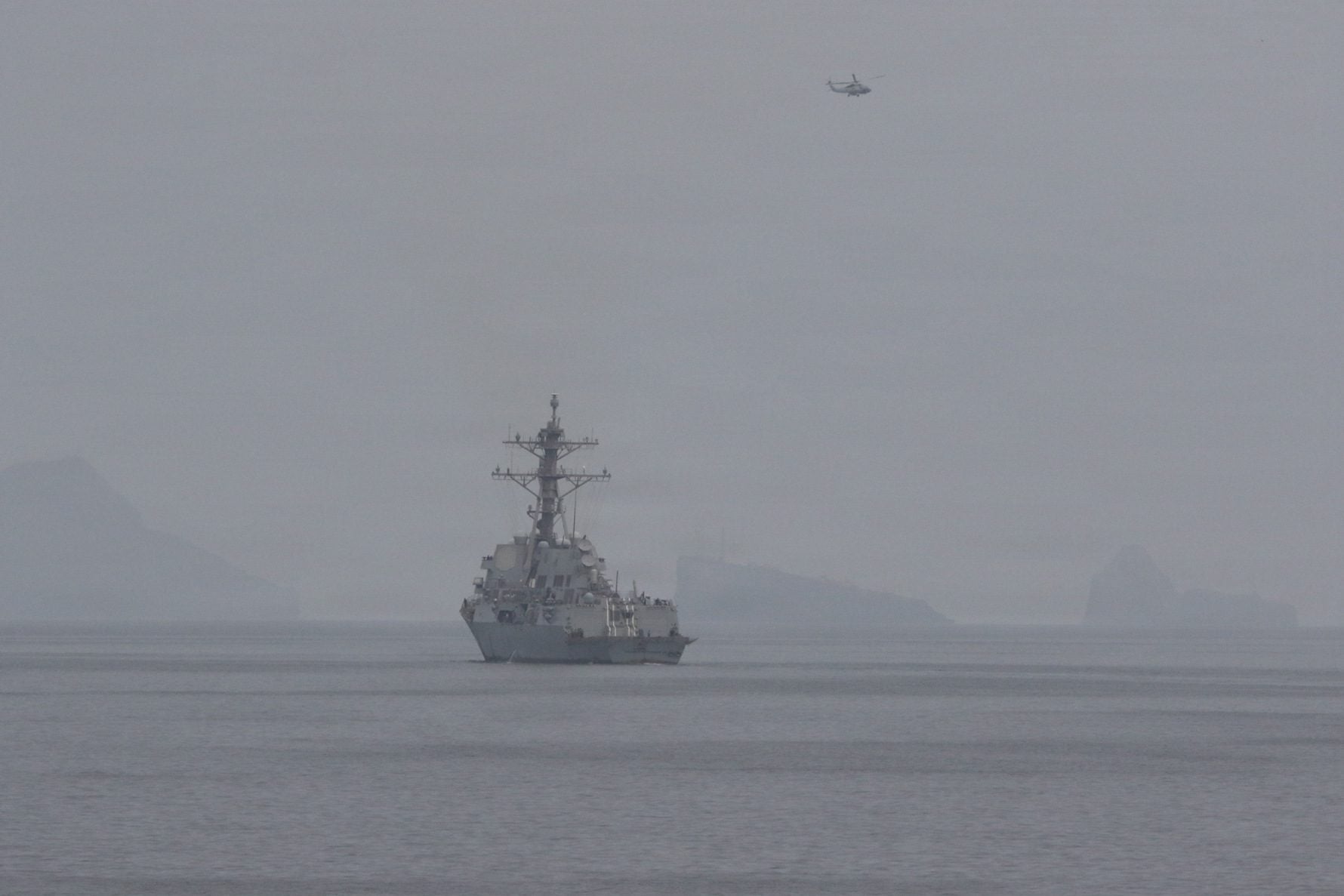
According to a U.S. Central Command official, American forces have reported nearly 1,000 commercial vessels passing through the Strait of Hormuz in the past two months. This number is higher than estimates from the private sector, which rely mostly on ship transponders.
Military analysts have been tracking ship movements since a ceasefire between the U.S. and Iran began on April 8. They used continuous air, sea, and space surveillance as part of operations against Iran. Most vessels counted are large cargo and container ships; smaller boats, like traditional dhows, were not included in this count.
However, this number is still significantly lower than the over 100 ships that used to transit through this crucial waterway for oil and gas from the Persian Gulf daily before President Donald Trump initiated a conflict with Iran in late February. This conflict led to the effective closure of the Strait of Hormuz, causing global energy prices to spike.
The new U.S. data suggests that commercial traffic in the strait is slightly busier than earlier thought. A separate Bloomberg count using ship-tracking data through transponders recorded just over 650 transits since April 8—402 leaving and about 260 arriving.
The U.S. count may also reflect a rise in the number of ships making "dark transits," meaning they have their transponders turned off to avoid detection by Iran, as U.S. forces try to restore traffic amid concerns about the impact of the strait's closure on the global economy.
When asked about oil shipments through Hormuz, Trump stated, “A lot.” He added: “I don’t want to specify numbers, but a lot of oil is getting into the world that people are unaware of. That’s why the price is at $97 a barrel instead of $300.”
After U.S. and Israeli airstrikes on February 28, Iran quickly threatened to close the strait to commercial vessels, which—along with attacks on regional energy facilities—has caused a surge in global energy prices and increased inflation, putting pressure on the White House to end the conflict.
The Strait of Hormuz has also become a key issue in U.S.-Iran negotiations to resolve the conflict, with Iran wanting to maintain control over the strait, while U.S. officials insist it must remain open and free.
In recent weeks, the U.S. military has resumed efforts to facilitate more commercial traffic through the strait. They are helping ships navigate a mine-free route closer to the Omani coast—rather than the Iranian coast—and providing protection from potential Iranian attacks.
This initiative follows an earlier U.S. attempt to protect vessels exiting Hormuz in early May, which was quickly halted after Iranian attacks on ships deterred other shipping companies.
Traffic seems to be persisting despite an escalation this week, when Iran launched drones and missiles at Kuwait’s international airport, resulting in one death and over 60 injuries, as well as targeting U.S. forces in Bahrain. U.S. Secretary of State Marco Rubio stated these attacks were in response to U.S. assistance for vessels moving through Hormuz.
The U.S. Central Command announced that its forces intercepted Iranian drones targeting "civilian mariners who were rightly transiting regional waters."
Moreover, U.S. forces are in contact with commercial ships preparing to travel through the Strait of Hormuz and the Persian Gulf. They are utilizing a communication system that includes radio, phone, and chat methods, previously developed by Admiral Brad Cooper, who once led U.S. Navy forces in the Middle East. He regularly held calls with shipping companies to share best practices.
Currently, the U.S. Navy is sharing information about transit routes, timing, and potential Iranian threats with vessels entering and leaving the Persian Gulf through operations centers in the region and Central Command’s headquarters in Tampa, Florida.