
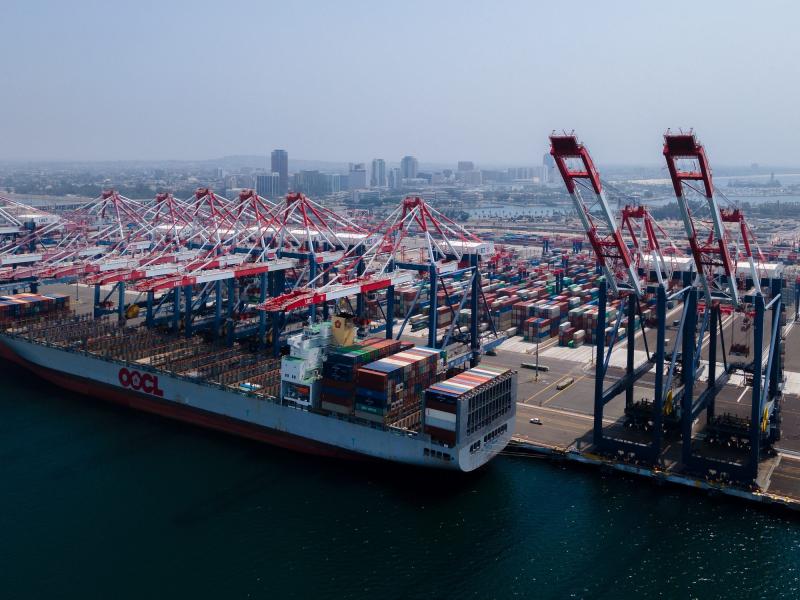
The ten largest ports in the U.S. experienced a 6.6% drop in inbound container volume in September compared to last year. This marks a significant shift from earlier months and suggests that, according to industry analyst John McCown, we can expect "consistent and more pronounced" declines to continue through 2026.
This decline in September follows modest increases of 0.2% in August and 3.2% in July. McCown noted that these upward trends were largely supported by efforts to bring in goods before new tariffs took effect. Before that, there were declines of 8.3% in June and 6.6% in May.
McCown warns that "inbound volume into the U.S. will continue to show consistent year-over-year declines into next year unless there are changes to the current tariffs."
The updated reciprocal tariffs that began on August 7 included an important exception for goods already in transit, which softened the impact temporarily. According to McCown, "The new tariffs did not apply to containers loaded on ships at their last foreign port before August 7, as long as they entered the U.S. by October 5." This grace period allowed many shipments arriving in August and some in September, especially those from Asia to the East Coast, to avoid the new tariffs.
Supply Chain Changes Speed Up
McCown notes that changes to global supply chains are happening quicker than expected. He points out that what was once considered an unattractive manufacturing site due to 10% higher costs now appears appealing if it can save on 25% tariffs. Manufacturers in countries facing high tariffs from the U.S. “may now see other markets without tariffs as more appealing,” he added.
This trend is reflected in global statistics. While container volume in the U.S. declines, worldwide container volume set records for two consecutive months through August. Exports from the Far East rose by 4.6% from a year earlier, while “container imports to Africa, the Middle East/India, and Europe have all sharply increased, contrasting with the declining U.S. volumes,” according to McCown.
Steeper Declines Expected
The forecast for the full year indicates a major shift from 2024, which saw a 15.2% rise in total inbound loads compared to 2023. The National Retail Federation now predicts that by the end of 2025, total inbound container volume will drop 3.4% from 2024, which means the last four months of 2025 could see a 15.7% decline compared to the same period in 2024.
McCown believes this estimate is realistic, stating, "We will soon start seeing double-digit percentage drops at most U.S. ports in the upcoming months." He added, "The decline in volume won’t end with 2025; it will carry over into 2026."
The Port of Los Angeles reported a 7.6% decrease in inbound volume for September, slightly better than the 10% drop initially expected. July and August data for imports to North America indicated a 9.9% decline, reinforcing the downward trend.
China Tariffs and USTR Fees Create Complications
The current downturn in container volume is occurring even with reciprocal tariffs on China paused until mid-November. President Trump has recently threatened to impose an additional 100% tariff on Chinese imports, highlighting "little progress in negotiations with this major trading partner." Since China represents the largest share of containers entering the U.S., any new tariffs would have broad effects.
The USTR ship fee plan, targeting vessels built in China or operated by Chinese carriers, went into effect on October 14. In retaliation, China introduced similar fees for U.S.-affiliated ships visiting Chinese ports. While few U.S.-built ships will be directly impacted, there is uncertainty regarding a provision about 25% U.S. ownership, which "could have significant implications based on how it is interpreted."
The overlapping tariffs have led to operational challenges. "The increasing number and complexity of the tariffs is a growing issue," McCown notes, with potential consequences for "the efficiency at container terminals and within individual supply chains."