
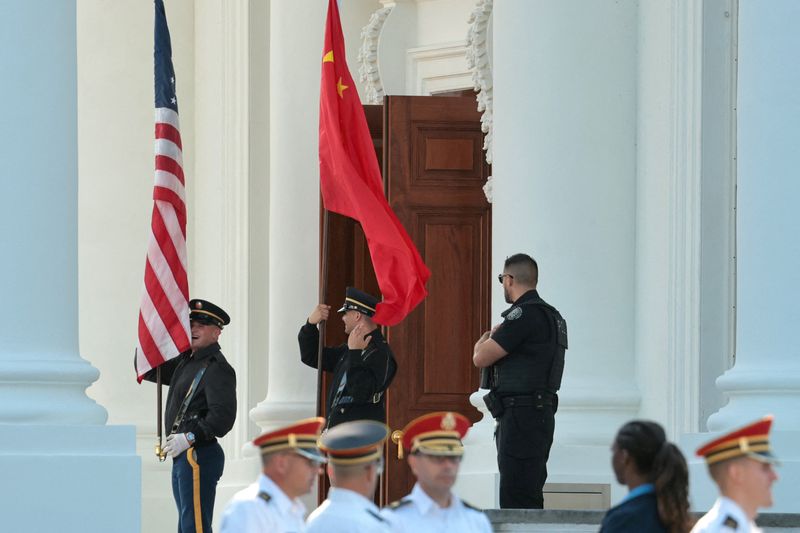
On September 18, discussions are underway between the US and China regarding the possibility of reducing or eliminating China's tariffs on American liquefied natural gas (LNG). This initiative could form part of a wider set of energy and agricultural agreements expected to be revealed during Chinese President Xi Jinping's visit to Washington next week, according to two sources familiar with the talks.
This potential move to ease tariffs on US LNG exports aligns with a broader proposal where both countries could cut tariffs on approximately $30 billion worth of goods.
In February 2025, China imposed a 15% tariff on US LNG in retaliation for President Donald Trump’s tariffs on Chinese products, effectively halting LNG trade between the two nations. The last substantial cargoes of US LNG reached China early that year.
American LNG producers are eager to find new markets for the increased export capacity being developed along the Gulf Coast, as ongoing trade tensions with China have made access to one of the largest LNG markets more challenging.
These discussions aim to stabilize trade relations ahead of the anticipated meeting between Trump and Xi on September 24. However, no final agreements have been made, and neither the White House nor the Chinese embassy in Washington has commented on the matter.
The US LNG industry is entering a significant expansion phase, with export capacity expected to increase by about 10 billion cubic feet per day by 2027 due to new and expanded facilities. Companies like Cheniere Energy, Venture Global, Sempra, NextDecade, and Exxon Mobil are among those enhancing their capacities.
The revival of Chinese demand for US LNG could provide American producers with a critical market just as global energy dynamics are shifting due to geopolitical events. This could bolster demand for current projects under construction and those seeking financing and long-term customers.
According to industry estimates and Reuters' analysis, out of nearly 100 million metric tons of LNG capacity being built in the US, approximately 24.5 million metric tons have not yet been secured with long-term contracts.
After Russia's invasion of Ukraine in 2022 disrupted European access to Russian pipeline gas, US LNG cargoes that would typically head to Asia increasingly found their way to Europe.
Additionally, the ongoing Middle East conflict between the US and Iran has altered global energy supply dynamics, leading to increased competition for LNG cargoes in Asia.
As the world's largest LNG importer, China has a strong economic incentive to restore its trade relationship with the US, which is the largest exporter of LNG. Before the tariff dispute, this relationship was rapidly growing.
Statistics show that US LNG exports to China dropped from 64 vessels in 2024 to nearly none in 2025 following the tariff's implementation. In 2021, US LNG shipments reached an all-time high of 131 vessels after large-scale exports began from the continental US in 2016. There was a brief decline in shipments to just two vessels in 2019 during Trump's initial trade dispute with China, before sharply rebounding in 2020 and 2021.
Recently, several LNG cargoes from Gulf Coast export terminals have reached China or are en route, indicating a potential return of Chinese buyers to the US market despite the ongoing tariff.
In the first half of 2026, US LNG exports averaged 17.4 billion cubic feet per day, reflecting a 23% increase from the previous year, according to the Energy Information Administration.