
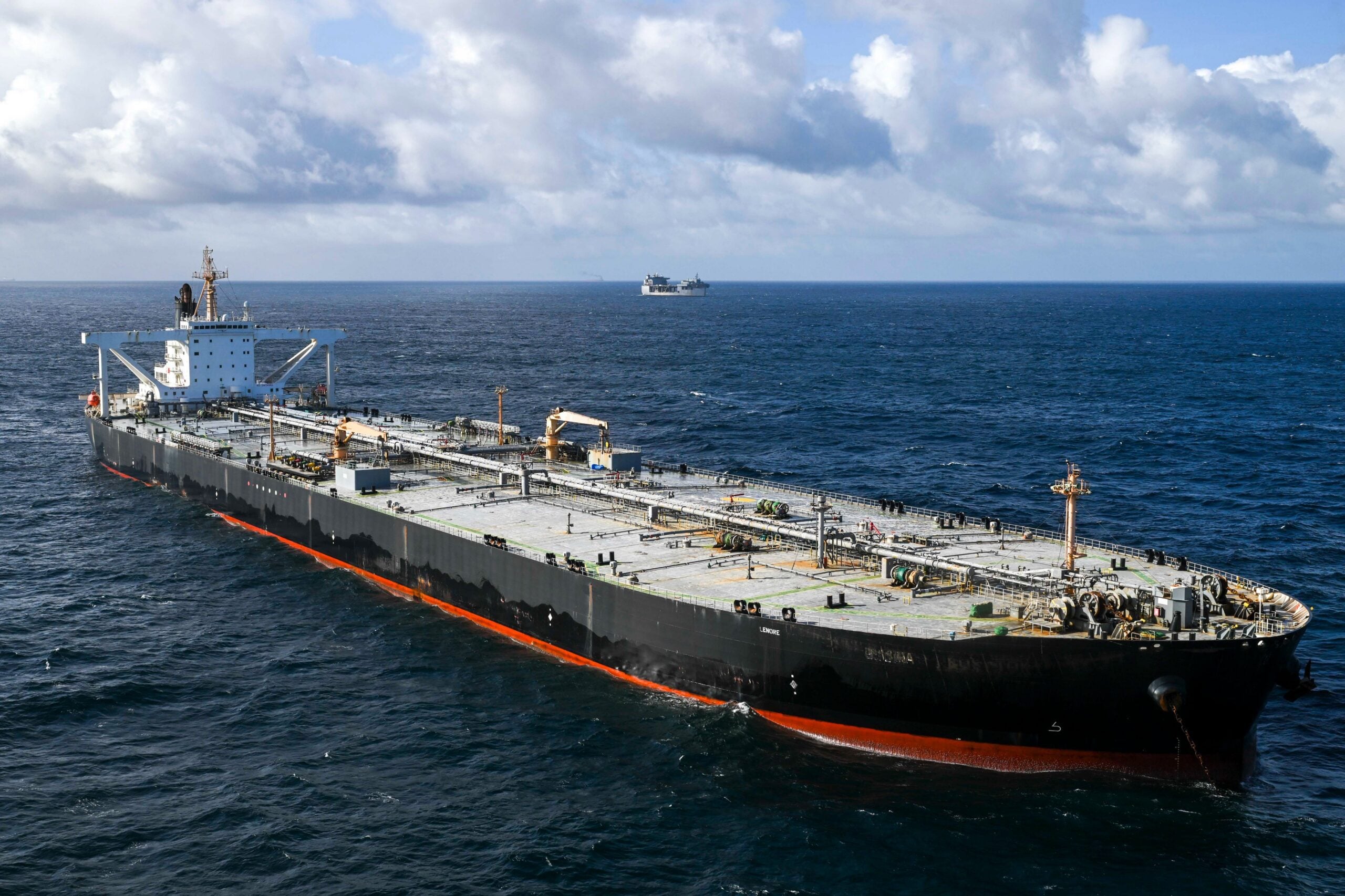
U.S. forces boarded a sanctioned tanker in the Indian Ocean overnight, marking the latest effort in a series of operations aimed at disrupting vessels connected to Iran's "shadow fleet." Washington is broadening its maritime enforcement operations beyond the Strait of Hormuz.
On Friday, the Department of Defense announced that U.S. forces had conducted a maritime interdiction and a right-of-visit boarding of the stateless tanker MT Davina in the Indo-Pacific Command area.
“We will continue global maritime enforcement to disrupt illegal networks and intercept vessels supporting Iran, wherever they may be,” the department stated. “International waters cannot be a refuge for those under sanctions.”
No immediate information was revealed about the tanker’s cargo, crew, destination, or whether the ship was confiscated after the boarding.
The MT Davina has been under U.S. sanctions since October 2024, when the Treasury Department identified the tanker, registered in the Marshall Islands, and its owner, Davina Shipping Inc., as part of Iran's "shadow fleet." This fleet is reportedly used to transport sanctioned crude oil to buyers in China. At that time, the Treasury indicated that the vessel had delivered Iranian oil to Chinese refineries and was supporting the National Iranian Oil Company.
The boarding operation occurs as the U.S. ramps up its maritime enforcement efforts against vessels linked to Iran’s energy exports.
This is at least the third known U.S. interdiction of a sanctioned tanker linked to the shadow fleet in the Indian Ocean since April. Previously, U.S. forces boarded the tankers Majestic X and Tifani as part of a campaign that has evolved from simply enforcing sanctions into a more extensive maritime blockade aimed at disrupting Iranian oil exports.
Earlier this week, U.S. forces disabled the sanctioned tanker Lexie after it allegedly ignored multiple warnings while attempting to approach Kharg Island, Iran’s main oil export terminal. U.S. Central Command reported that a U.S. aircraft fired a Hellfire missile into the tanker’s engine room when the crew did not comply with U.S. instructions for 24 hours.
The incident involving the Lexie marked the sixth commercial vessel disabled since the Trump administration initiated its maritime blockade on Iran in April. U.S. officials now say they have redirected 129 commercial vessels and disabled six more to ensure compliance with blockade restrictions, highlighting the scale of the enforcement operations.
The recent boarding of the Davina indicates that Washington is extending its operations beyond the Persian Gulf and Gulf of Oman into the broader Indian Ocean. Unlike the Lexie incident, U.S. officials have not revealed whether the Davina was disabled, detained, or permitted to continue its journey after being boarded.
This operation coincided with the Treasury Department's announcement of new sanctions under its “Economic Fury” campaign, targeting Iranian oil exports and financial networks.
The latest sanctions aim at a network accused of disguising Iranian liquefied petroleum gas as Omani exports and shipping millions of barrels to buyers in South and East Asia. The Treasury also sanctioned multiple shipping companies, traders, exchange houses, and six LPG carriers said to be involved in transporting Iranian fuel.
“Iran’s economy is suffering, and its military is weakened,” said Treasury Secretary Scott Bessent when announcing the new sanctions. “Through Economic Fury, Treasury will keep cutting off Iran’s shadow fleet, shadow banking systems, and access to global trade.”
According to the Treasury, the targeted network used front companies in the UAE and China, foreign bank accounts, and ships from Iran’s shadow fleet to hide the origin of Iranian LPG shipments and avoid international sanctions. The department claimed that the campaign has already disrupted tens of billions of dollars that could have flowed to Tehran and its regional allies.
The latest enforcement actions underline Washington’s increasing focus on maritime sanctions as a central part of its strategy to limit Iran’s access to global energy markets and financial systems.
Neither the Department of Defense nor the Indo-Pacific Command provided details on whether any illegal cargo was found aboard the Davina or if further enforcement actions are planned against other sanctioned vessels in the region.