
By Timothy Gardner
WASHINGTON, Feb 13 (Reuters) - The U.S. has relaxed sanctions on Venezuela's energy sector. On Friday, they issued two general licenses that permit global energy companies to work on oil and gas projects in the country and allow other firms to negotiate contracts for new investments.
The U.S. Treasury's Office of Foreign Assets Control issued a license that enables Chevron, BP, Eni, Shell, and Repsol to continue their oil and gas operations in Venezuela. These companies still have offices and interests in the nation and are key partners of Venezuela's state-owned company, PDVSA.
Under this authorization, any payments for royalties and taxes to Venezuela must go to the U.S.-controlled Foreign Government Deposit Fund.
The second license permits companies worldwide to form contracts with PDVSA for new investments in oil and gas projects. However, these contracts require additional permissions from OFAC.
This authorization does not permit any transactions with companies from Russia, Iran, or China, nor with entities controlled by businesses in those countries.
This action marks the most significant easing of sanctions on Venezuela since U.S. forces captured and removed President Nicolas Maduro last month.
OIL LAW REFORM
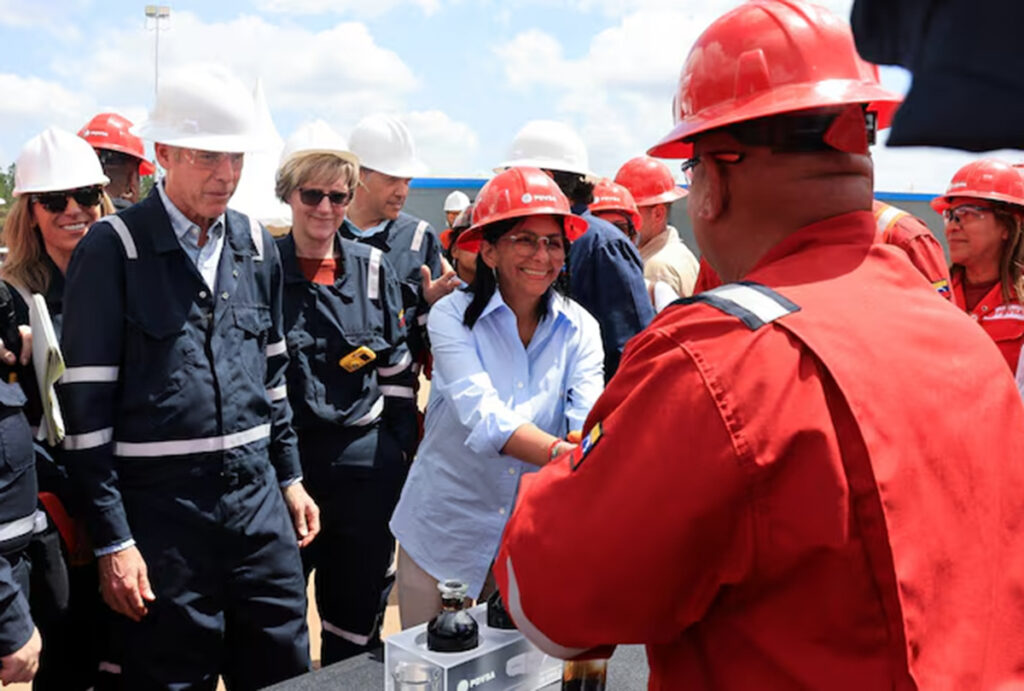
The U.S. licenses follow a major overhaul of Venezuela's oil law that was approved last month. This reform allows foreign oil and gas producers greater freedom to operate, export, and manage the cash from sales under existing partnerships with PDVSA or through a new production-sharing contract approach.
The U.S. has imposed sanctions on Venezuela since 2019, during Donald Trump's presidency. Now, Trump is looking for $100 billion in investments from energy companies in Venezuela's oil and gas sector. U.S. Energy Secretary Chris Wright mentioned during a visit to Venezuela that oil sales from the country have already reached $1 billion since Maduro's ousting, with expectations of another $5 billion in the coming months.
Wright stated that the U.S. will manage the sales revenues until Venezuela establishes a "representative government."
Since last month, the Treasury has issued several other general licenses to ease oil exports, imports, storage, and sales from Venezuela. It has also authorized the provision of U.S. goods, technology, software, or services for oil and gas exploration, development, or production in Venezuela.
The Venezuelan government took control of assets from Exxon Mobil and ConocoPhillips in 2007 under President Hugo Chavez. The Trump administration is seeking to encourage these companies to invest in Venezuela again. Last month, during a meeting at the White House, Exxon Mobil's CEO, Darren Woods, described Venezuela as "uninvestable" at this time.
Wright noted that Exxon, which no longer has an office in Venezuela, is currently in discussions with the Venezuelan government and is gathering information on the oil sector. Exxon has not commented yet.