
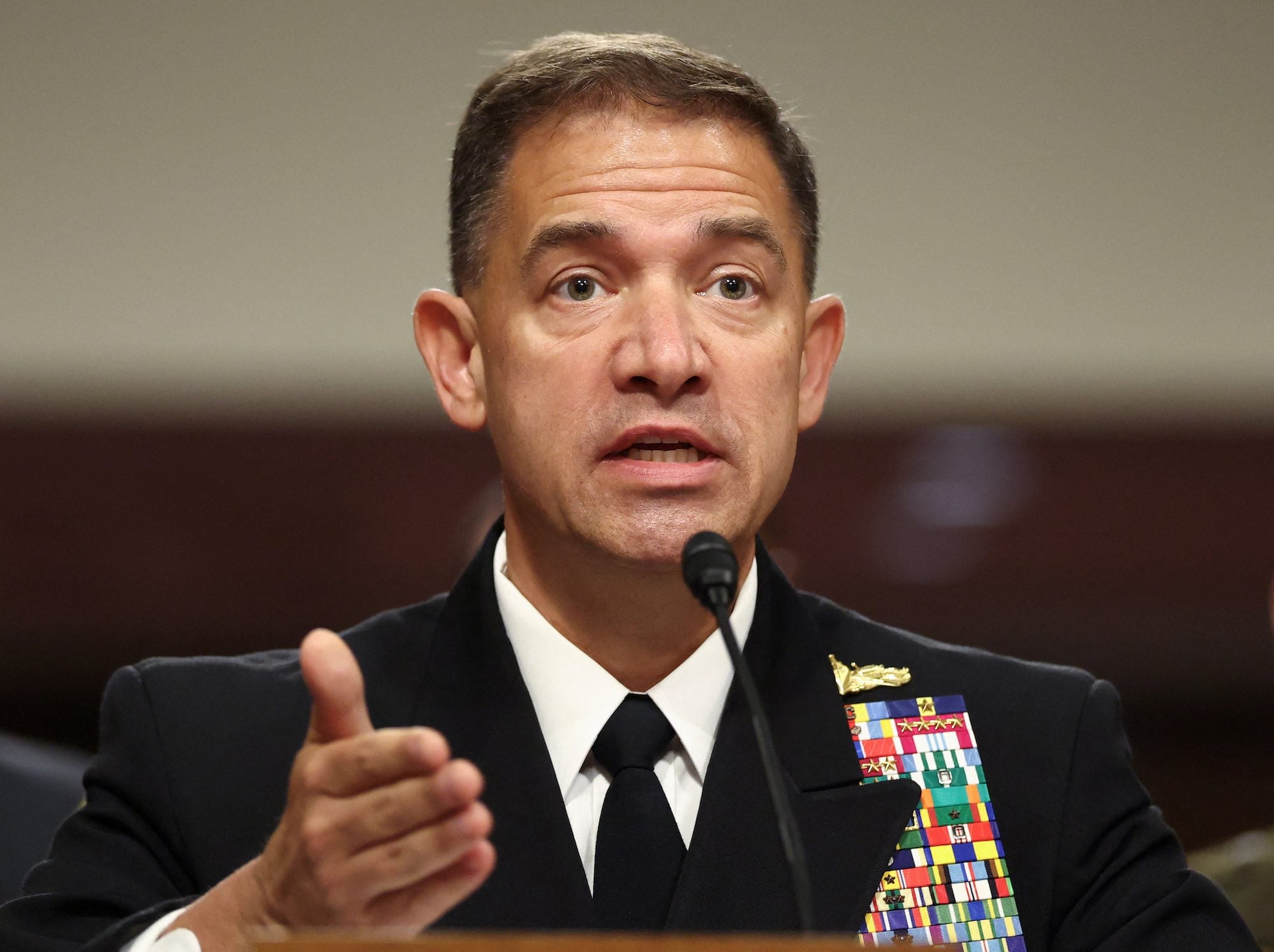
On Thursday, Admiral Brad Cooper from U.S. Central Command provided a detailed assessment of the damage incurred by Iran during Operation EPIC FURY. He informed lawmakers that the 38-day U.S.-Israeli campaign significantly weakened Iran’s military power in the Middle East.
During his testimony to the Senate Armed Services Committee, Cooper stated that the operation had destroyed or heavily damaged critical elements of Iran’s missile, drone, naval, and air defense systems.
“In short: in 38 days, we rolled back 40 years of Iranian military investment,” he noted in his prepared remarks.
The operation saw U.S. and Israeli forces conducting over 10,200 sorties and more than 13,500 strikes aimed at what Cooper described as “the full breadth” of Iran’s military capabilities.
Cooper reported that more than 85% of Iran’s ballistic missile, drone, and naval defense infrastructure was harmed or destroyed. This was achieved through extensive strikes on facilities related to weapons manufacturing, missile storage, drone launch sites, air defense systems, and naval infrastructure. Specifically, over 1,450 strikes targeted weapons manufacturing sites, while many others focused on ballistic missile systems and drone units.
The maritime aspect of the campaign was a key point in his testimony.
“At sea, we destroyed 161 vessels across 16 classes of warships, effectively crippling the regime’s operational capability,” Cooper said, emphasizing that Iran’s navy could no longer be regarded as a maritime power.
He also mentioned that over 90% of Iran’s stock of more than 8,000 naval mines was destroyed through more than 700 strikes on mine-related targets. This is particularly important given current issues affecting commercial shipping in the Strait of Hormuz.
In the air, Cooper claimed that Iranian air power had effectively stopped functioning. Before the conflict, Iran’s air force was flying between 30 and 100 operations daily, but he said that number is now zero. He noted that U.S. and Israeli strikes had either destroyed or rendered non-operational key airfields, fuel depots, hangars, munitions stockpiles, and 82% of Iran’s air defense missile systems.
Despite these claims, Cooper acknowledged that Iran still maintains some “nuisance capabilities.” These might include harassment by fast boats, drones, rockets, mining activities, GPS interference, proxy attacks, and isolated strikes on commercial shipping. While asserting that Iran can no longer project long-term naval or air power in the region, he indicated that Tehran still has enough capability to disrupt trade and increase maritime risks in the Strait of Hormuz.
Cooper confirmed that the U.S. is still enforcing the maritime blockade against Iran that was initiated during the conflict.
“As of this submission, U.S. air and naval forces are continuing to enforce the Presidential blockade against Iranian ports and merchant vessels while allowing neutral vessels to pass through,” he stated.
As of Thursday, CENTCOM reported that its forces had diverted 70 commercial vessels and disabled 4 to ensure compliance.
These comments come as traffic through the Strait of Hormuz remains heavily affected by ongoing issues months after the conflict began. Threats to maritime security, vessel seizures, mining concerns, military escort operations, and insurance instability continue to complicate navigation through one of the world's most important waterways.
Cooper also highlighted important operational lessons from the conflict, particularly the increasing importance of integrated air defense systems and low-cost drones.
In his testimony, Cooper noted that the U.S.-led Middle East Air Defense network intercepted over 6,000 one-way attack drones and more than 1,500 ballistic missiles during Operation EPIC FURY.
He also described the operation as the first combat deployment of U.S. Group 3 one-way attack drones, referring to them as “cheap and lethal drones” that could significantly impact the economics of modern warfare.
This operation was framed as part of a larger strategy to permanently alter the regional security landscape, rather than just a temporary military action.
“USCENTCOM believes that Iran can no longer project power across the region or pose the same persistent threat to the United States or our allies that it did before Operation EPIC FURY,” Cooper testified.
Nevertheless, he warned that Iran would likely try to rebuild some military capabilities over time, stressing the need for ongoing enforcement and vigilance to prevent Tehran from re-establishing its forces.