
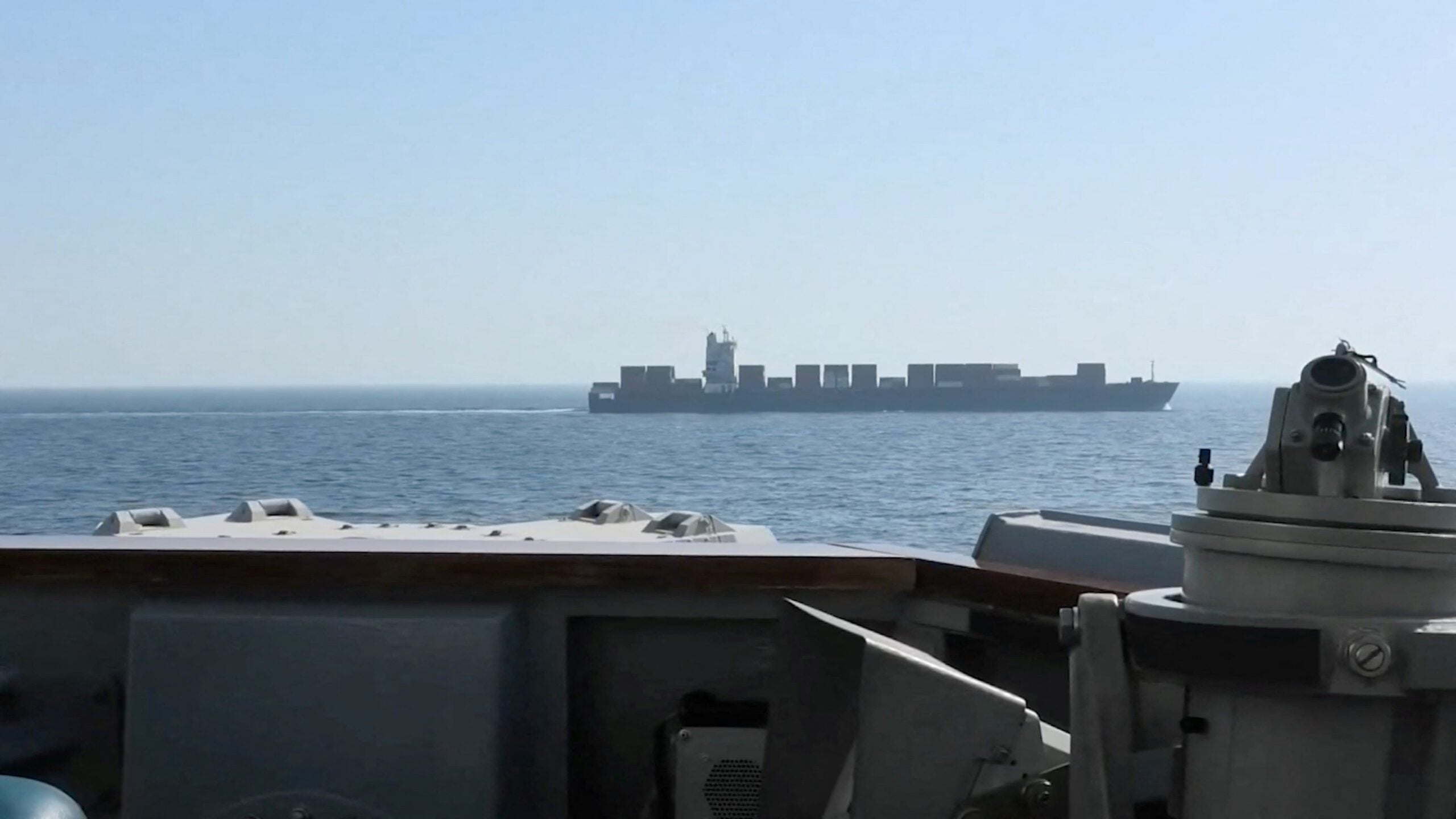
PARIS, May 5 (Reuters) – Members of the U.N. Security Council are set to start discussions on Tuesday about a draft resolution supported by the U.S. and Bahrain. This resolution could lead to sanctions against Iran and may authorize the use of force if Iran does not stop its attacks and threats against commercial shipping in the Strait of Hormuz, according to three Western diplomats.
New exchanges of fire on Monday highlighted the increasing tensions, as the U.S. and Iran vie for control over this crucial waterway, essential for global energy supply and trade. This has put additional strain on a fragile truce that has been in place for about four weeks and has intensified the competition for maritime control.
The U.S. is now working within the U.N. framework, a shift from its previous months of taking unilateral military actions against Iran without seeking U.N. approval and encouraging allies to join unstructured naval patrols to ensure freedom of navigation.
This previous strategy faced pushback from partners concerned about the potential for an ongoing conflict and legal liabilities, prompting criticism from U.S. President Donald Trump, who called out countries not supporting U.S.-led initiatives.
Monday’s escalation included the U.S. destroying six Iranian small boats and an Iranian missile strike on a UAE oil port. This follows the launch of “Project Freedom,” an initiative led by the U.S. to assist stranded tankers and other vessels in navigating through Hormuz.
In this context, the draft resolution is part of a wider strategy aimed at applying diplomatic pressure on Iran and preparing for a situation after the conflict.
Washington has also proposed a new multinational maritime coalition, called the Maritime Freedom Construct (MFC). This initiative aims to create a security framework for the Middle East and reopen the Strait once conditions improve.
RESOLUTION COULD AUTHORIZE SANCTIONS, FORCE
A previous resolution from Bahrain, supported by the U.S., which seemed to legitimize military action against Iran, was blocked by Russia and China.
The new draft resolution takes a more cautious approach, avoiding specific language that would authorize the use of force, while still operating under Chapter VII of the U.N. Charter, which allows for sanctions and military action.
This draft condemns Iran's alleged violations of the ceasefire and its ongoing actions that threaten the safe passage through the Strait of Hormuz, which includes deploying sea mines.
It views these actions as a threat to international peace and security and demands that Iran immediately cease its attacks, reveal the locations of any mines, and not hinder clearance efforts.
The resolution also calls on Iran to cooperate with U.N. efforts to set up a humanitarian corridor through the Strait, emphasizing the disruption of critical aid supplies, fertilizer shipments, and other essential goods.
The U.N. Secretary-General will report back within 30 days on Iran’s compliance with the proposed measures. The Security Council will then meet again to discuss further actions, including potential sanctions, if Iran does not adhere to the resolution.
Diplomats noted that Washington aims to finalize negotiations quickly, with the goal of circulating a final draft by May 8 and holding a vote early the following week. However, Russia and China are still considering their own proposals.
U.S. SEEKS HORMUZ COORDINATION WITH FRANCO-BRITISH MISSION
The push from the Security Council aligns with diplomatic efforts on the MFC, a U.S.-led body that intends to coordinate with a separate Franco-British maritime mission involving around 30 countries.
The Franco-British initiative aims to establish safe passage through the Strait once the situation stabilizes or the conflict is resolved, in coordination with Iran.
Some nations have indicated that any military mission would require U.N. approval before they commit their assets.
According to an informal diplomatic document seen by Reuters, “The MFC will complement other maritime security forces, including the planning efforts led by the UK and France.”
While the MFC will operate independently, close coordination is deemed crucial to build the strongest possible maritime security framework.