
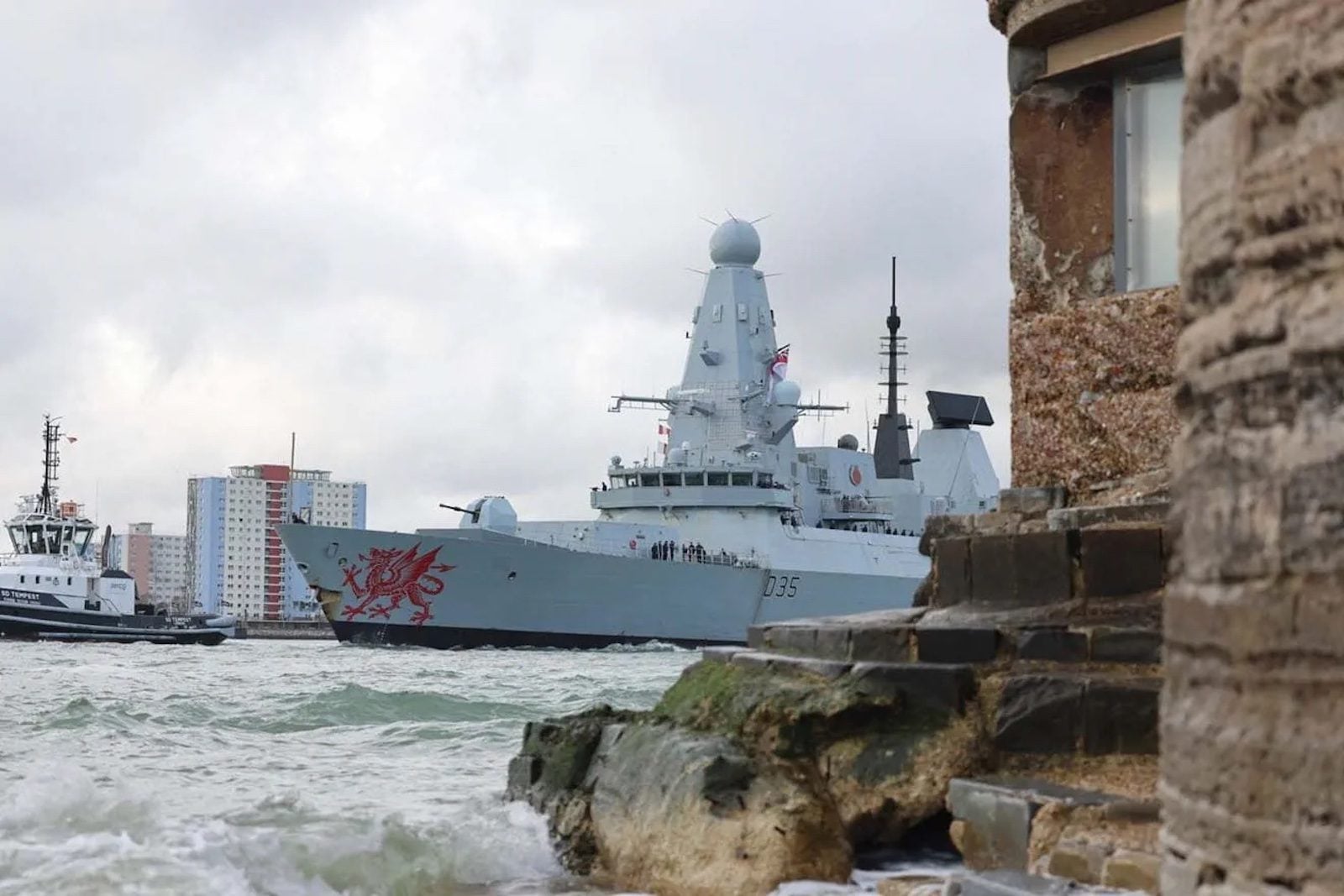
The United Kingdom is boosting its military presence in the Strait of Hormuz by announcing the deployment of new technology and resources. This includes autonomous mine-hunting systems, counter-drone technology, Typhoon fighter jets, and the Royal Navy destroyer HMS Dragon. These efforts are part of a future multinational maritime security mission.
This announcement was made during a virtual meeting of defense ministers from over 40 nations. British officials described the mission as “strictly defensive,” aimed at restoring confidence in commercial shipping routes through this vital waterway.
The UK and France will jointly lead the mission, which will start "when conditions allow," according to the UK Ministry of Defence.
The UK plans to invest £115 million in this deployment, focusing on advanced autonomous mine-hunting drones and counter-drone systems, as there are ongoing concerns about naval mines, drone attacks, and overall maritime security in the Strait.
“The UK is taking a leading stance in securing the Strait of Hormuz, and today's announcement showcases our commitment with new technology to protect our interests,” stated John Healey.
He added, “This multinational mission, alongside our allies, will be defensive, independent, and credible.”
The package includes advanced mine-hunting systems that can detect and disable naval mines, as well as a modular “Beehive” launch system from the Royal Navy. This system will deploy high-speed Kraken drone boats for surveillance, threat assessment, and defensive actions.
Additionally, Royal Air Force Typhoon fighter jets will carry out air patrols over the Strait of Hormuz, while British mine-clearance experts have been training in the UK in preparation for possible future operations in the area.
The centerpiece of this deployment is the HMS Dragon, a Type 45 destroyer that is already headed to the Middle East. It recently completed weapons and sensor calibration exercises to get ready for high-risk operations.
British officials emphasized HMS Dragon’s advanced Sea Viper air-defense system, highlighting how this mission takes into account lessons from recent conflicts in the Red Sea, where drones, missiles, and asymmetric attacks changed naval operations and the risks for commercial shipping.
This upcoming mission in Hormuz reflects Europe’s changing strategy in the Red Sea with the EUNAVFOR ASPIDES operation, launched in 2024 to protect merchant ships from Houthi attacks. Like ASPIDES, the Hormuz coalition is described as a long-term defensive effort focused on escorts, mine clearance, air protection, and rebuilding trust in commercial shipping rather than engaging in offensive combat.
The UK also announced that the Royal Fleet Auxiliary vessel RFA Lyme Bay is being upgraded to serve as a potential “mothership” for autonomous systems in support of future operations in Hormuz.
The Strait of Hormuz continues to be a challenging area for regular commercial shipping, despite some limited voyages and ongoing diplomatic efforts to resolve the U.S. and Israeli conflict with Iran.
About one-fifth of the world’s oil passes through the Strait of Hormuz, as well as significant LNG exports from Qatar. This makes the waterway crucial for global energy markets and supply chains.
The UK aims for the multinational mission to strengthen confidence among commercial shipping operators and mitigate the economic effects of regional conflicts on global trade and energy markets.