
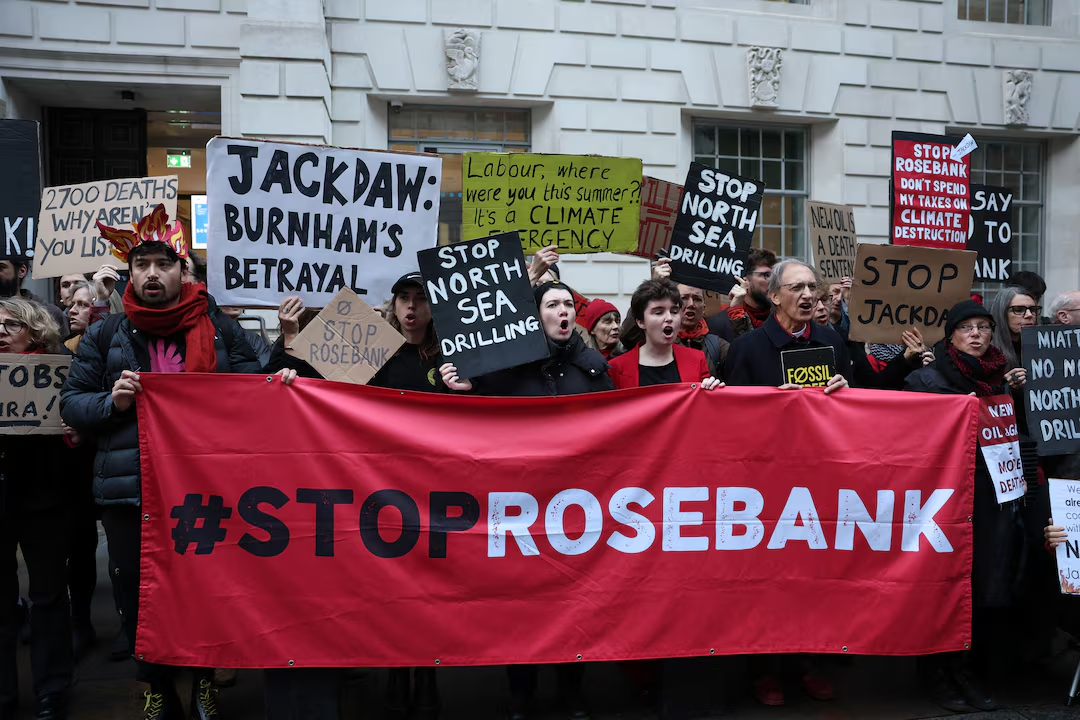
LONDON, Oct 21 (Reuters) – The UK government has approved the Jackdaw gas field in the North Sea, putting an end to years of legal and political disputes. This decision comes as the Labour government tries to find a balance between climate goals and energy security concerns.
Energy Minister Miatta Fahnbulleh announced that the project will start supplying gas by the end of this month, which is expected to help lower energy costs that have been rising during the conflict in Iran.
High energy prices have affected households and businesses, putting pressure on Britain's economy. US President Donald Trump has repeatedly urged Prime Minister Andy Burnham to increase North Sea drilling.
The government estimates that Jackdaw will increase domestic gas production by around 6% at peak output and will operate for up to 11 years, calling it “a source of national strength” during uncertain times globally.
At its peak production of 40,000 barrels of oil equivalent per day, Jackdaw will meet almost 4% of Britain's daily gas needs, based on calculations from government data.
Burnham stated, “At a time when people are really struggling, it’s important to responsibly maximize the existing energy resources we have in Britain that could help.”
NEW ENERGY WEALTH FUND
Since taking office in July, Burnham has worked to balance the pressure to address rising bills with calls from some Labour lawmakers to cut down on fossil fuel use.
On social media, Trump described the decision as “great news for the wealth and prosperity of the United Kingdom, and the wonderful region of Aberdeen.”
Oil and gas production in the British North Sea began in the 1960s, generating significant tax revenue over the years and serving as a key component of Margaret Thatcher’s government. However, production has been declining sharply in recent years.
Along with the Jackdaw approval, the government introduced a new Energy Wealth Fund, which will start with a £2 billion ($2.7 billion) investment aimed at channeling oil and gas revenues towards the transition to cleaner energy.
This initiative is meant to show that Britain is still committed to its climate goals, even while backing a new gas project, following one of the hottest summers on record.
The Green Party criticized the approval, calling it “climate vandalism.”
Fahnbulleh stated that bringing Jackdaw into production aligns with the UK’s legally binding target of reaching net-zero emissions by 2050.
When asked about the larger Rosebank oilfield, which is set to produce 70,000 boed mainly from oil, Fahnbulleh said a decision is still pending.
Both Jackdaw and Rosebank faced delays after climate activists successfully challenged their permits in court, forcing developers to revise applications to consider emissions from burning the hydrocarbons.
Fahnbulleh explained, “Jackdaw is a gas field that primarily serves the UK market, while Rosebank is an oil field focused mainly on exports,” in comments to Sky News.
Even if both projects start producing, their output will be relatively small on a global scale and unlikely to halt the overall decline of the region.
Jackdaw is managed by Adura, a joint venture between Shell and Norway's Equinor. Shell expressed support for the government’s decision.
“Long-term energy projects rely on a competitive and stable investment environment, along with timely and predictable regulatory decisions,” Shell stated.
($1 = 0.7476 pounds)