
By Anthony Di Paola
May 15, 2026 – The United Arab Emirates plans to double its capacity to export crude oil without going through the Strait of Hormuz by next year, aiming to lessen its dependence on this key shipping route.
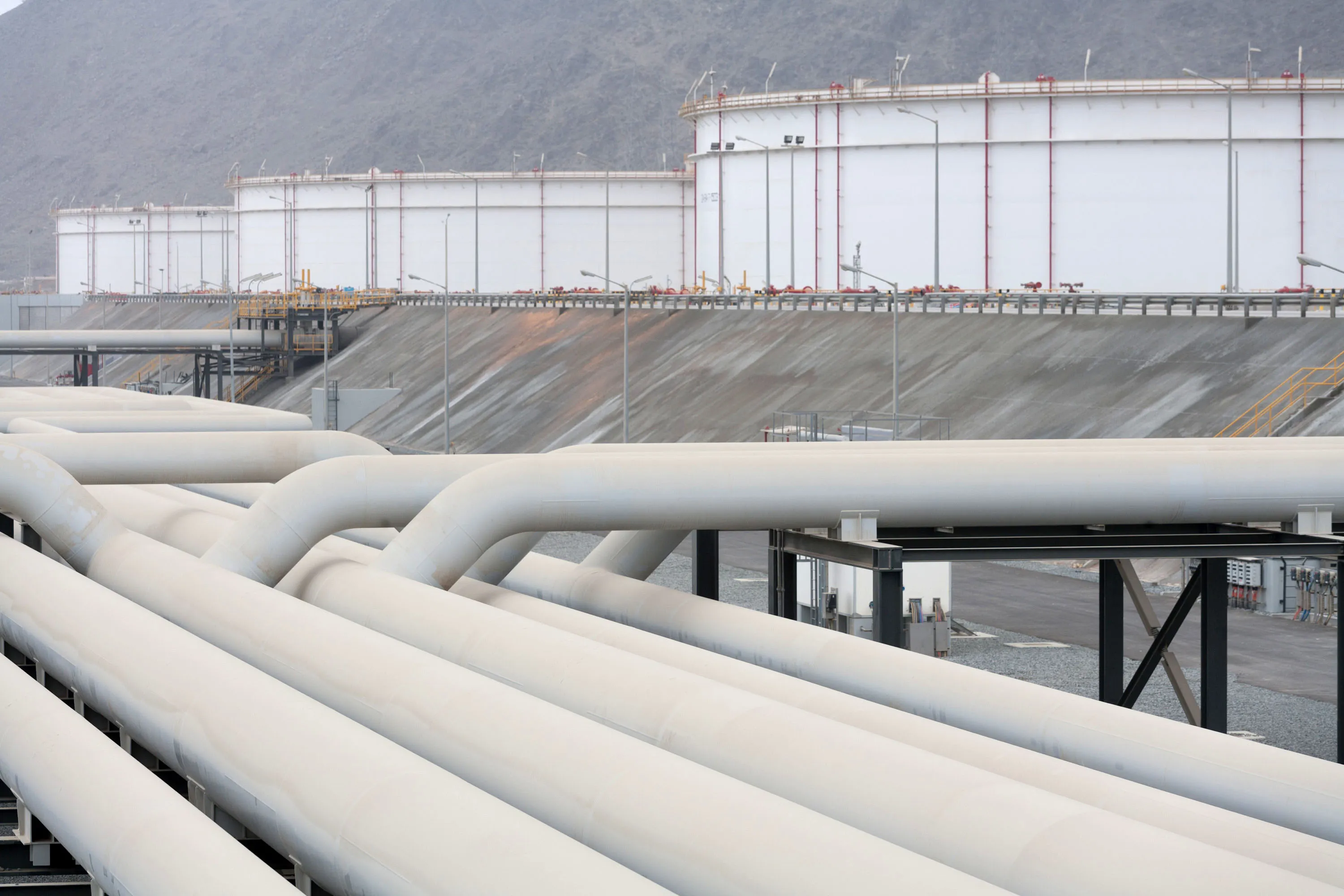
The Abu Dhabi National Oil Co. is speeding up the construction of a pipeline that leads to the port of Fujairah, located on the Gulf of Oman. This pipeline currently transports 1.5 million barrels of oil per day from the UAE's oil fields to the eastern coast port, which has been essential for maintaining oil supply during recent Middle East conflicts.
Thanks to the existing pipeline, the UAE has been able to keep supplying oil despite disruptions caused by Iran's actions, which nearly blocked the usual route through the Strait of Hormuz after the conflict escalated in late February. The UAE had plans to expand this pipeline since the current system cannot handle enough export volume.
Carole Nakhle, CEO of consulting firm Crystol Energy Ltd., remarked, “The project's importance has increased due to the Hormuz crisis, but the decision to expand it was made before the war. The main goal is to reduce reliance on the Strait of Hormuz.”
The closure of the Strait of Hormuz, through which roughly 20% of the global oil and gas supply flows, has caused economic instability and affected shipments of various products, including metals and fertilizers. The US has implemented its own blockade for the past month, targeting shipments to and from Iranian ports.
During this conflict, the UAE and Saudi Arabia are the only major Gulf oil producers that have successfully managed to ship significant quantities of crude oil. Both countries' state oil companies have recently managed to sneak some cargoes out of the Gulf, bypassing the Iranian blockade.
The acceleration of the pipeline construction also follows the UAE's recent exit from the Organization of Petroleum Exporting Countries (OPEC). Without the group's production limits, the UAE is now able to respond more quickly to market demands amid the ongoing disruptions. The added capacity for exports via Fujairah will provide the country with more options, even if the Strait of Hormuz reopens.
Now outside OPEC, the UAE wants to maximize the benefits from its significant oil field expansions. Adnoc plans to increase its production capacity to 5 million barrels per day by next year. When this target was discussed in 2018, the company was producing about 3 million barrels per day.
Adnoc mainly exports its primary crude grade, Murban, produced at its onshore fields, through the pipeline to Fujairah. The expansion of both pipelines will likely allow for an output that exceeds the amount of Murban Adnoc can produce. This means the new pipeline could also be used to export offshore grades from Fujairah, such as Upper Zakum, which are well-regarded by refiners for their quality and often affect regional pricing.
The UAE is not the only nation planning alternatives to the Hormuz route. Aramco operates a pipeline that runs across Saudi Arabia to the Red Sea and is currently working to boost its export capacity at ports there. However, both Aramco's pipeline and the Fujairah port have faced attacks during the ongoing conflict, which shows these routes are not completely secure. Yet, the biggest Gulf oil producers are actively seeking options and alternative routes for the future.
Although the current 252-mile (406-kilometer) pipeline to Fujairah has not been directly targeted during the war, the infrastructure at both endpoints has been attacked. Iranian drones struck a gas-processing facility near the pipeline’s starting point in Habshan, and the port of Fujairah has also suffered damage that temporarily disrupted shipments during multiple attacks throughout the conflict.