
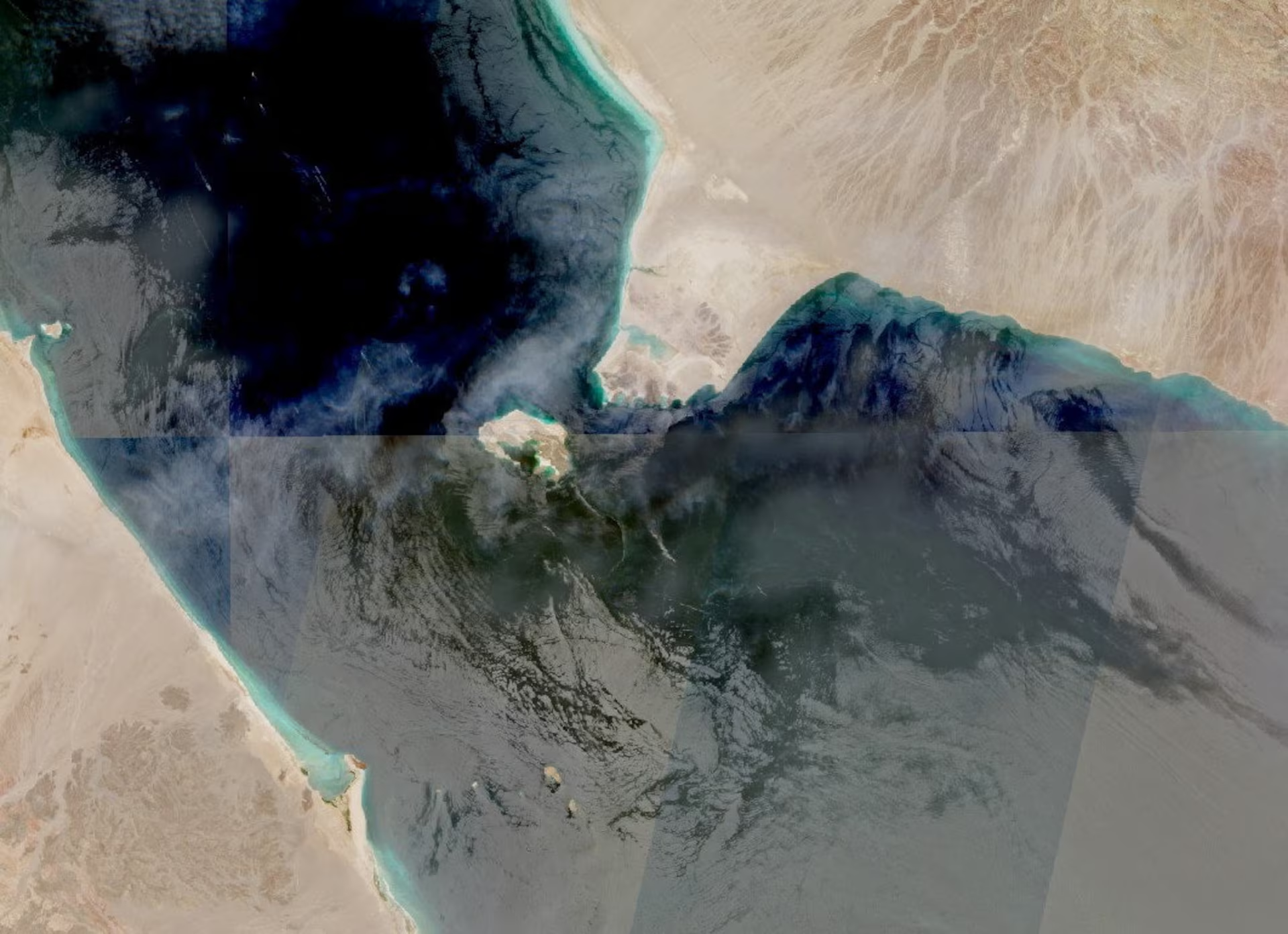
SINGAPORE, Aug 3 (Reuters) – Over the weekend, two tankers carrying Saudi oil passed through the Bab el-Mandeb strait, while activity in the Strait of Hormuz decreased after reports of attacks on vessels, according to shipping data released on Monday.
The number of commodity vessels that traveled through the Bab el-Mandeb strait dropped to 18 on Sunday, down from 27 on Saturday and 28 on Friday, as reported by Kpler data.
On July 20, the Iran-aligned Houthis announced a maritime embargo against Saudi Arabia, intensifying their actions against the U.S. and its allies in the conflict with Iran and broadening their attacks on tankers transporting global energy supplies beyond the Gulf.
The Malta-flagged tanker Lesvos and the Very Large Crude Carrier Desh Vaibhav left the Red Sea with their Automatic Identification Systems (AIS) turned off, according to the data.
The Lesvos was transporting about 1 million barrels of Saudi crude, but its destination is still unclear.
On the other hand, the Desh Vaibhav, carrying 2 million barrels, is headed to Sikka port in India, where Reliance Industries usually receives crude.
Dynacom, which manages the Lesvos, did not respond to requests for comments after office hours, and attempts to reach the Shipping Corp of India, which operates the Desh Vaibhav, were unsuccessful.
STRAIT OF HORMUZ
In the Strait of Hormuz, which is a crucial route for about 20% of the world’s crude oil and liquefied natural gas, only one tanker carrying liquefied petroleum gas loaded in Iran made the crossing on Sunday, according to Kpler data.
Some vessels might have switched off their AIS and are not currently accounted for.
The UK Maritime Trade Operations agency has reported three more attacks on tankers since Saturday.
The number of commodity vessels passing through Hormuz decreased to 10 on Saturday, compared to 19 on Friday, which was the highest number since mid-July, the data shows.
In addition to the VLCCs Spain B and Noble, two more VLCCs exited the Hormuz strait, while one entered on Friday.
These include the VLCC Kiku, carrying around 1.4 million barrels of Qatari crude, and the VLCC Rotterdam Energy, which has 2 million barrels of Das crude onboard.
Apex Shipping, the manager of the Kiku, and the Abu Dhabi National Oil Co, owner of Rotterdam Energy, did not respond to requests for comments outside of office hours.