
By Weilun Soon
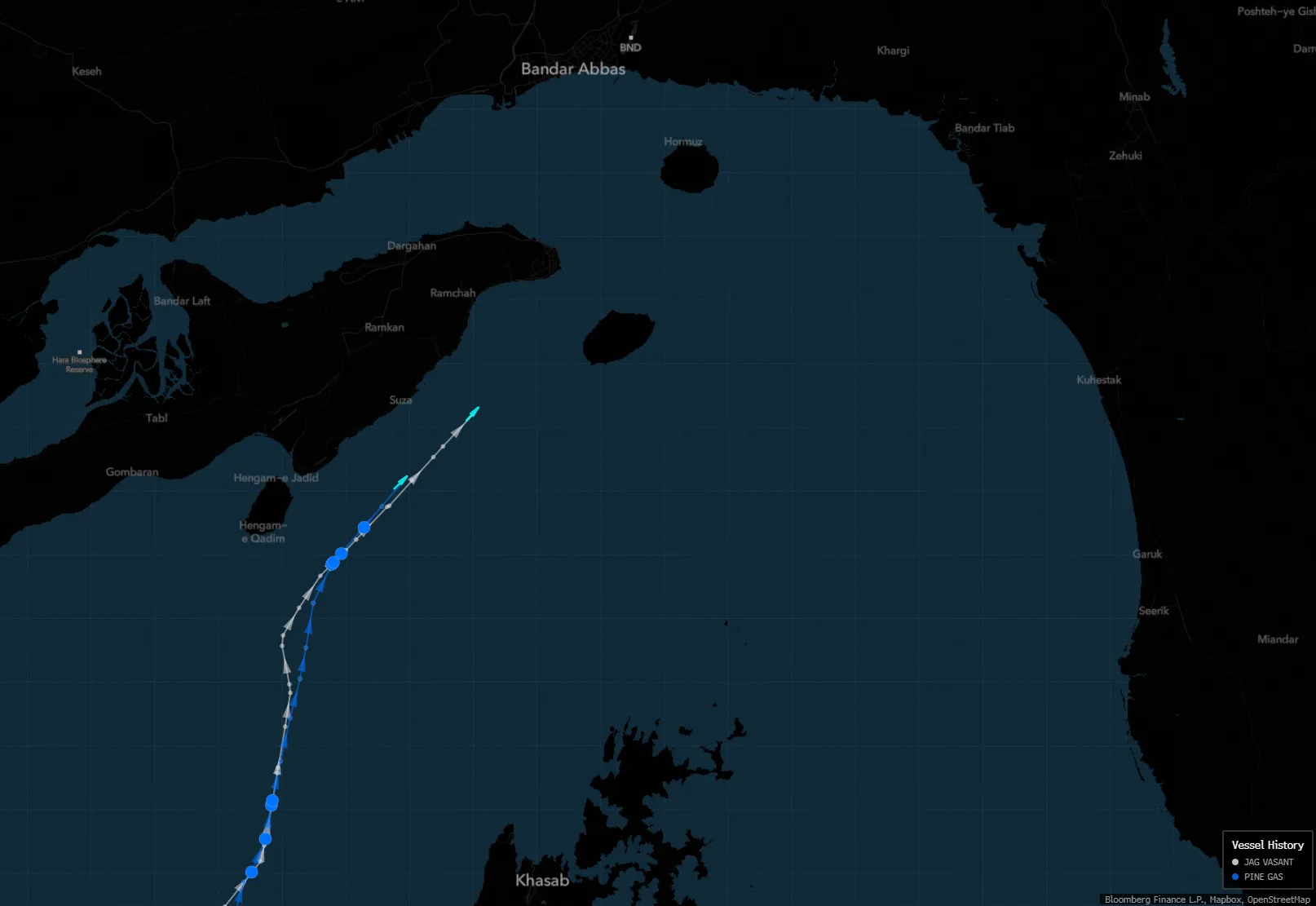
March 23, 2026 (Bloomberg) – Two more Indian-flagged ships carrying liquefied petroleum gas (LPG) are currently navigating through the Strait of Hormuz. This information comes from ship-tracking data, which indicates that these vessels are following a path that stays close to Iran's coastline, similar to the routes taken by other approved ships.
The vessels, named Jag Vasant and Pine Gas, are large gas carriers flagged in India. They moved north from the UAE coast towards Iran's Qeshm and Larak islands early on Monday.
Instead of providing a destination, these ships have indicated Indian ownership through their transponders as a safety measure, a practice also used by other vessels crossing the strait. However, it is likely they are headed for India, which is experiencing significant shortages of LPG, primarily used for cooking. The country has been in discussions with Tehran to secure fuel shipments.
Earlier this month, two other Indian-flagged LPG carriers successfully made the transit through the area.
Traveling through the Strait of Hormuz can take up to 14 hours. If Jag Vasant and Pine Gas continue on their current path without any interruptions, they should reach the Gulf of Oman by Monday evening.
The Strait of Hormuz is a crucial trade route that connects oil and gas producers in the Persian Gulf to the rest of the world. This route has been severely restricted since US and Israeli military strikes started at the end of February. Following these events, Tehran has significantly increased its military presence and issued threats, limiting traffic drastically. Most vessels allowed through have been linked to Iran, China, or a few other nations, including India, that have negotiated secure passage.
The ships that have successfully navigated through the strait have generally followed a route along the Iranian coast, indicating a traffic control measure set by Tehran. In normal circumstances, ships would typically take a route closer to Oman; however, one vessel using this conventional path was attacked earlier this month.
India's last two carriers received safe passage after a deal was arranged with Iran. A senior officer on board one tankers mentioned that the Iranian Navy guided their transit.
Over the weekend, Indian Prime Minister Narendra Modi spoke with Iranian President Ahmad Masoud Pezeshkian to stress the importance of maintaining open shipping lanes, while Foreign Minister Subrahmanyam Jaishankar also communicated with his Iranian counterpart, Abbas Araghchi, according to a social media update on Saturday.
Ship-tracking data shows that Jag Vasant entered the Persian Gulf via Hormuz on February 26. It then loaded LPG from Kuwait just hours before the conflict began on February 28 and has remained stuck since. Pine Gas made its entry on the same day, loading its cargo from Ruwais in the UAE.
Jag Vasant was chartered by Bharat Petroleum Corp. Ltd., and Pine Gas was chartered by Hindustan Petroleum Corp. Ltd., according to sources familiar with the situation.