
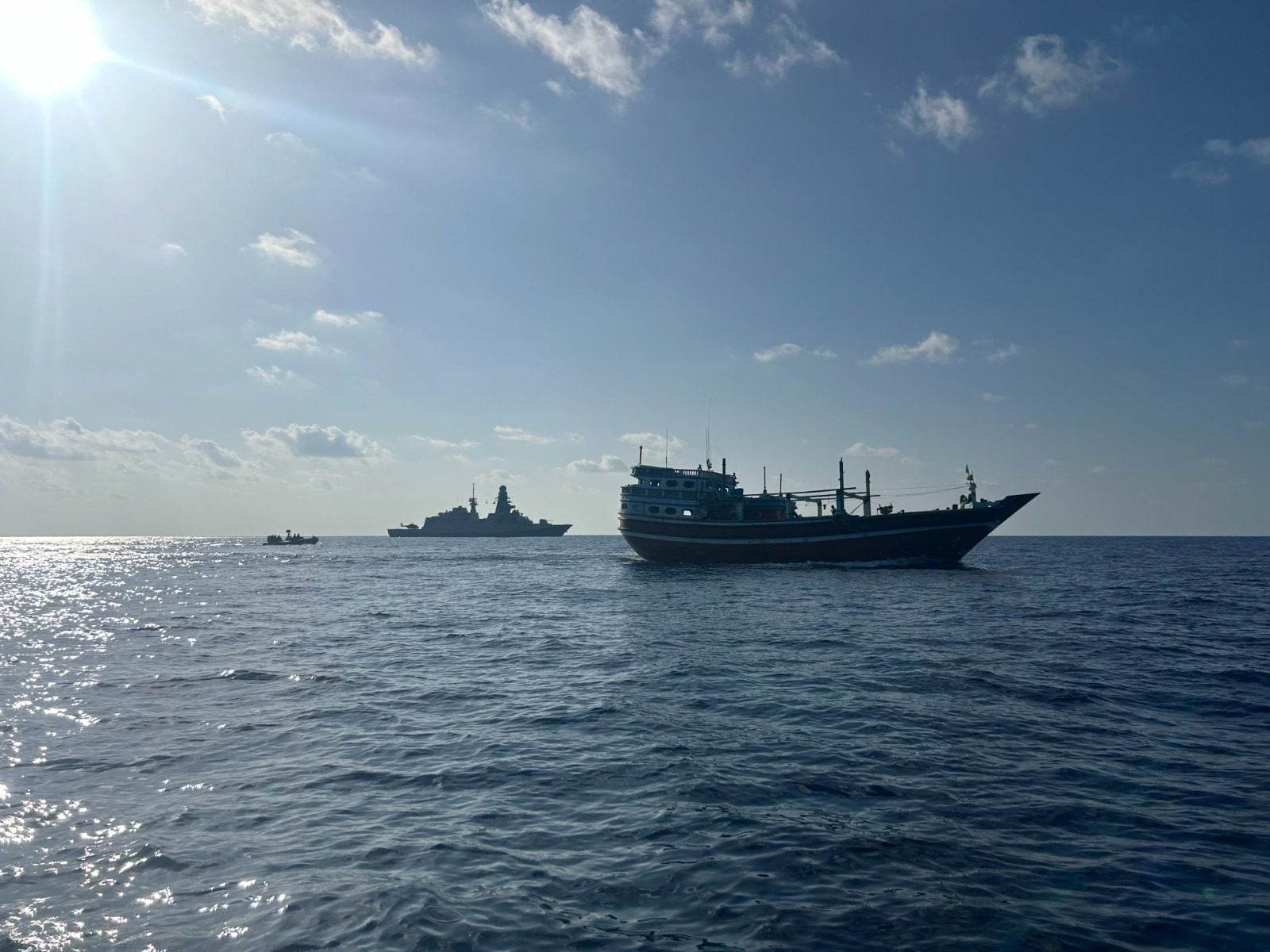
Concerns are rising again about Somali piracy after the United Kingdom Maritime Trade Operations reported two ships being hijacked off the coast of Somalia in just a few hours. This shift from opportunistic attacks to actual takeovers of commercial vessels is alarming.
These recent events happen just weeks after European naval forces interrupted an attempted hijacking of the Iranian fishing dhow ALWASEEMI. Pirates were planning to use it as a mothership to attack merchant ships, indicating that pirate groups may be looking for chances to strike in the western Indian Ocean.
According to UKMTO Warning 046-26, unauthorized individuals took control of a cargo ship about six nautical miles northeast of Garacad on April 26, redirecting it into Somali territorial waters.
Earlier that day, UKMTO Warning 045-26 reported that a tanker was seized about 45 nautical miles northeast of Mareeyo and was guided 77 nautical miles south into Somali waters.
These incidents followed a warning on April 23 about a likely failed pirate attack south of Eyl, where armed individuals in two small boats approached a cargo ship, exchanged gunfire, and then retreated.
Taken together, these events suggest a more serious problem than random criminal boardings.
The rise in pirate activity coincides with a broader increase in piracy that began in 2024, alongside Houthi attacks on commercial shipping in the Red Sea. Several attempted hijackings and use of motherships in the past two years indicate that the threat of piracy never completely vanished but changed form.
Garacad and surrounding areas along Somalia’s central and northeastern coast have a long history of piracy, and steering both hijacked vessels into territorial waters reflects tactics used during Somalia’s piracy peak when captured ships were often anchored nearby while ransom negotiations took place.
The recent incidents may also bring attention back to whether limited naval resources are creating vulnerabilities. Currently, international maritime security efforts are mainly focused on crises in the Red Sea and the Strait of Hormuz, while counter-piracy operations in the western Indian Ocean are getting less attention than they did a decade ago.
However, international naval forces are still active. EUNAVFOR Operation Atalanta earlier this month showed that counter-piracy operations can still disrupt attacks, successfully pressuring pirates to abandon the hijacked ALWASEEMI without a direct assault. Yet the apparent hijacking of two larger commercial vessels may pose a more significant challenge.
For shipowners and security planners, these developments may lead to a renewed focus on Best Management Practices, armed protection measures, and regional risk assessments for transiting near the Horn of Africa and the western Indian Ocean.
These incidents also raise fears that pirate groups might be experimenting with new tactics—using smaller hijacked vessels as motherships to extend their reach before targeting larger merchant ships further out to sea.
For an industry that invested years and billions to combat Somali piracy, even a few successful hijackings can carry significant implications.