
By Firat Kozok, Patrick Sykes and Khalid Al-Ansary
On August 1, 2026, Turkey and Iraq agreed to extend their oil pipeline agreement for another year and to increase oil flows. This deal secures a connection for exports that avoids the Strait of Hormuz.
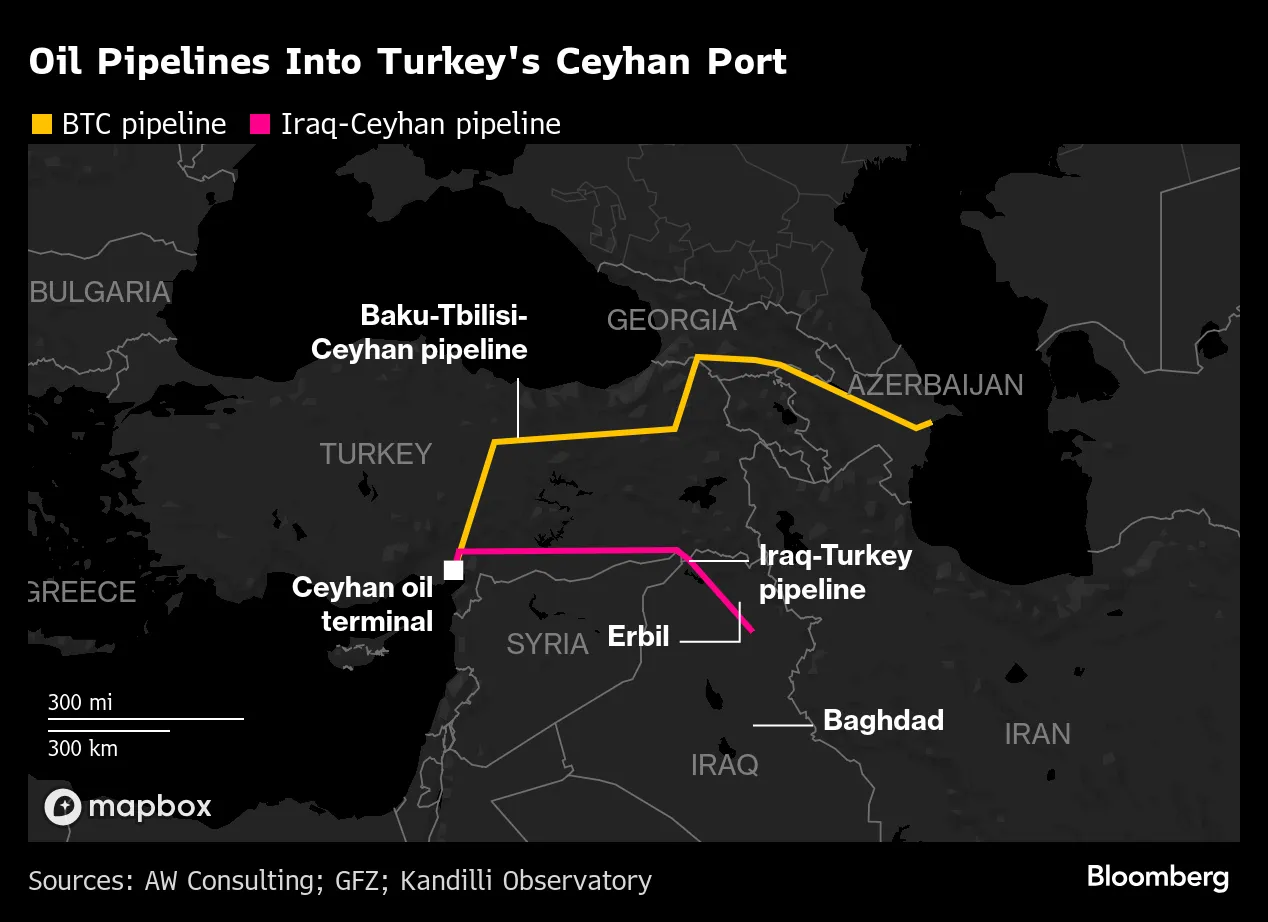
Iraqi oil exporters will keep sending crude oil through the 986-kilometer (613-mile) pipeline that runs from Kirkuk to Turkey’s Mediterranean port at Ceyhan.
Salim Al-Rikabi, spokesman for the Iraqi Oil Ministry, told Bloomberg that the interim agreement allows for a “reserved” export capacity of up to 750,000 barrels per day. However, he noted that these flows depend on security improvements, full production in the oil fields of Iraqi Kurdistan, and the completion of infrastructure to transport more crude oil from southern to northern Iraq.
The Turkish Energy Ministry did not provide any comments. However, Minister Alparslan Bayraktar confirmed the new flow capacity in a post on social media.
This extension is important for oil markets that have been impacted by disruptions caused by the ongoing conflict in Iran affecting exports through the Strait of Hormuz.
The agreement is expected to be retroactive to July 27, the date when the previous deal expired after 53 years. Despite ongoing negotiations, oil flows continued this week without interruption.
The agreement follows Turkey’s investment in production activities in Kirkuk. While negotiations were still ongoing, Turkey's state oil company, Turkiye Petrolleri AO, announced it would acquire a 15% stake in BP Energy Company of Kirkuk Limited, a consortium working on redeveloping oil and gas fields in the area. Financial details of this investment were not disclosed.
Al-Rikabi indicated that there is a new pipeline in progress that will connect Basra, Iraq’s southern oil center, to Kirkuk and the Ceyhan pipeline, which will boost Iraq’s export capacity.
The pipeline can technically handle 1.5 million barrels per day, but it has not been fully utilized. In June, exports were about 180,000 barrels per day, according to the head of Iraq’s State Oil Marketing Organization.
Exports via the Kirkuk-Ceyhan pipeline have previously faced interruptions due to a long-standing legal dispute between Iraq and Turkey.
In 2023, the International Court of Arbitration ruled that Turkey must pay Iraq $1.5 billion for shipping Kurdish oil without permission from the Baghdad government. Turkey rejected this ruling and attempted to negotiate a more comprehensive agreement with Baghdad.
Oil flow resumed last September after a two-and-a-half-year halt, though there was a brief shutdown in March due to the war.