
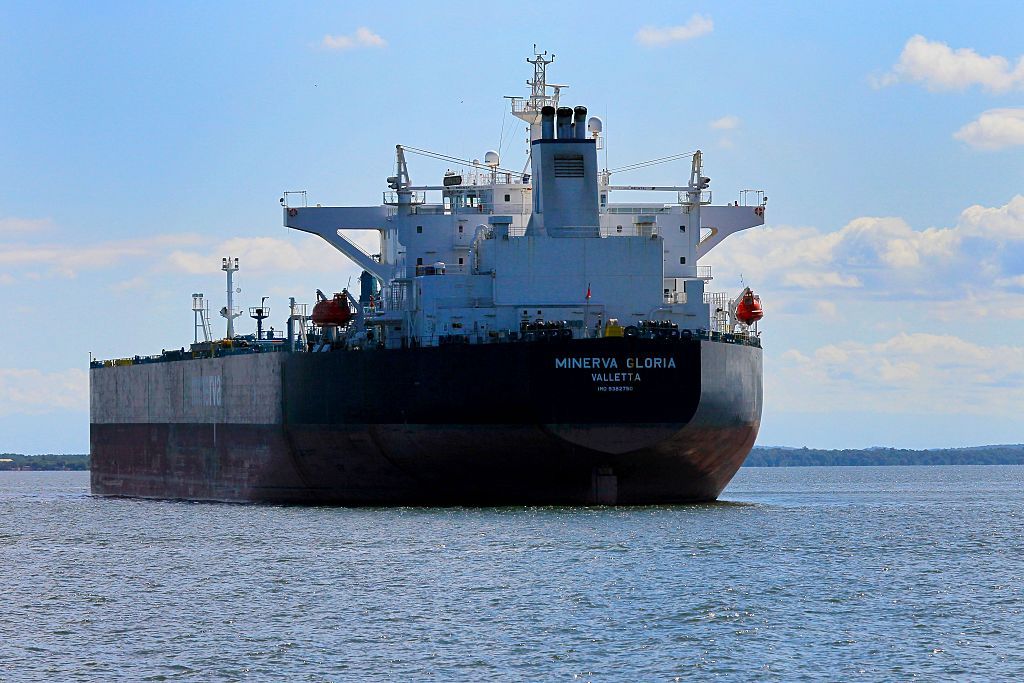
Venezuela might soon need to close some of its oil wells as it faces a shortage of storage capacity. This follows last week’s seizure of a tanker and the United States' plans to block more sanctioned vessels.
According to sources familiar with the situation, who wished to remain unnamed, the oil storage facilities and tankers at Venezuela's terminals are filling up fast and could reach full capacity in about 10 days. If this occurs, the state-owned company Petróleos de Venezuela SA could be forced to shut down some of its production, which is currently near 1 million barrels per day.
Chevron Corp. stated that it continues to produce oil through its joint ventures with PDVSA without any disruptions and is following all relevant laws. The company is using non-sanctioned tankers to export crude oil to the US Gulf. However, it is uncertain what consequences could arise if PDVSA is compelled to halt some of its production.
The pressure on Venezuela's oil industry is increasing due to the Trump administration's intensified efforts to cut off oil revenues from President Nicolás Maduro’s regime. On Tuesday, US President Donald Trump announced a "total blockade" on all sanctioned tankers traveling in and out of Venezuela, also designating the regime as a foreign terrorist organization. Although the administration has not yet provided details about these actions, shipping activities are effectively at a standstill as companies are wary of the risk of seizure.
Chevron confirmed in a statement that it is adhering to the "sanctions frameworks" set by the US government and advised that any questions regarding security in Venezuela should be directed to US authorities.
Chevron’s operations account for about half of its 200,000 barrels per day in Venezuelan production under its contract with PDVSA. The company operates in Venezuela under a US Treasury license that grants it certain exemptions from oil sanctions under specific conditions.
PDVSA, on the other hand, claims that its crude exports are still proceeding as normal, with complete insurance and technical support in place.
New shipping restrictions for Venezuelan oil and the necessary diluent for producing and transporting the country’s heavy crude suggest that storage could fill up rapidly, according to Schreiner Parker from Rystad Energy. If storage capacity is reached, we could see production levels drop significantly.
During Trump’s first term, the "maximum pressure" sanctions led to a drop in Venezuela’s production to below 500,000 barrels per day. Although PDVSA managed to partially recover by swapping crude with Iran for a type of diluent, that option is likely limited now due to increased US patrols in the Caribbean.
Tanker Backlog
At least three supertankers, capable of carrying a total of 6 million barrels of oil, have loaded but remain in Venezuelan waters. This information comes from sources, satellite images, and a shipping report.
Venezuela heavily relies on a network of so-called “ghost vessels” that hide their locations by turning off or spoofing their transponder signals. The three ships currently in Venezuelan waters are loaded with heavy oil worth approximately $300 million.
Two ghost ships, Crag and Galaxy 3, identified under false names, loaded their cargo last week and remain in the area. Another supertanker, Kelly, which switched off its transponder a week ago, completed loading recently. Additionally, a fourth ship, operating under the name Romana, is loading 1.9 million barrels of Venezuela’s most prominent oil, Merey 16.
Despite facing a recent cyberattack that impacted PDVSA’s administrative work at the ports, Chevron has managed to load cargoes without disrupting its oil production or shipping operations.
Venezuela contributes to less than 1% of global oil production, which limits the overall impact of these disruptions on oil prices.