
March 4, 2026 (Bloomberg) - President Donald Trump announced that the US will ensure the smooth flow of energy through the Persian Gulf by offering insurance guarantees and even naval escorts. However, the shipping industry considers this, at best, a limited response to a significant crisis.
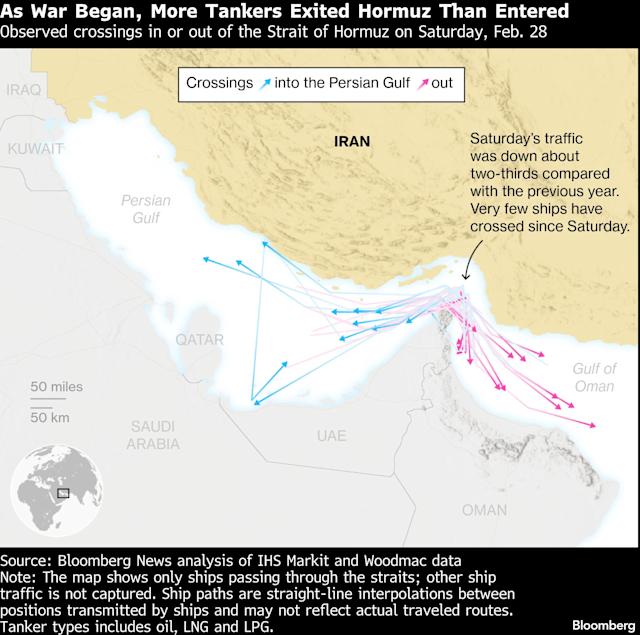
Recent US and Israeli strikes on Iran have escalated regional tensions, leading to multiple attacks on vessels and effectively closing the Strait of Hormuz. This closure significantly disrupts seaborne trade between some of the world’s largest oil and gas producers and the global market.
“Nothing is certain, and we need immediate clarity,” stated Khalid Hashim, managing director of Precious Shipping Pcl, a Thai company that operates bulk carriers. “Lives are at risk, cargoes are at risk, and ships are at risk. We need immediate coverage to protect us from all this,” he emphasized.
The company has ships currently in the Persian Gulf and is struggling to secure war-risk insurance before they leave the area.
As ships are either unable or unwilling to pass through the strait, production has stalled. Supertanker costs are rising sharply, and storage at many refineries in the Persian Gulf is filling up quickly. The largest insurance mutuals have pulled war risk insurance for vessels in the region.
“Shipowners are primarily concerned about the real risk of loss,” explained Karnan Thirupathy, a partner at Kennedys Law LLP who specializes in commodities, shipping, and insurance. “No one wants to engage in trade if the risk of loss is too great.”
The impacts have been immediate. Iraq, the second-largest oil producer in the Middle East, has already begun significant production cuts and may have to reduce output even further, signaling stress among suppliers in the region.
Trump's proposed solution involves leveraging the US International Development Finance Corporation, which usually helps the private sector finance projects in developing countries. This initiative would support charterers, shipowners, and key maritime insurers.
“While President Trump’s remarks about insurance and tanker escorts led to a pullback in oil prices, we question the level of planning on this insurance safety net and foresee several challenges in implementing the plan swiftly,” analysts at RBC Capital Markets LLC noted.
There is some international precedent. In November 2023, a facility was established with partners including Lloyd's insurers and the Ukrainian government to provide affordable war risk insurance for vessels involved in Ukraine’s maritime exports, mainly grain. The DFC has also provided assistance in war risk reinsurance, which it might do again.
However, establishing a US-organized insurance solution for oil, gas, and fuels in the Persian Gulf would be much more extensive and complex due to the high number of producers and consumers involved. Some shipowners expressed reluctance to rely on a volatile US administration.
Oil prices did decrease slightly after Trump’s announcement on Tuesday, although the market soon resumed its upward trend. With limited details available, shipowners are cautious about the proposed insurance and its costs. They requested to remain unnamed, as they are not authorized to speak publicly.
Additionally, several shipowners highlighted that restoring confidence cannot be easily achieved with the US navy, considering Iran’s ongoing attacks and the limited availability of escorts, especially since many tankers are not US-owned or flagged. Attacks by Houthi forces in the Red Sea have continued despite interventions.
“The US is currently leading the campaign against Iran, and a key question remains whether there are enough Navy resources to escort ships while continuing operations against Iran,” RBC stated.
A limited solution to resume some traffic will require time to implement—a luxury that producers and consumers might not have.
“This is encouraging news, but it clearly won’t happen overnight,” commented Warren Patterson, head of commodities strategy at ING Groep NV. “Naval escorts would be beneficial, but this effort will take time. Naval escorts could become easy targets for Iranian attacks.”