
US President Trump has warned Iran and its trading partners of potential economic isolation after months of military actions and a maritime blockade did not force Tehran to surrender.
Though Trump did not detail specific measures or countries that would be targeted, his remarks drew immediate attention to China, which purchases the majority of Iran's oil. As a result, Brent crude prices rose for the fifth consecutive day, hitting around $94 a barrel, the highest level this month.
In response to Trump's comments, Beijing stated that sanctions and pressure would not be effective and advocated for a diplomatic solution. Iran described Trump's threats as a distraction from America's own issues, such as unprecedented debt and rising interest rates. Iranian Foreign Minister Abbas Araghchi stated on social media that relying on unsuccessful strategies would lead to more defeat and resentment among Iranians, adding that "US economic terrorism threatens the global economy and sovereignty worldwide."
It's uncertain what new economic penalties the US might impose, if any, that Iran hasn't already faced. Targeting Iranian oil sales could also provoke conflict with China, which buys nearly all of Iran’s crude exports. This would complicate Trump's efforts to maintain a truce on tariffs with President Xi Jinping, who is scheduled to visit the US next month.
Daniel Fried, a former US ambassador, noted that while there could be some additional pressure applied on Iran's economy, they have mechanisms in place to navigate around the sanctions. "Our leverage is not great in the short run," he added.
Trump’s remarks highlight the US's desire to shift from a military strategy that has effectively neutralized many of Iran's top leaders and adversely affected its economy, yet has not resulted in Iran's surrender.
China does not recognize unilateral sanctions, but its state-run companies typically avoid oil that has been blacklisted. The country’s largest banks have also been known to comply with US sanctions against Iran and North Korea to maintain access to the US dollar-clearing system.
Since launching the conflict against Iran in February, the US has already sanctioned certain independent Chinese refineries and companies but has refrained from targeting major Chinese banks that facilitate the trade.
In May, China instructed its domestic firms not to comply with US sanctions against five refiners, leaving its biggest banks caught between this directive and the risk of losing access to US financial systems.
“Sanctions and pressure will not help resolve the issue,” said Chinese Foreign Ministry spokesman Lin Jian during a recent press briefing. He emphasized the need for responsible actions and diplomatic methods to address the situation.
Trump is demanding that all nations cease giving Iran access to financial systems, cash transfers, and channels for smuggling oil. He is also attempting to galvanize support from countries that have not yet backed the US's confrontational approach toward Iran, asserting the need for all allies to help “isolate, and defeat, the Iran threat.”
The US received a boost when the United Arab Emirates cut economic ties with Iran, alleging it was responsible for launching two ballistic missiles at its waters. Iran denied these claims.
Last year, the UAE was Iran’s largest trading partner, a relationship crucial for Tehran's access to foreign goods and currency, followed by China, Turkey, and India.
Trump's goal is to induce Iran into new negotiations aimed at ending the conflict, persuading Tehran to abandon its nuclear ambitions and ease its control over the Strait of Hormuz. These objectives were outlined in a memorandum of understanding signed in June, but further negotiations stalled amid ongoing attacks from both sides.
Iran has been dealing with economic sanctions for decades and has countered by making its own demands, such as the unfreezing of its assets, an end to sanctions, and compensation for war damages.
Finding a resolution to the conflict has become increasingly urgent for Trump as he faces soaring gas prices and a growing unpopularity regarding the war, along with Republican worries about losing control of Congress in the upcoming midterm elections. Earlier this week, he even issued a threat to bomb Oman, a US ally that has occasionally mediated, if it interferes with American interests.
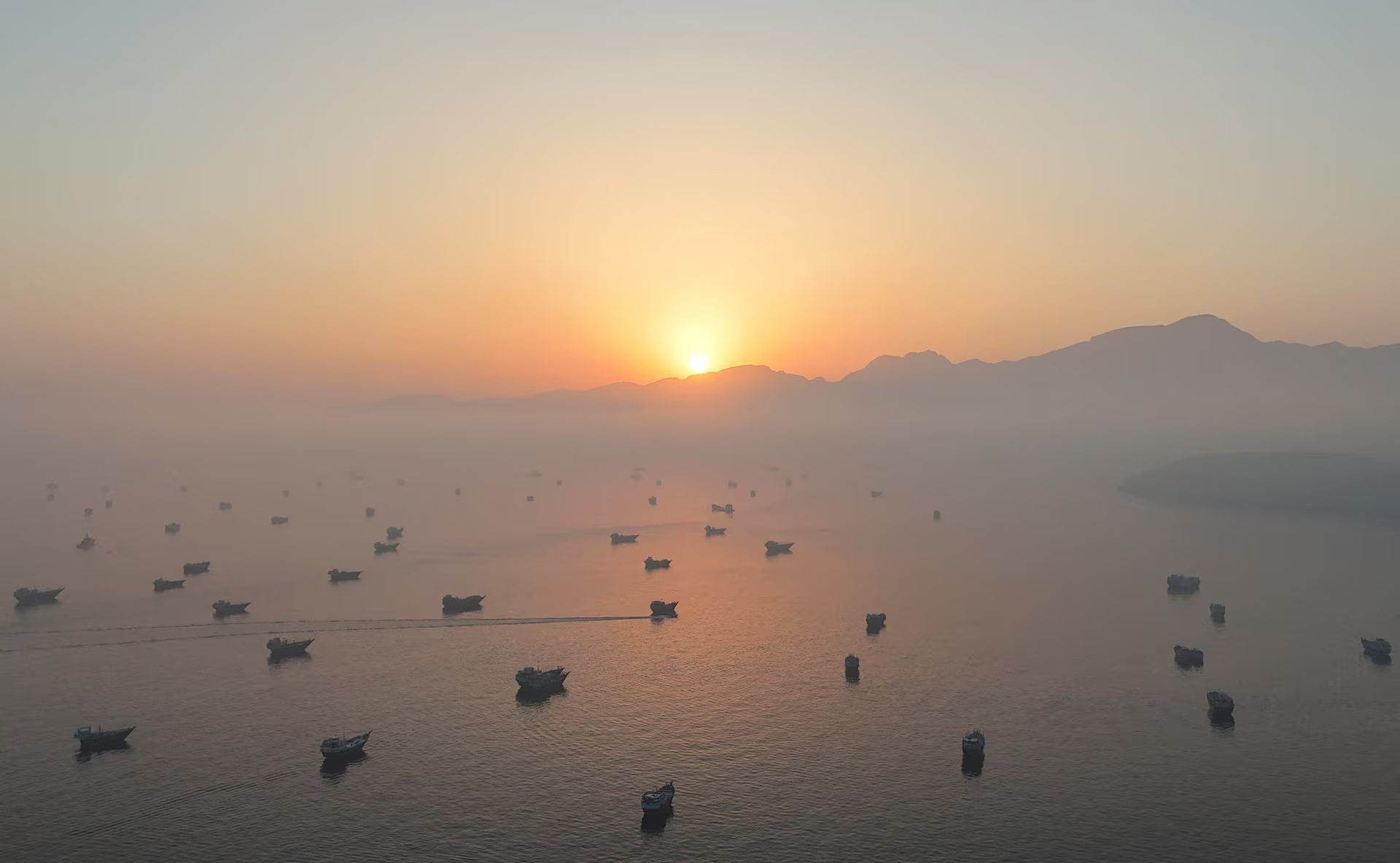
Iran’s threats toward commercial shipping have disrupted traffic through Hormuz, while Trump's counter-blockade has severely limited Iran’s oil exports.
As the war approaches the six-month mark, inflation in Iran has soared almost 80%, and its currency has depreciated nearly 30% against the dollar this year. Economists warn that the ongoing conflict could push Iran into one of its worst economic crises in history.