
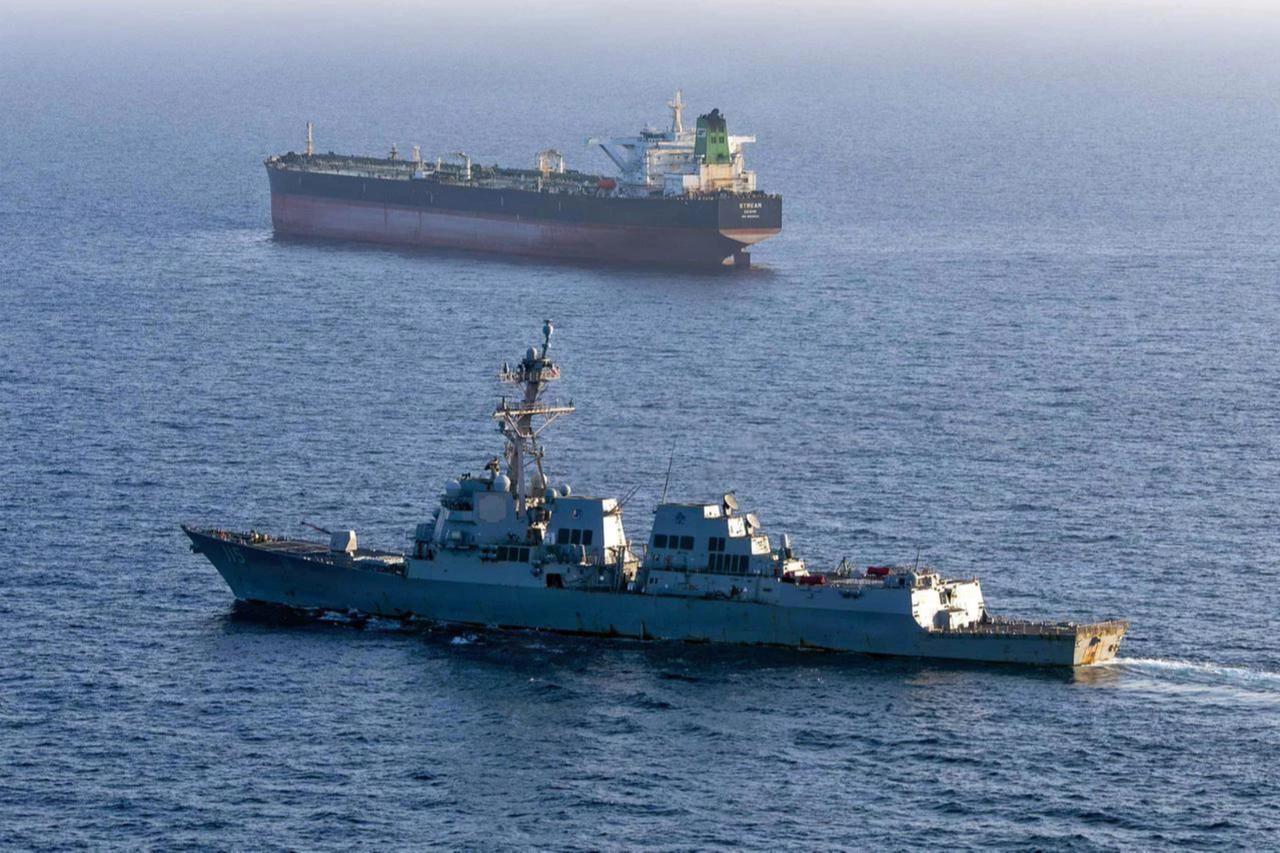
On Tuesday, President Donald Trump announced that the U.S. Navy has removed all mines from the international waters of the Strait of Hormuz. However, the multinational maritime security center, which monitors threats to commercial shipping, has indicated that mine danger areas are still active and clearance operations are ongoing.
In a post on Truth Social, Trump stated, “I have just been informed by the United States Navy that all mines have been removed and/or detonated from within the International Waters of the Strait of Hormuz.”
He warned Iran that “any ship or boat placing new mines will be immediately and systematically destroyed,” emphasizing that the U.S. has a “Zero Tolerance” policy toward new mine placements.
However, the Joint Maritime Information Center (JMIC) released an assessment on Tuesday that describes a more careful situation for merchant shipping.
According to JMIC’s advisory from August 25, there is still a “continued risk of drifting or uncharted mines in and near the Traffic Separation Scheme (TSS), and mine danger areas are still active.”
The center also mentioned that “clearance and mine-surveying operations continue throughout the Strait of Hormuz,” keeping the overall threat level in the area at SEVERE.
JMIC has advised vessels to get updated mine-danger coordinates and graphics from U.S. Naval Forces Central Command’s Naval Cooperation and Guidance for Shipping (NCAGS), warning that mine-risk reporting is still important in and around the Strait's TSS.
This difference in information is critical for commercial operators as they assess whether the situation in this crucial shipping area has improved enough to return to normal operations.
Trump’s statement specifically mentions mines in “International Waters,” while JMIC’s assessment covers the wider Strait and surrounding areas in the traffic separation scheme. It is possible that known mines in international waters have been cleared, but surveys for drifting or previously uncharted mines may still be ongoing in other danger areas.
Despite this, JMIC has not stated that the Strait is mine-free and continues to classify mines as an active navigational hazard.
This latest announcement is the second time in a week that Trump has claimed the mine threat has been essentially resolved.
On August 18, he stated that the Strait of Hormuz was open and that “all water mines” had been removed or detonated. At the same time, Iran maintained its restrictions on commercial traffic, while maritime security officials warned that conditions remained dangerous.
Trump’s recent statement goes further by directly attributing the mine-clearance claim to the U.S. Navy and threatening immediate military action against vessels that try to lay new mines.
He also added that U.S. Space Force assets are monitoring “every square inch” of the Strait and Iran’s nuclear sites.
The Strait of Hormuz typically carries about one-fifth of the world's oil supply, but commercial traffic has been heavily affected during nearly six months of conflict between the U.S. and Iran. Merchant vessels have encountered attacks, Iranian restrictions, and significantly increased security, freight, and insurance costs.
Despite U.S. claims that the waterway is open, Iran continues to assert control over vessel movement, stopping ships and enforcing its transit arrangements.