
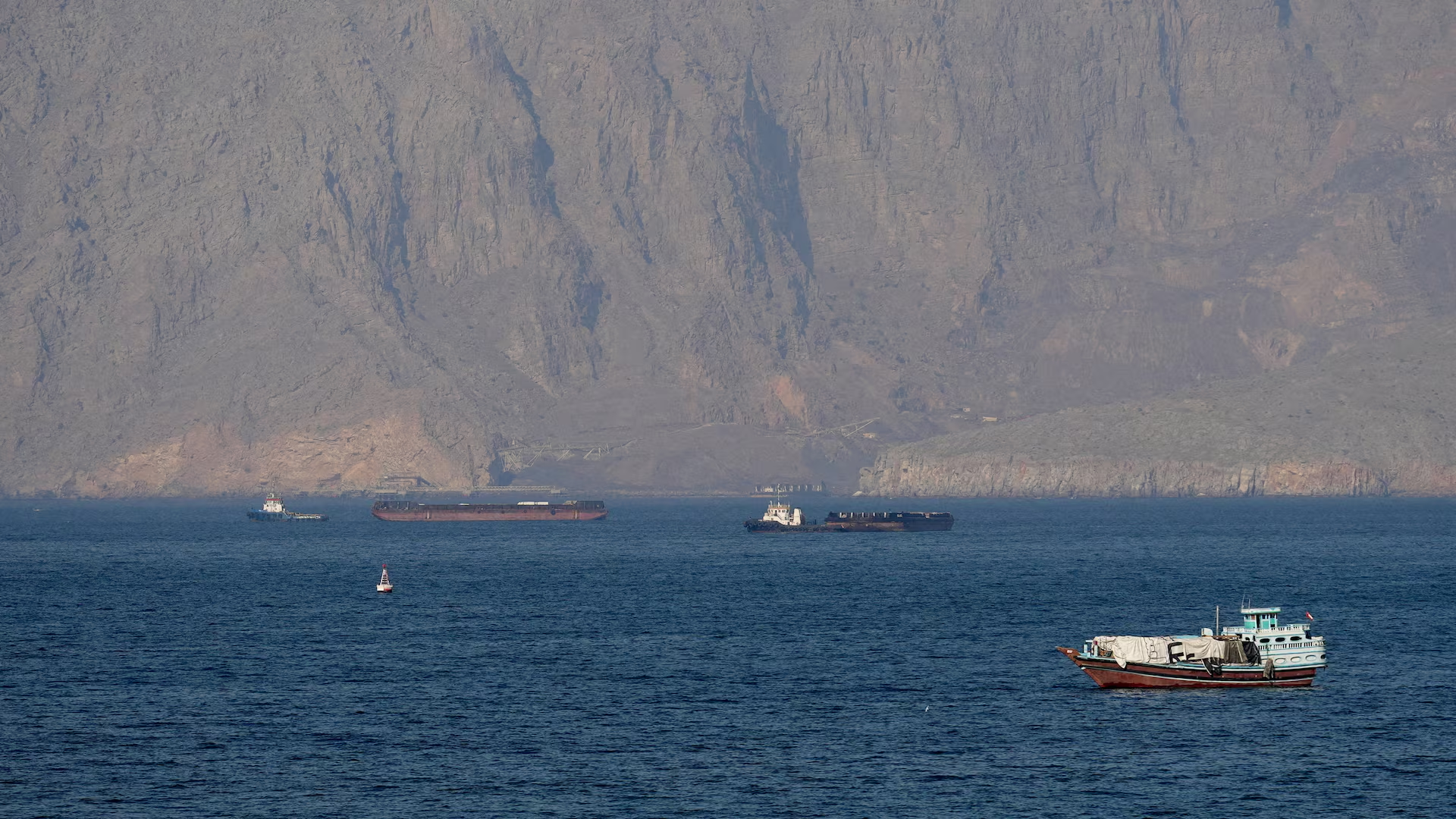
WASHINGTON, July 13 – On Monday, President Donald Trump stated that the United States might take control of the Strait of Hormuz and expects compensation for managing this crucial waterway.
“We’re going to maintain control over the strait, and we’ll likely operate it. We’ll be the guardian of the strait—maybe even call ourselves the guardian angel of the strait. And we should be paid for that,” he mentioned during a phone interview on Fox News’ “Fox & Friends” program.
The Strait of Hormuz is an essential route for global oil supplies and has become a key focus in the ongoing conflict. Iran's effective blockade has led to rising energy prices and heightened inflation concerns worldwide.
“We’re going to protect it. We expect to be compensated for that—quite a bit of money,” Trump added.
He emphasized, “We’re going to be reimbursed because other nations are quite wealthy. They support us, and we can’t be expected to shoulder this load for free.”
Following their announcement on Saturday to close the waterway due to what they termed an unauthorized passage, Tehran stated on Sunday that traffic remains halted and permits will be granted once “stability and calm” are restored.
“We had a deal. It was settled, but then they broke it. They always do. We’ve made ten agreements with them, and now we’re just going to hit them hard,” Trump remarked.
On Monday, Iran's Revolutionary Guards stated that normal shipping traffic through the strait could only resume if U.S. military actions in the area ended, warning that continued interference might cause more serious incidents in the global oil and gas market.
Over the weekend and into Monday, U.S. and Iranian forces exchanged heavy missile and drone attacks, with Tehran claiming to have targeted U.S. military facilities across the Gulf and continuing to keep the Strait of Hormuz closed, leading to an increase in oil prices.
These latest tensions represent a significant escalation in both the intensity and geographical scope of the attacks over the last week, raising doubts about a recent U.S.-Iranian agreement to reopen the strait and pause hostilities as both sides engaged in an additional 60 days of negotiations.