
WASHINGTON/MANAMA/DUBAI, June 25 - A heated argument over Iran between U.S. President Donald Trump and senior Republican Senator Bill Cassidy overshadowed the efforts of the U.S. Secretary of State to win support from Gulf allies for a new deal with Tehran.
During a closed meeting with Republican lawmakers on Wednesday, Trump and Cassidy had a strong disagreement. Cassidy argued that the administration needed to clarify the agreement made last week, which seemed to fall short of the goals Trump set at the beginning of the conflict.
Several Republicans present said that the discussion escalated into a shouting match as Cassidy sought more details about the deal. However, Senate Republicans later backed away, calling a late-night vote to block a resolution aimed at limiting Trump’s war powers regarding Iran. This resolution had previously gained ground but two party members changed their votes, resulting in a final tally of 50 to 47 against the measure.
Cassidy voted against the resolution after expressing gratitude to Trump's administration for a White House briefing on the war.
The blocked resolution would have required Trump to withdraw U.S. troops from actions against Iran unless Congress authorized their deployment.
“This vote puts Iran on notice,” Trump stated on social media after the vote.
RUBIO TRIES TO REASSURE GULF ALLIES
Meanwhile, U.S. Secretary of State Marco Rubio made an effort to reassure Gulf partners, who are skeptical about the deal. Concluding a trip to the Gulf in Bahrain, home to the U.S. Navy's Fifth Fleet, he told reporters that Gulf nations had significant concerns and wanted to stay informed about the peace agreement with Tehran, especially regarding the Strait of Hormuz.
Oil prices dropped back to pre-war levels after U.S. Energy Secretary Chris Wright noted that oil shipments through the strait were nearing levels seen before U.S. and Israeli strikes on Iran began on February 28, with over 20 million barrels passing through in the last day.
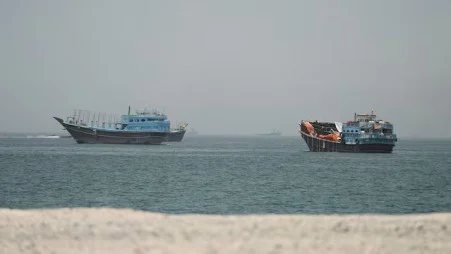
During the conflict, Iran gained control over this vital shipping route, disrupting oil supplies and unsettling global energy markets. Despite improved shipping rates, Iran stated it would continue to maintain its control, with its Revolutionary Guards warning boats to stick to approved routes and rejecting any new shipping paths not coordinated with Iran as unacceptable.
This warning followed Oman’s announcement of temporary shipping lanes through the strait in line with the U.N. shipping agency's plans, with data indicating that 57 ships have passed through since June 23 under the evacuation plan.
Rubio expressed that if Iran decides to threaten or block vessels in the strait, “then we’re going to have a problem,” affirming earlier statements that “no country on Earth has the right to charge for the use of international waterways” and that shipping fees would not be included in any agreement.
CONFLICTING ACCOUNTS OF THE DEAL
The ongoing conflict is weighing heavily on Trump as the November elections approach, with polling showing that only one in four Americans believe the war is worth the costs. Conflicting reports have arisen regarding the deal, attracting criticism of Trump both domestically and internationally.
Iran's leading negotiator, Mohammad Baqer Qalibaf, stated that claims made by the U.S. about Iran using its unfrozen assets to purchase American agricultural goods are incorrect. Disagreements also persist about financial incentives for Iran, inspections of nuclear sites, control of the Strait of Hormuz, and Israel’s operations in Lebanon.
The agreement allows for 60 days of discussions to resolve more complex issues, such as Iran's nuclear program.
REGIONAL SKEPTICISM
The deal has raised doubts in the Middle East, where many nations experienced attacks from Iran during the conflict and perceive the agreement as overly favorable to Tehran, which includes a proposed $300 billion fund and some easing of sanctions.
Washington's Gulf allies fear that the reconstruction fund could assist Iran in rebuilding its military, and the deal does not address Tehran's ballistic missile capabilities.
Under the agreement, Iran is required to allow free shipping through the Strait of Hormuz for 60 days, after which it has indicated it may impose tolls, something that Washington and its Gulf partners oppose.
CONFLICT IN LEBANON
On Thursday, Israeli and Lebanese officials denied reports of an Israeli withdrawal from southern Lebanon, despite a U.S. official suggesting that some troops had been pulled back as a goodwill gesture.
Israel has been engaged in conflict with Hezbollah in Lebanon since March 2, when the group attacked in support of Iran. Tehran has made a cessation of hostilities in Lebanon a key demand for any lasting peace agreement with the United States.