
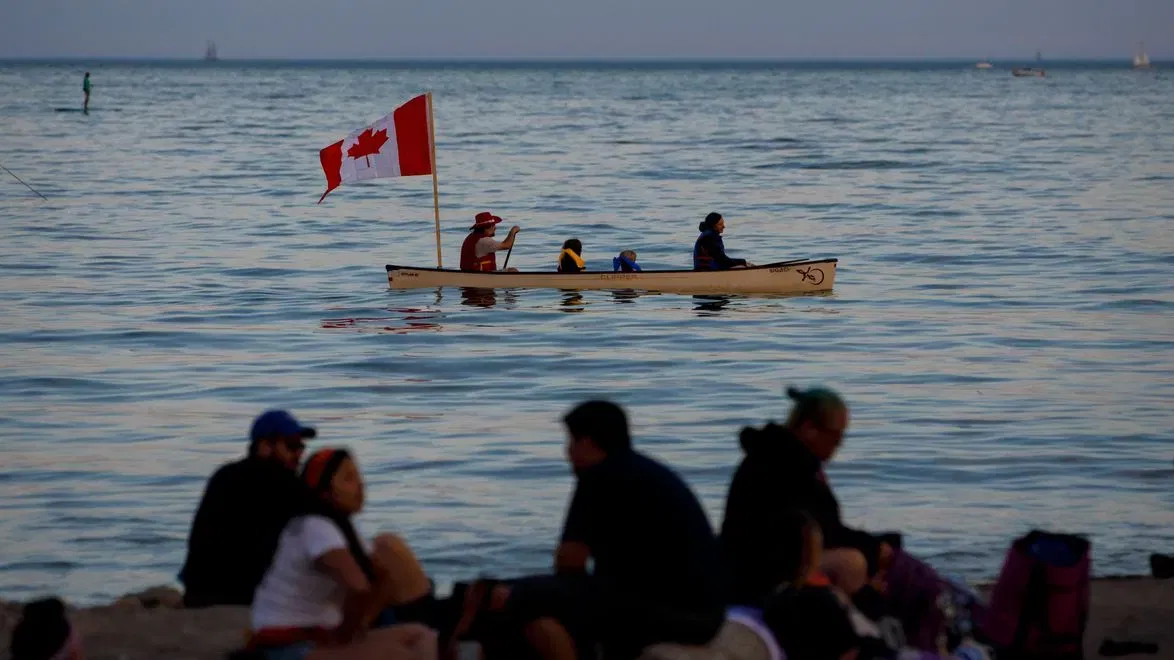
On Thursday, President Donald Trump instructed the U.S. government to rename Lake Ontario to “Lake America.” This move is part of his administration's ongoing effort to rename significant geographical features amidst a growing trade conflict with Canada.
Trump signed Executive Order 14420, which directs the Department of the Interior and the U.S. Board on Geographic Names to officially adopt the name “Lake America” for federal purposes. The order requires Interior Secretary Doug Burgum to update the Geographic Names Information System within 30 days and instructs federal agencies to remove all mentions of Lake Ontario from maps, contracts, and other official documents.
This name change will only apply to the United States. Lake Ontario is a body of water shared by New York and Ontario, Canada, with most of its northern shoreline and major cities like Toronto located in Canada. There is no global authority compelling Canada or other countries to use the new U.S. name.
The timing of the announcement highlights the broader strained relations.
Trump proposed the name change earlier this week as tensions increased following the breakdown of trade talks between the U.S. and Canada.
“The United States is seriously considering changing the name of Lake Ontario to Lake America as we don’t anticipate doing much business with Ontario anymore,” Trump stated on Tuesday.
The name change became official just two days later.
The executive order claims that the U.S. should get more credit for its role in protecting the Great Lakes, mentioning U.S. funding for environmental restoration and the Coast Guard’s icebreaking efforts.
“The United States is the greatest protector of the Great Lakes,” the order claims, noting that the Coast Guard operates nine out of the eleven icebreaking vessels on the lakes and that Washington has invested nearly $4 billion over the last decade to protect the Great Lakes ecosystem.
The order also includes a unique geographical argument, stating that since the deepest parts of Lake Ontario are in U.S. territory, “the United States claims most of the Lake’s volume.”
It emphasizes the lake's significance to U.S. shipping, military history, and industrial growth, mentioning locations such as Oswego and Sackets Harbor in New York and the lake's role as the easternmost Great Lake linked to the St. Lawrence Seaway.
Lake Ontario is essential to one of the world's largest shared transportation networks, connecting ports in both the U.S. and Canada to the Atlantic Ocean and facilitating the transport of grain, iron ore, steel, limestone, and other bulk goods.
The name change comes amidst a significant trade dispute between the two countries.
Negotiations between the U.S. and Canada fell apart last week, leading Washington to impose tariffs as high as 50% on about $20 billion of Canadian exports. Canada has responded with similar tariffs on U.S. goods set to begin on September 8. Trump has also warned of 50% tariffs on Canadian automobiles and parts starting January 1.
On Wednesday, Trump escalated his statements further, declaring it was “time to teach Canada a lesson.”
The order regarding Lake Ontario follows Trump’s executive order from January 2025, which renamed the Gulf of Mexico to “Gulf of America,” a change that U.S. federal agencies started using.
However, Washington's decision does not obligate other countries to adopt the new name. Canada can continue to refer to it as Lake Ontario, as can international groups, foreign governments, and private map makers.
Canadian officials had already rejected the name change before Trump signed the order. Ontario's Premier Doug Ford remarked that Trump could call the lake anything he wished, but Canadians would stick to calling it Lake Ontario.
Despite this, the White House order establishes “Lake America” as the official name in U.S. federal government documents, adding another layer to the ongoing trade conflict.