
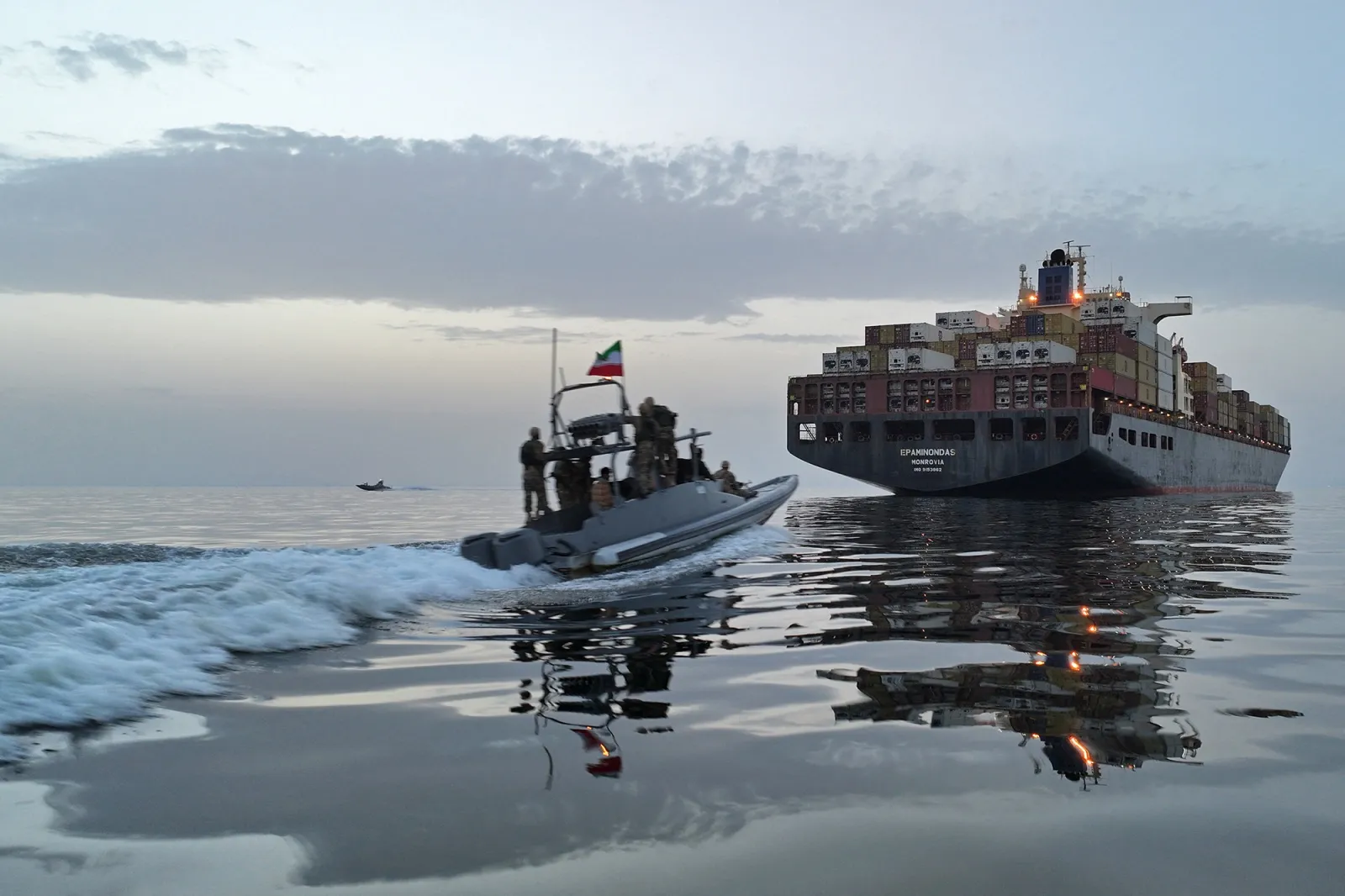
(Bloomberg) — Iran's speedboats, missiles, drones, and mines continue to pose a significant threat in the Strait of Hormuz, despite ongoing strikes from the world's most powerful navy.
Five months into the conflict, the US is realizing the limits of its military might against a determined enemy in this crucial global shipping channel. The reduction in shipping traffic through the strait is driving up oil prices, which adds pressure on President Donald Trump.
According to Steve Wills, an analyst with the Navy League, while Iran may not have total control over Hormuz, they can still threaten safe shipping routes enough to influence prices and insurance rates.
Shipping companies are hesitant to navigate the waters even with US support, as Iranian attacks on commercial vessels make these journeys risky.
Months after Trump claimed the destruction of Iran's navy, the US has been carrying out daily strikes to limit Iran’s ability to endanger maritime safety in the strait. Recently, US forces targeted a supertanker deep in the Persian Gulf as part of efforts to block Iranian ports.
Oil prices have been steadily rising due to the ongoing attacks from both sides, with Brent crude reaching $85, the highest price since before the US and Iran declared a ceasefire last month.
Fatih Birol, Executive Director of the International Energy Agency, warned in a recent interview, "If the Strait of Hormuz remains closed, it could create significant challenges for global economies, including those in the region and in developing nations and Asia." He stated that the strait needs to be "fully open, unconditionally open," and it's a matter of weeks, not months.
While Trump asserted earlier in the week that the strait was open, despite Iranian intentions to close it, some officials in his administration have acknowledged the limits of US capabilities to protect large, slow-moving ships in these narrow waters.
Vice President JD Vance, in an interview with Joe Rogan, stated, "You can bomb their assets and disrupt their radar, but it’s still easy to target ships in the straits. We need to be willing to engage in talks to solve the issue."
Publicly, White House officials downplayed the spike in oil prices, with spokeswoman Karoline Leavitt describing the market as “rather stable” on Thursday.
Nevertheless, Iran's small boats and mines have proven dangerously effective despite their limited numbers. Centcom head Brad Cooper labeled them a "nuisance capability" in May, stating that earlier US assessments indicated that half of Iran's small attack boats and over 95% of their sea mines had been destroyed.
The exact number of Iran's "mosquito fleet" that remains operational is unclear, though the US reported striking over 60 boats on July 7.
Regarding mines, US officials admit more action is needed. Chief of Naval Operations Admiral Daryl Caudle mentioned last week that "there's no chance they’re not there."
Fully securing the strait would likely require a much larger military effort, a move the White House has so far avoided due to public resistance to the conflict.
Retired Marine General Frank McKenzie, a former Centcom head, told Bloomberg Radio in April that the US Navy "can open and maintain control of the strait if necessary."
However, this would come at a "considerable cost" in lives and would divert resources from other parts of the world, warned Emma Salisbury, a senior fellow at the Foreign Policy Research Institute in Philadelphia.
In its latest statements, US Central Command highlighted attacks on Iranian-controlled islands near the strait — Abu Musa and Greater Tunb — as well as "coastal surveillance facilities."
Caitlin Talmadge, a national security professor at MIT, noted that the administration "seriously underestimated Iran’s willingness and ability to close the strait," as well as the resilience and innovative use of their weapons systems.