
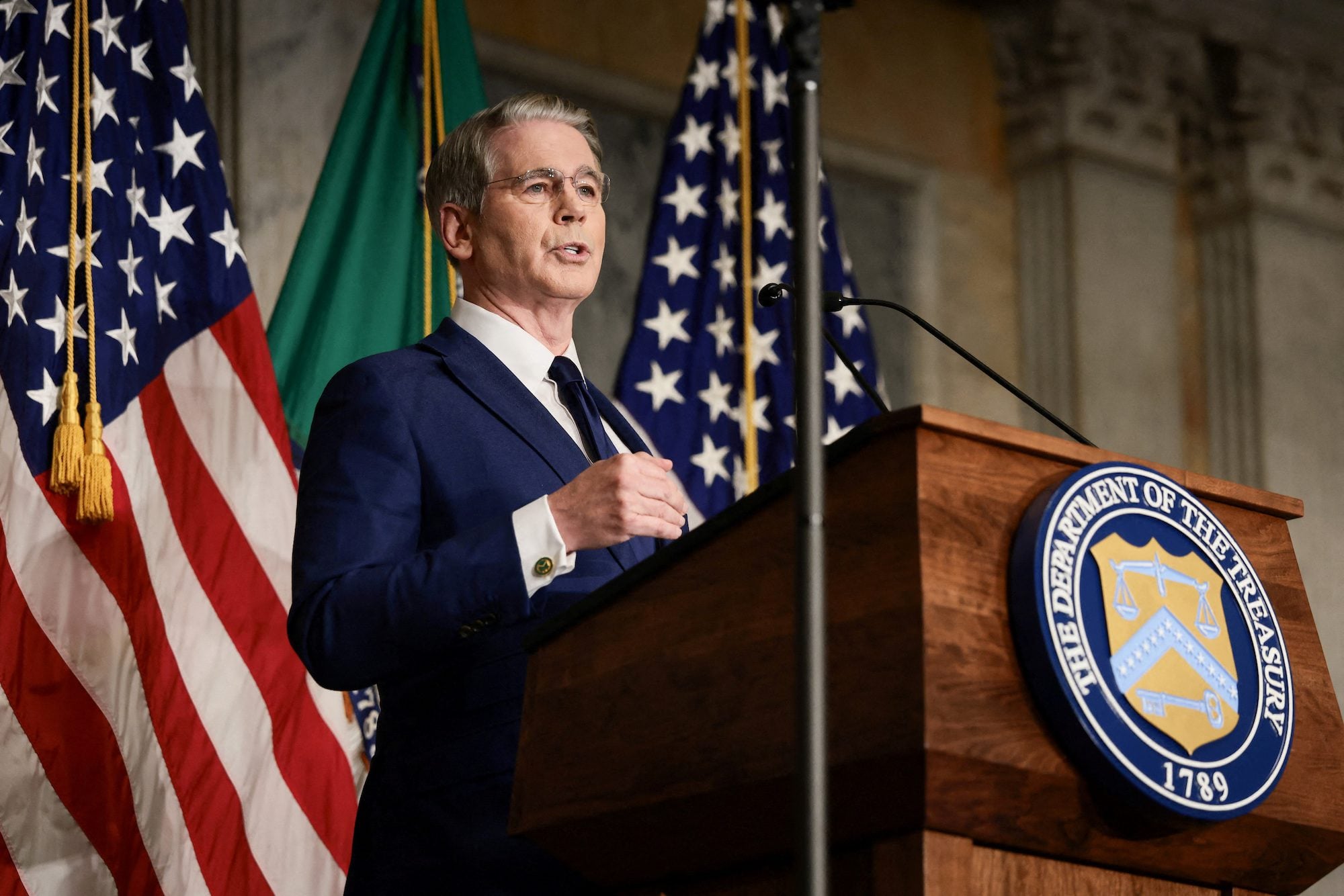
On Monday, the Trump administration announced a major economic initiative against Iran, extending the threat of secondary sanctions to the shipping industry. This campaign specifically targets many companies, individuals, and vessels involved in transporting Iranian oil.
The U.S. Treasury Department named this initiative “Operation Economic Outcast,” marking the start of an ongoing effort to cut Iran off from the global economy. Treasury Secretary Scott Bessent described the campaign as an economic “D-Day,” aiming to stop the revenue that supports Tehran.
This action comes after President Donald Trump's warning last week that countries trading with Iran could face economic isolation, as Washington ramps up pressure on Tehran amid ongoing conflicts and shipping disruptions in the Strait of Hormuz.
The maritime sector is a key focus of this new campaign.
The Treasury issued five new sanctions covering digital assets, technology, gold, aviation, and shipping. These new rules significantly expand the government's ability to sanction foreign companies and individuals engaged in or providing services to these sectors of Iran’s economy.
The Treasury accused Iran's national shipping line of transporting components for weapons and missile equipment, and its national tanker service of moving oil for the government and military.
The Office of Foreign Assets Control also sanctioned nearly 60 entities, individuals, and vessels in various locations. This includes companies and ships that the Treasury claims are involved in Iranian oil exports and the country’s so-called shadow fleet. These networks span the United Arab Emirates, Hong Kong, China, Singapore, Switzerland, and Europe.
These sanctions extend beyond just the designated companies. The Treasury indicated that U.S. officials are working with governments around the world, giving countries specific timelines to end Iran-related activities identified by the U.S. Companies that help Iran evade sanctions or launder money could lose access to the U.S. financial system, while the administration plans to enhance enforcement of secondary sanctions.
Targeting the Shadow Fleet and Bunkering Networks
One of the maritime targets is Mohammad Ahmed Suhil Fattouh, a Syrian national based in the UAE, known as “Captain Hamzah.” The Treasury labeled him a long-time broker for vessels associated with sanctioned Iranian interests, including the National Iranian Oil Company and entities linked to the Islamic Revolutionary Guard Corps-Quds Force.
The Treasury also sanctioned another UAE-based individual, Ivan Obukhov, and his company Foscom FZE. They accused Obukhov of enabling Iranian military oil shipments and processing over $100 million in cryptocurrency payments in 2023 to support oil sales for the IRGC-QF.
Singapore-based Azure Shipping Pte. Ltd. was sanctioned for allegedly coordinating ship-to-ship services for sanctioned vessels with the National Iranian Tanker Company.
The sanctions also targeted a network of bunkering companies operating from Hong Kong and Dubai. The Treasury stated that Shipoil Limited, Shipoil FZCO, and Ship Fuels and Trade DMCC worked with sanctioned Iranian entities to provide fuel to vessels transporting Iranian crude and petroleum products.
The Treasury mentioned the tanker MEDNA (IMO 9281683), noting that the companies arranged bunkering services for this sanctioned vessel in 2026; the tanker has previously carried crude for Iran's Armed Forces General Staff.
Blocking Five Additional Tankers
OFAC also targeted five tankers accused of transporting Iranian crude oil, liquefied petroleum gas (LPG), and other petroleum products:
- SIFRA (IMO 9185346), a Botswana-flagged LPG tanker
- G SILVER (IMO 9139696), a Cameroon-flagged LPG tanker
- QUANTUM HOPE (IMO 9233650), a Vanuatu-flagged crude tanker
- VOYAGE ELITE (IMO 9286138), a Gambia-flagged crude tanker
- TELA (IMO 9189110), a Gambia-flagged crude tanker
The Treasury stated that QUANTUM HOPE and VOYAGE ELITE have transported millions of barrels of Iranian oil to China since early 2026, while the other tankers have brought Iranian crude and petroleum products to markets in Southeast Asia. These vessels were classified as blocked property, and their owners or operators were designated for involvement in Iran's petroleum sector.
The new measures heighten compliance risks well beyond just the vessels involved. Foreign financial institutions that knowingly facilitate significant transactions with designated entities could face restrictions on their access to U.S. correspondent or payable-through accounts.
This campaign comes at a time when the maritime industry is facing significant risks related to Iran, including disrupted tanker movements through the Strait of Hormuz, attacks on commercial vessels, and sharply rising freight and insurance costs.
The Treasury made it clear that the U.S. plans to impose even more pressure by increasing the financial consequences for shipowners, charterers, traders, bunker suppliers, brokers, and other maritime service providers who continue to facilitate trade with Iran.