
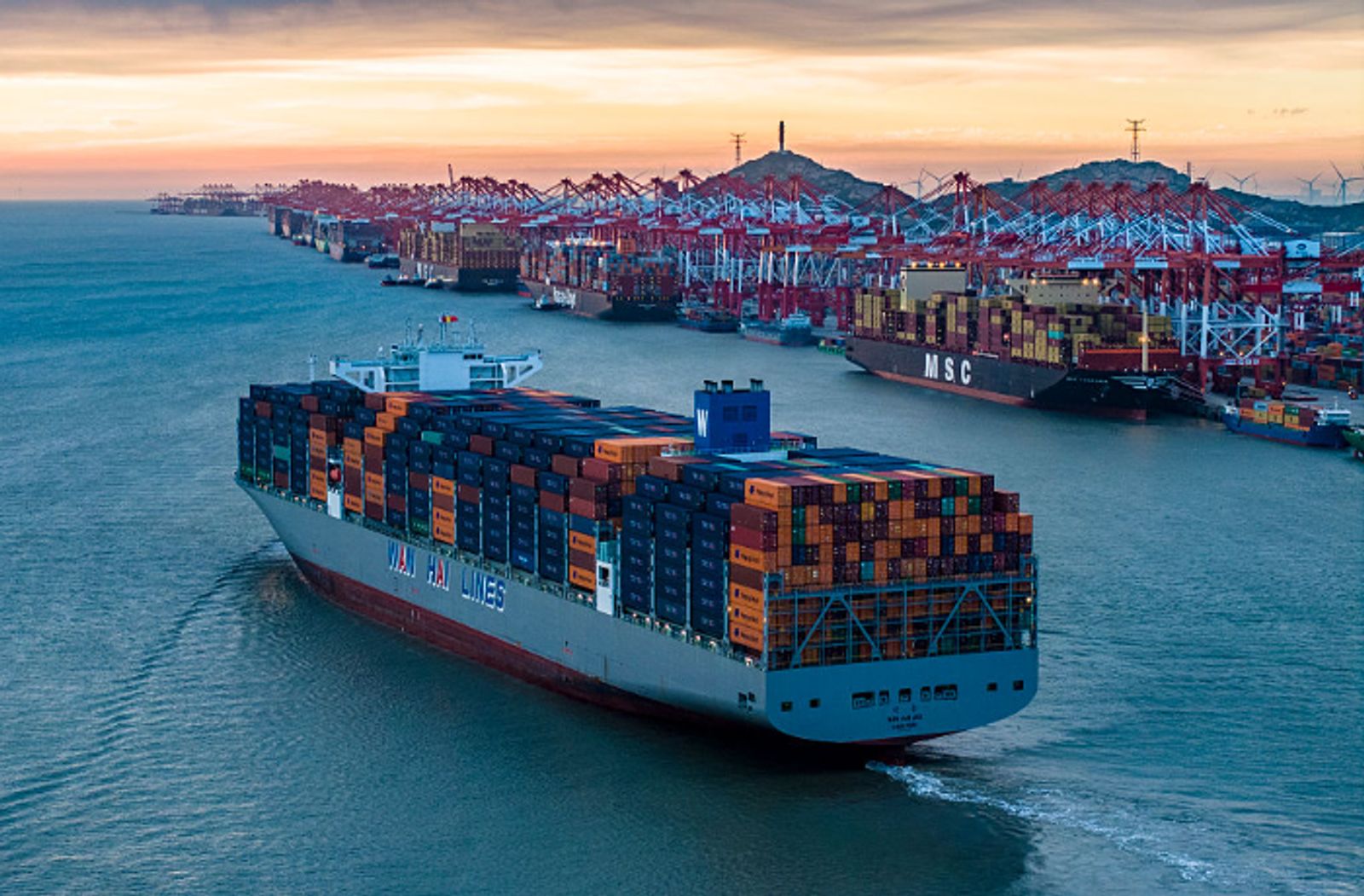
Global container spot rates increased for the second week in a row as limited capacity and strong demand drove prices higher, according to Drewry.
The Drewry World Container Index rose by 4% this week, reaching $4,526 for a 40-foot container. This rise was mainly due to higher rates on routes from Asia to the United States, which balanced out lower rates on Asia-Europe routes.
Spot rates from Shanghai to New York surged by 9%, now at $9,507 for a 40-foot container, while rates from Shanghai to Los Angeles also went up by 9% to $6,802.
Drewry noted that demand on Transpacific routes remains strong as shipping companies manage their available capacity by skipping sailings and reducing capacity. Next week, seven blank sailings have been announced.
In August, capacity for shipping from Asia to the U.S. East Coast decreased by 9%, while capacity to the U.S. West Coast slightly fell by 0.4%, resulting in less available space.
This situation has allowed shipping companies to keep pushing rates upward, even during the usual peak shipping season. Drewry anticipates that Transpacific rates will stay stable next week due to limited capacity.
Additional costs may be on the horizon for shipments heading to the East and Gulf coasts. Several carriers have announced extra surcharges for shipping through the Panama Canal starting in September, which could further increase shipping expenses.
The situation on the Asia-Europe routes is somewhat different.
Spot rates from Shanghai to Genoa dropped by 2% this week to $4,955 for a 40-foot container, while rates from Shanghai to Rotterdam fell by 1%, now at $4,401.
Carriers are also managing capacity on these routes, with two blank sailings scheduled for next week. Although port congestion has improved at both ends of the route, it remains high. Drewry reported average waiting times for vessels of 32.3 hours in Shanghai and 25 hours in Rotterdam during week 33.
Drewry expects freight rates on the Asia-Europe route to remain relatively stable next week.
The overall East-West container market is still affected by geopolitical and operational uncertainties. The expiration of the U.S.-Iran memorandum regarding the Strait of Hormuz has created ongoing tensions, while some container carriers have cautiously resumed certain transits through the Red Sea and Suez Canal, thanks to improved security assessments.
Congestion at major ports in Asia and Europe, along with labor issues at German ports, is impacting schedule reliability.
For the time being, carriers are continuing to manage capacity and implement surcharges to maintain pricing. Drewry recommends that shippers book early and allow extra time in their supply chains to minimize the risk of cargo rollovers and delays.