
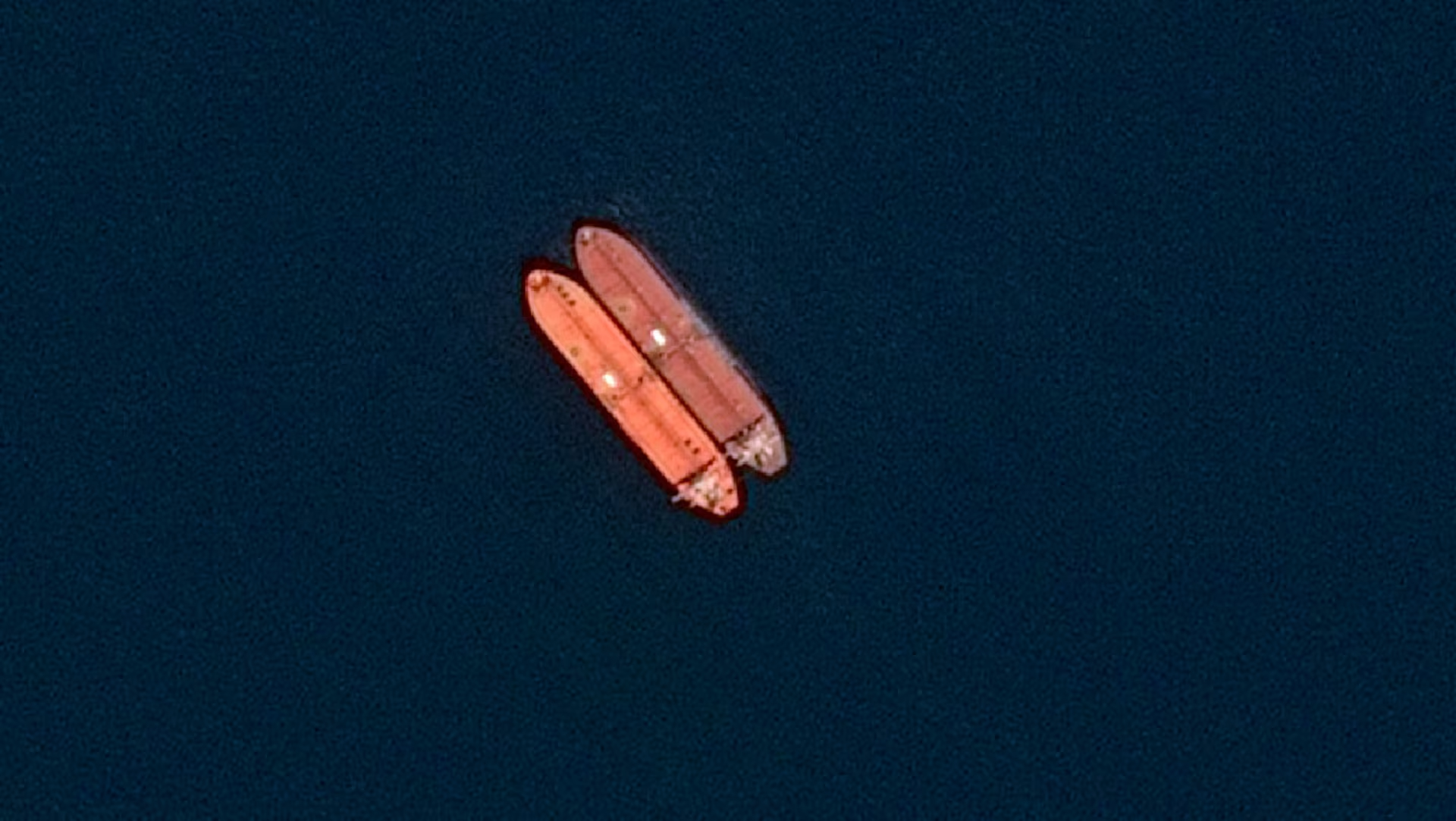
DUBAI, June 16 (Reuters) – The U.S. military is overseeing secret ship-to-ship oil transfers to maintain energy exports from the Gulf. This involves the use of drones, helicopters, and aerial surveillance to guide tankers to awaiting vessels.
The operation, conducted near the Strait of Hormuz, uses a shuttle method to evade sanctions. Eleven sources familiar with the operation identified two main transfer locations: one off the coast of Fujairah in the UAE and another near Sohar port in Oman. This operation began in early May, involving at least 92 ships, according to shipping data and satellite images.
On June 11, satellite images showed 17 pairs of ships conducting oil transfers simultaneously at these locations.
An Apache helicopter that was shot down by Iran on June 9 was reportedly involved in this operation, as per four sources, including a former U.S. official. Reuters noted that on the day of the incident, six pairs of tankers were sighted in a concentrated area near Sohar port.
While the specific role of the Apache in the operation remains unclear, a U.S. defense official stated that no Central Command forces are engaged in offshore oil transfers. U.S. officials confirmed that the drone boat rescued both crew members from the downed helicopter.
This operation's scale, methods, and Apache's involvement have not been publicly reported before. The White House directed inquiries to Central Command, while Iran has not responded to questions regarding the oil transfers.
The transfer sites in the Gulf of Oman are close to boundaries recently established by a new Iranian authority overseeing the Hormuz Strait. Ships that do not adhere to Iranian directives face threats of drone and missile attacks from the Islamic Revolutionary Guard Corps.
During the U.S.-led operation, Fujairah port has experienced repeated Iranian attacks. Over the recent weekend, an “unknown projectile” struck a tanker near Oman, though the British maritime risk group Vanguard reported no environmental damage, and it is unclear if the tanker was involved in a transfer.
In response to the U.S.-Israeli conflict, Iran has effectively closed the Strait of Hormuz, through which about 20% of global oil supply typically passes. This has caused a significant disruption in global energy supplies and spurred inflation worldwide.
The ship-to-ship transfers, although risky and not very efficient, seem to align with efforts to restore normal oil flow from the Gulf. Recently, President Trump mentioned that the Strait of Hormuz would reopen under a peace framework with Iran, but details remain unclear. It is uncertain if this announcement has impacted the ongoing oil transfers.
A Reuters investigation on May 20 revealed that Iran has set up its own system for directing ships through the Strait, involving checkpoints, diplomatic agreements, and sometimes fees.
STAGGERED DEPARTURES AND WAYPOINTS
According to eight sources, including a private security contractor, U.S. military controls the transfer operations fully.
Tankers are required to reach predetermined meeting points before entering the strait and must stagger their departures to maintain a distance of about 3,000 to 4,000 meters. Their transponders are turned off, and lights are dimmed to avoid detection.
Specific waypoints let the U.S. military track the tankers' progress, though it’s clear that American forces monitor the situation closely.
As the tankers navigate through the strait, just beyond the zone Iran claims control over, they pull alongside Very Large Crude Carriers (VLCCs) to start the oil transfers. This process takes between 24 and 40 hours to complete. Once empty, the tankers return through the strait, while loaded VLCCs continue their journey.
The operation is feasible because some shippers are still willing to navigate through the strait to deliver oil, despite the threat from Iran.
However, the operation carries risks. “There is always uncertainty about when Iran might use drones or gunboats to stop even these ships from passing through the strait,” noted Noam Raydan, a senior fellow at the Washington Institute who specializes in maritime risk and reviewed the findings.
Iran has been using ship-to-ship methods for years to evade sanctions, as this approach conceals the oil's origin. They often operate one pair of ships at a time to avoid detection, given their smaller prewar export levels. The U.S.-led efforts allow Gulf producers better protection from Iranian retaliation, enabling them to transport crude and petroleum products to global markets.