
As governments work to protect oceans worldwide, regions with strong environmental laws can provide models for lasting change, according to Thordon Bearings.
On January 17, 2026, the High Seas Treaty officially took effect, marking a significant shift in ocean protection. This treaty, also known as the Biodiversity Beyond National Jurisdiction (BBNJ) Agreement, is the first global legally binding framework aimed at preserving marine biodiversity in international waters. It has established new rules for environmental impact assessments and the creation of marine protected areas, all in a bid to advance sustainable development goals.
While this initiative is commendable, many governments have already acted decisively to safeguard sensitive marine environments at national and regional levels. A prime example is the Great Lakes, which lie between the US and Canada and contain about one-fifth of the world's surface freshwater. These vital lakes have been under strict environmental regulations for decades, serving as a model for broader international efforts like the High Seas Treaty.
Additional regional regulations also apply to operations in the Great Lakes. In 2013, the US Environmental Protection Agency (EPA) implemented the Vessel General Permit (VGP) regulations, which outline a comprehensive set of requirements for commercial ships operating in US waters. Aimed at minimizing environmental harm and promoting sustainability, VGP rules address various types of discharges related to normal vessel operations, including ballast water, bilge water, grey water runoff, and leaching from hull coatings. Because the Great Lakes cover around 244,106 km2 (94,250 m2) and are governed by both the US and Canada, all vessels in the region must adhere to these VGP rules.
One of the key aspects of the VGP regulations is the tight control over oil-to-sea interfaces, including stern tubes, bearings, and seals, to prevent oil pollution during routine ship operations. Vessels longer than 79ft (24m) navigating the Great Lakes are required to use environmentally acceptable lubricants (EALs). These lubricants must be biodegradable, minimally toxic, and non-bioaccumulative, meaning they do not build up in the tissues of aquatic life. This is crucial since even small oil leaks from ship bearings could lead to long-term contamination of the Great Lakes' food chain.
An “annual Amoco Cadiz”
Due to these regulations, many ship operators are exploring and adopting seawater-lubricated bearing systems, which completely eliminate the risk of oil leaks. Not only are these systems better for the environment, but they can also save money by extending maintenance intervals and reducing the need for inspections and compliance documentation. As a result, some vessel operators exempt from the VGP are voluntarily switching to water-lubricated bearing systems.
The Great Lakes are particularly important to Thordon Bearings, a Canadian company based in Burlington, on the shores of Lake Ontario. While Thordon serves customers worldwide, its water-lubricated bearing systems are notably installed on over 120 vessels operating in Great Lakes, mainly bulk carriers known as 'Lakers,' as well as larger US vessels and smaller Canadian self-unloaders. Prominent early adopters of self-lubricating bearings include Algoma Central, American Steamship, Lower Lakes Towing, Canada Steamship, and Interlake Steamship.
Craig Carter, Vice President of Business Development at Thordon Bearings, states: “Our polymer bearing systems help reduce operating costs, extend service life, work well under harsh conditions, and eliminate the risk of oil and grease discharges into our rivers, lakes, and oceans. The economic and environmental benefits are significant.” Research presented at the IMO indicates that conventional oil-lubricated propeller shafts release about 80 million liters (21 million US gallons) of oil pollution into oceans and lakes each year.
In fact, that figure could be much higher since crew members often top up oil in the header tanks, which are the reservoirs supplying oil to the metal bearings. “Oil-lubricated propeller shafts are often considered closed systems, yet they don’t always function completely leak-free. If they did, then a ship’s oil header tank, which holds 2,000-3,000 liters (528-792 US gallons) of oil, wouldn’t require annual oil top-ups,” Carter explains.
Carter also highlights the maritime industry's unusual focus on reducing air emissions like CO2, NOx, and SOx while largely neglecting the effects of 'invisible' leaks from oil-lubricated propeller shaft bearings and stern tubes submerged beneath the waterline.
“To promote ocean sustainability and enable truly zero-emission ships, the industry needs to replace oil-lubricated shaft lines with seawater-lubricated systems,” Carter warns. “The environmental impact of oil-lubricated stern tubes needs serious attention from the start of the supply chain to the end of the journey.”
Tightening regulations
The environmental regulations impacting the Great Lakes extend beyond VGP rules. They also involve oversight from agencies like the US Coast Guard (USCG), Canadian Coast Guard (CCG), Environment Canada (now part of Environment and Climate Change Canada), and Transport Canada. The Fisheries Act is a significant Canadian federal law that prohibits anyone from releasing a “deleterious substance” (like oil, grease, or treated water with pollutants) into waters where fish are present. Even minor oil leaks from stern tubes can be considered a release and can result in severe fines or prosecution.
It’s no surprise that many operators in the Great Lakes are also opting for water-lubricated bearings. For example, Lower Lakes Towing recently replaced an oil-lubricated system on its bulk carrier Kaministiqua with Thordon COMPAC water-lubricated propeller shaft bearings, a Water Quality Package (which supplies water from the sea chest to the propeller shaft bearings), and SXL grease-free rudder bearings.
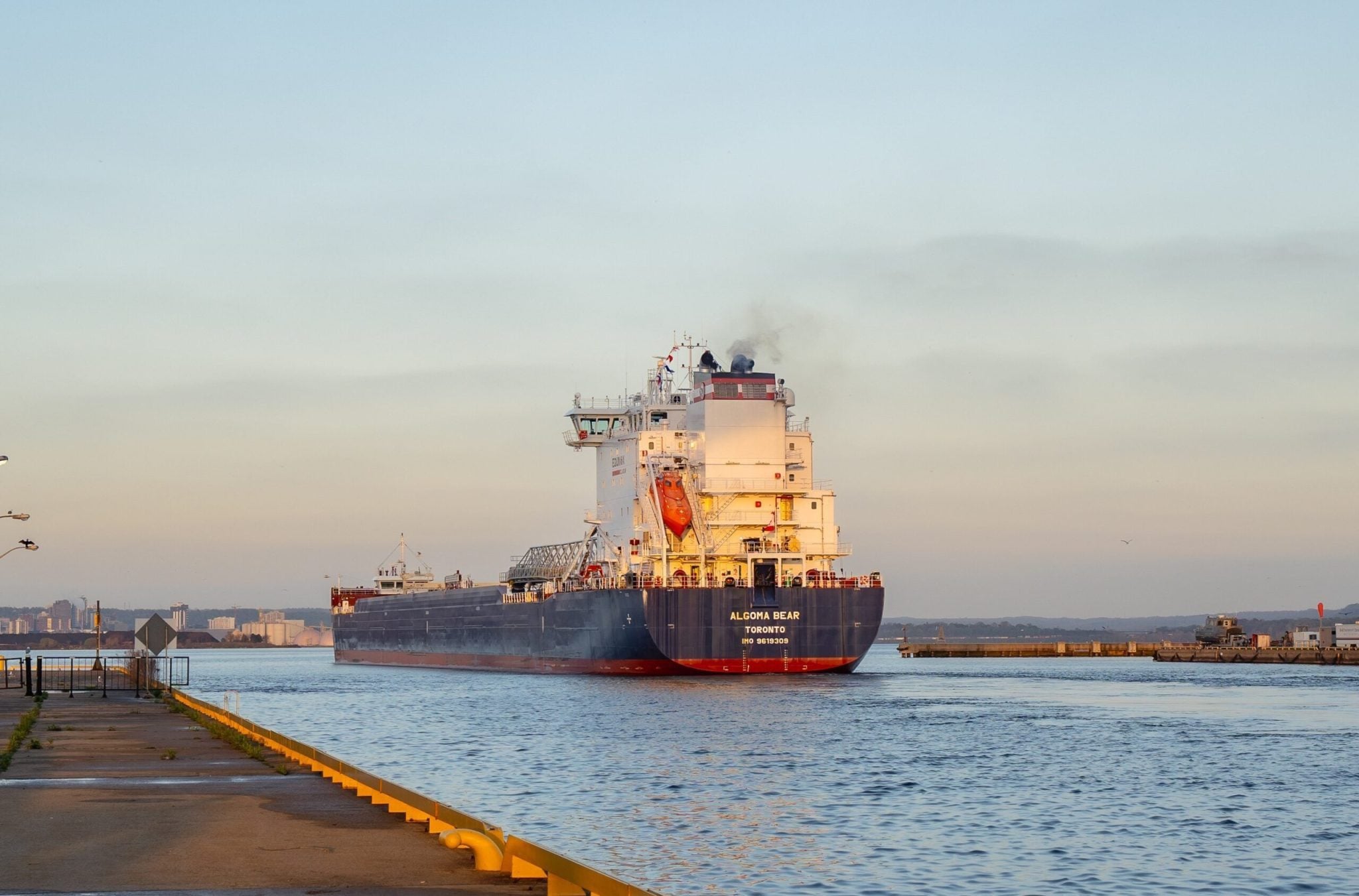
Likewise, the bulk carriers Captain Henry Jackman and Algoma Bear from Algoma Central Corporation, measuring 225m (738 ft.), have been equipped with Thordon’s COMPAC stern tube bearings, ThorShield shaft corrosion protection, and Water Quality Packages since their entry into service on the Great Lakes-St. Lawrence Seaway in 2021 and 2024, respectively.
The environmental measures introduced in the Great Lakes, especially the shift to water-lubricated bearings, demonstrate that proactive regional regulations can drive significant technological adoption and economic benefits without compromising safety or trade. As the High Seas Treaty and upcoming global frameworks aim to protect the world's oceans, the example set by the Great Lakes serves as a powerful reminder that consistent local action can lead to meaningful, scalable change on a global scale.