
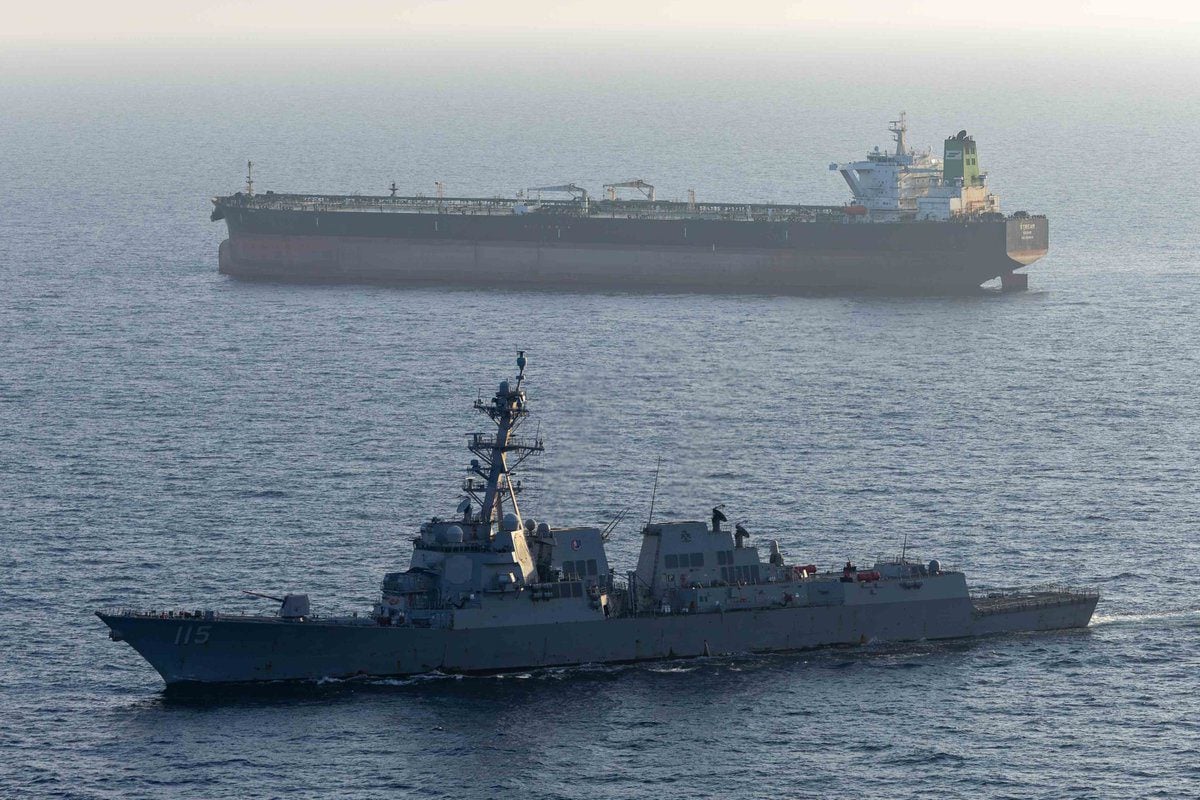
For years, we've anticipated that artificial intelligence would bring major efficiencies to global trade. When the Strait of Hormuz closed, it seemed that moment had arrived. However, the savings didn't lead to lower prices for consumers. Instead, they were consumed by geopolitical issues and leveraged against rivals. This indicates that the key issue isn't whether AI can increase efficiency, but rather who benefits from it.
At 2 AM on March 2, a US flagged tanker, the Stena Imperative, was docked in Bahrain when it was hit by projectiles fired from Iran. One of the explosions killed a yard worker. This marked the first attack on an American merchant ship in this conflict, and it certainly wouldn't be the last. Before dawn, war risk underwriters began canceling insurance coverage across the Gulf via radio. A vessel that was once a profit-generating asset had suddenly become a liability.
Trusted voices like economists, energy analysts, and geopolitical experts warned that this situation would spell disaster for the global economy. Iran had deployed mines, and the extent was unknown, in waters carrying a fifth of the world's oil demand. The Supreme Leader of Iran was killed in the initial hours of the US and Israeli air assault. Missiles rained down on military bases across the Gulf, including Bahrain and Al Udeid. The Royal Navy had given away its mine-hunting ships in exchange for drones and had no warships available for deployment. Brent crude oil prices soared past $100 for the first time since 2022 and climbed to over $120. Traders predicted prices could reach $200. The UN estimated that 45 million people could face starvation, while the UK’s foreign secretary warned of a looming famine.
Yet, against all odds, that catastrophe didn't materialize.
Prices rose, inflation hit a three-year high, and US service members, sailors, and countless Iranians lost their lives. Iran's Navy was decimated. However, the predicted famine never reached grocery stores in Ohio, and there was no panic buying of basics. By late May, even with the Strait still shut, Brent prices had dropped by a fifth from their peak. Store shelves remained stocked. Today, months later, Hormuz is still closed, but food and fuel supplies continue flowing, and those in authority haven’t been transparent about how this happened.
Rather than avoiding disaster, the crisis was managed. Surprisingly, the United States, which imports little oil through the Strait, emerged as the world's largest energy exporter, and the wealthiest nation is in no hurry to reopen the strait.
What Everyone Was Waiting For
The shipping industry is notoriously resistant to change. It's been around longer than corporations or insurance contracts and tends to adopt new technologies only when faced with severe consequences. Historically, the industry transported oil in single-hull tankers until enough of them broke apart. There was resistance to new technologies like container shipping, radar, and satellite tracking until those who resisted went out of business. Remarkably, it took about a century to transition fully from sail to steam power.
So, when tech advocates claimed that artificial intelligence would revolutionize trade by making it more efficient—cheaper shipping, smarter routes, instant digitalization—the reaction on the docks was indifference. Then, however, circumstances forced the industry to act.
There's a thought I can't shake: In the most critical choke point crisis since the 1970s, not a single gas station in the US resorted to rationing.
But how did we dodge catastrophe?
What if the efficiencies promised by AI really did arrive, and the evidence is the disaster that never occurred—the famine that didn’t reach the public? But that also serves as a warning, since these efficiencies never actually benefited consumers directly. They didn’t translate to lower fuel prices or cheaper groceries. What if AI delivered efficiencies that were absorbed by geopolitical conflicts and utilized by Washington as leverage over nations that depend heavily on that vital waterway? This was an argument I presented back in March in a piece titled The Hormuz Hypothesis, and my conviction has only deepened since then.
Every day, I see forecasts about how AI will reshape our world, yet nobody seems to be asking if it already has.
And if it has... where are all the promised benefits?
They were siphoned off by other factors.
This is more than just a story about one strait; it’s not entirely a maritime issue. There's no clear prediction about the economic impact of AI since very few industries have weathered real crises while utilizing the technology. The shipping industry just did. It underwent a stress test that banks, hospitals, and power grids are still awaiting, and the outcome is neither what the optimists nor the pessimists anticipated. It’s simply more of the same: gradually increasing inflation.
So if you're involved in AI regulation, speculating on AI stocks, or lying awake worrying about job security due to AI, don't focus on a tech conference in California or podcasts. Pay attention to the closed strait in the Persian Gulf, where the central question shifted from whether AI generates efficiency to a more vital one: when it does, who claims the benefits?
There are three views on this issue. Supporters of Trump’s administration argue that the efficiencies were effectively utilized to eliminate a dictator and dismantle nuclear facilities.
Critics counter that this merely consolidates power for the already dominant players, implying that the United States stands as the only winner in a scenario where others lose.
Both perspectives hold some truth, and beneath them lies a harsh reality. The benefits tend to flow upward, ending up in the hands of the wealthiest corporations and strongest nations, bypassing consumers and poorer populations entirely. To sum it up: AI HAS delivered the promised efficiencies this year, but the war and those controlling the technology claimed the benefits long before they could reach corporations and certainly before they reached you. There are three things we must address regarding this, and I'll outline them at the end. But first, let’s explore how this happened.
Two Trades, One Ocean
Eric Raymond, a programmer, once divided the software world into the "cathedral" and the "bazaar." The cathedral represents the funded experts constructing grand systems over time, while the bazaar depicts the bustling crowd making rapid, informal arrangements. He discussed open-source software, emphasizing how a collaborative effort could eventually create an operating system that would be more widely used than Microsoft’s cathedral structure.
This division also exists in my trade, and it’s central to understanding the situation.
The cathedral comprises the major shipping lines like Maersk, MSC, and France's CMA CGM, with the top ten companies handling most of the world’s cargo on set schedules, similar to trains with predetermined stops. Each shipping line employs teams of analysts who turn global dynamics into operational plans. When Hormuz shut down, decision-makers in Copenhagen analyzed the situation, made a single call, and the entire Maersk fleet responded, passing costs and delays down the chain to customers. One mind made one decision executed across oceans. However, these major shipping lines typically do not transport crude oil.
In contrast, crude oil and bulk carriers for grain and fertilizer rely on the bazaar—a sort of flea market. Thousands of tanker owners, many from Greece and operating small family-run offices in Piraeus, don’t coordinate. They generally distrust one another and fiercely negotiate contracts. When the strait closed, they didn’t hold a meeting; instead, each sought individual solutions to keep their vessels profitable while parts of the fleet were stuck in the Persian Gulf.
A Thousand Small Bets
The cathedral views problems from a singular perspective, while the bazaar witnessed the closed strait from countless angles. One owner experimented with ship-to-ship transfers in the Gulf of Oman; another sent an aging tanker on a long voyage around Africa, securing a deal that would be unforgettable. Several ran the strait, while refiners in Asia quietly revised the grades they could accept, leading ships to turn back mid-voyage. Dozens of owners quickly reflagged their ships and operated discreetly.
Historically, markets have always found ways to reroute around closed chokepoints. They did it around the Suez Canal in 1956 and during the tanker wars in the 1980s, albeit with telex and telephones. The lack of information made it a risky venture, as they lacked satellites to observe their competition’s moves.
This spring marked a pivotal moment: every operator in the bazaar had access to AI.
However, there was a catch—the technology didn’t provide instant, trusted answers.
“Claude, here are our documents with information on all our vessels, customers, and profits. Please reroute them to maximize profits. Make no mistakes.”
Sure, many ship owners posed queries to language models, but often dismissed the results as unrealistic.
So how exactly did AI help reroute global energy flows?
The reality of 2026 is more nuanced. The research aspect, which previously required a full desk of analysts a week to complete, now took just hours on a laptop. The AI processed live ship tracking and prices, proposed routes that owners had never previously considered, and analyzed long-held assumptions, all while the user enjoyed a cup of coffee.
Users played around with results until they had solid ideas to take to their next calls—whether that was the owner, an intern, a junior analyst, or even his child.
What remained for humans wasn't the analysis but the judgment and the risk, as someone had to take responsibility when AI routed a ship onto a mine that didn't appear on any map. Keep that concept—judgment—in mind, as the technology offers solutions for that too.
I don’t want to downplay the bazaar’s role in this. Major consumers added to their reserves; the IEA members released 400 million barrels into the market while the US tapped into over 100 million of its own reserves. Alternative pipelines handled what they could. Demand was already softening and decreased further as prices rose. All these factors were significant. However, reserves run dry and pipelines reach capacity, and what consistently worked from voyage to voyage was the unsupervised efforts of thousands of owners armed with personalized research. No one gives them credit, as there’s no media outlet for four thousand Greek ship owners.
AI didn't simply optimize research; it also spurred curiosity while proposing different questions to explore and experimenting with the data.
However, there’s a downside to this gift. Utilizing AI consumes a lot of energy... and so does the labor of the people working with it.
In a recent video, VC expert Marc Andreessen stated that AI isn’t replacing coders; it’s transforming them into workaholics. They are reportedly pulling all-nighters to develop fresh ideas. I suspect a similar trend has unfolded in shipping offices globally over the past few months.
AI didn’t liberate the operators; it fueled increases in sales of energy drinks. The efficiencies that contributed to rising fortunes and prevented famine were, in part, purchased at the expense of operators’ well-being.
Moreover, the information advantage that made firms like Vitol and Trafigura prosperous—knowing where the oil was located—didn’t transition to simple phone calls. Instead, it shifted to the data the AI cannot access unless it’s provided: the unique records of a company’s fleet, private contracts, and the history of who paid during the last market shift. It also tapped into information that wasn’t paid for by the companies, such as gCaptain articles, shipping updates, and various maritime economics texts.
## The Code That Kept the Crews Home
The bazaar isn't just a group pursuing the best deals; it also operates on an ethical code transmitted through the industry by word of mouth and peer pressure—and this spring, early on, the code established was clear: we won’t risk seafarers' lives over this issue.
The shipowners of my grandfather's era used crews without much care. It was a dangerous profession, and crew deaths were often seen as mere statistics. In fact, many shipowners profited handsomely from placing seafarers in perilous situations.
What has changed is partly due to the fact that the sea is no longer an obscure place. A deceased sailor now features in a widely-shared video, immortalized with his shipmates wearing bloody work gear displaying the company logo. This footage, transmitted via satellite to social media, cannot be removed. No owner wants that association with their vessel. This could also be attributed to an ingrained bias in the AI systems that avoids planning voyages likely to end in a funeral—there may be guidelines against it. The Lloyd's Market Association has stated clearly that concerns for crew safety, rather than insurance costs, were what kept most ships docked.
This general sentiment was pervasive, though not universal. A few profit-driven owners ventured out for unprecedented rates. Yet most independents, major shipping lines, and even the US Navy, which has its own pledge to prioritize the safety of personnel, made the same choice.
The Machine That Asks Better Questions
However, this time, something different happened. It’s why the bazaar outpaced any historical crisis. Every operator in the bazaar had access to a machine.
It’s important to clarify the role of this machine because the discussions around it often miss the nuance. It didn’t replace brokers, owners, or captains, nor did it provide anyone with ready-made answers. What it did was more intricate and perhaps more significant: it enabled individuals to formulate better questions.