
Water shortages in South Texas are creating significant challenges for a rapidly growing industrial area, which is vital for President Donald Trump's goals of leading in global energy markets and reducing trade deficits.
Corpus Christi, a city located 400 miles (640 kilometers) south of Dallas, is facing a worsening drought. This situation has led to restrictions on lawn watering and warnings that more severe measures may be needed. The area has experienced seven years of unusually dry weather, which coincides with rapid industrial expansion in the country’s largest oil-exporting hub, putting a strain on fresh water supplies.
Local leaders are divided on how to address the issue. Recently, the city council decided to stop work on a desalination plant that would convert seawater into fresh water after the estimated costs exceeded $1 billion, stirring frustration among residents. The growing industrial presence of large water users, such as Exxon Mobil Corp., Koch Industries LLC, Celanese Corp., and Occidental Petroleum Corp., has also fueled long-standing tensions in the community.
If the drought does not improve in the next year, officials have warned that even stricter water usage limits might be implemented, potentially reducing available supplies by 25%.
“Yes, it will impact the industry,” stated Brian Williams, general manager of the San Patricio Municipal Water District, which supplies water to major companies. “The drought seems like it’s not going to ease up. Everyone is exploring their options.”
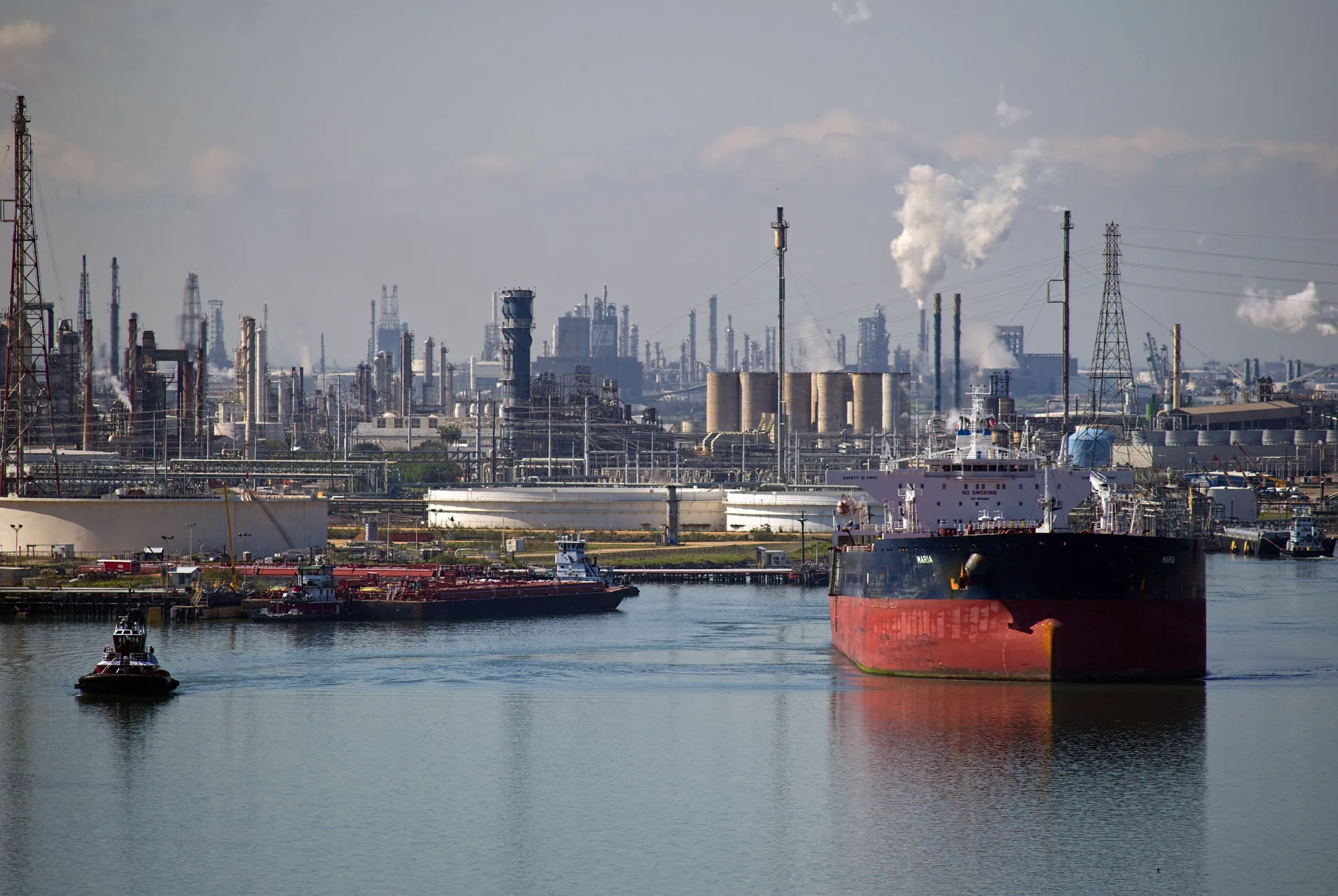
Corpus Christi has transformed from a 19th-century trading post into an essential hub for the global oil, natural gas, and chemical industries. Since 2010, the city, which has a population of 320,000, has attracted over $57 billion in direct capital investment. The deepwater port serves as an export center for Permian Basin crude oil and gas, and the coastline hosts six refineries, an LNG terminal, and several large petrochemical plants.
Currently, about half of the city's water supply is allocated to commercial and industrial customers, as the rivers that supply the region are becoming depleted. The Choke Canyon Reservoir and Lake Corpus Christi, the primary sources of water for the city, are only 12% full due to severe drought conditions affecting river flows over a wide area.
Lawn watering is already banned in the city, and strict rules are in place for activities like washing cars and maintaining swimming pools. It is anticipated that the two main reservoirs could become so low by November 2026 that an emergency declaration will implement even more stringent restrictions.
“Everyone is anxious about that date,” said John Byrum, executive director of the Nueces River Authority, which oversees surface water resources in the area.
This crisis is pitting residents against the heavy industries that provide jobs and revenue for schools, libraries, and public safety. State climatologists do not expect an end to the drought anytime soon.
Byrum, alongside some local representatives and businesses, is advocating for a multi-phase seawater desalination plant that could potentially become the largest in the country. He notes that beyond the immediate needs, water demand is expected to rise by 30% in the coming years as the city continues to grow.
“They will need more water for the future,” he emphasized. “My message to them is, ‘Now is the time to act.’”
Despite these concerns, the city council voted last month to halt the desalination project during a lengthy, contentious meeting, even with a $1 billion funding guarantee from the state.
During the discussion, Councilwoman Carolyn Vaughn accused an official from Governor Greg Abbott’s office of "intimidating" her into supporting the desalination plan, citing her worries about its high cost and its favoring of industry over residents.
“This indicates they don’t care if the citizens bear the cost, even though it’s for industry,” she stated during the meeting on September 2.
Governor Abbott’s Chief of Staff Robert Black met with Vaughn and other local officials, encouraging them to support the desalination project. He warned them that not backing the facility could put the state in a difficult position for future projects due to a lack of trust, according to his statement.
According to the governor’s office, “The state has invested significant resources into this project — $235 million in direct funding, an offer of a $757 million below-market-rate loan, and countless hours assisting the City with the permitting process and environmental reviews.”
Mayor Paulette Guajardo’s office stated that while the council's vote “represented a setback in advancing the seawater desalination project, our commitment to securing a reliable long-term water source remains strong.” The council is set to consider “new options and approaches” later this month.
The dispute flared up again during an October 7 meeting when residents blamed new industrial developments, like the large Exxon-Saudi Basic Industries Corp. petrochemical facility, for consuming water supplies and increasing homeowners’ bills.
“As a resident, I see no benefits for the community,” said Elida Castillo, program manager for the climate advocacy group Chispa Texas. “The tax breaks they receive, the low water rates, and their high water consumption have only lowered our quality of life.”
An Exxon spokesperson responded that their joint venture with Sabic “was designed to recycle water, and we actively seek ways to reduce our water consumption. We are also looking into alternative water sources in case of a curtailment.”
Major industrial users are preparing backup plans, said Mike Culbertson, who leads the Corpus Christi Regional Development Corporation tasked with attracting new businesses to the area.
“There’s no more affordable water,” he warned. “This serves as a warning for all regions in the South aiming to draw heavy industry.” Koch Industries, Occidental, and Celanese did not respond to requests for comments.
Culbertson is now exploring how to continue the region's economic growth without worsening the water crisis: “We’re looking for companies that don’t require significant water use.”