
Months of increasing tariffs seem to have benefited U.S. importers.
On Friday, President Donald Trump reinstated broad tariffs on imports from 60 trading partners, ending a temporary 10% global tariff that expired recently. This new tariff system falls under Section 301 of the Trade Act of 1974.
This decision supports what retailers, manufacturers, and other importers have been preparing for in recent months: bringing goods into the U.S. before the next round of trade barriers went into effect.
The National Retail Federation (NRF) and Hackett Associates had already predicted an unusually early peak shipping season. They forecast that in July, imports through the country's major container ports would hit a record 2.47 million TEUs, as companies rushed to avoid expected tariff hikes, surpassing the previous record set during the surge in imports in May 2022.
“This year’s early peak season is expected to continue through July as retailers and other importers prepare for possible higher tariffs and uncertainties in trade,” said NRF Vice President Jonathan Gold earlier this month when the forecast was shared.
Ben Hackett, founder of Hackett Associates, noted, “Import volumes have surged significantly, and this growth is likely to continue into July. Much of this uptick is due to frontloading ahead of expected tariff increases.”
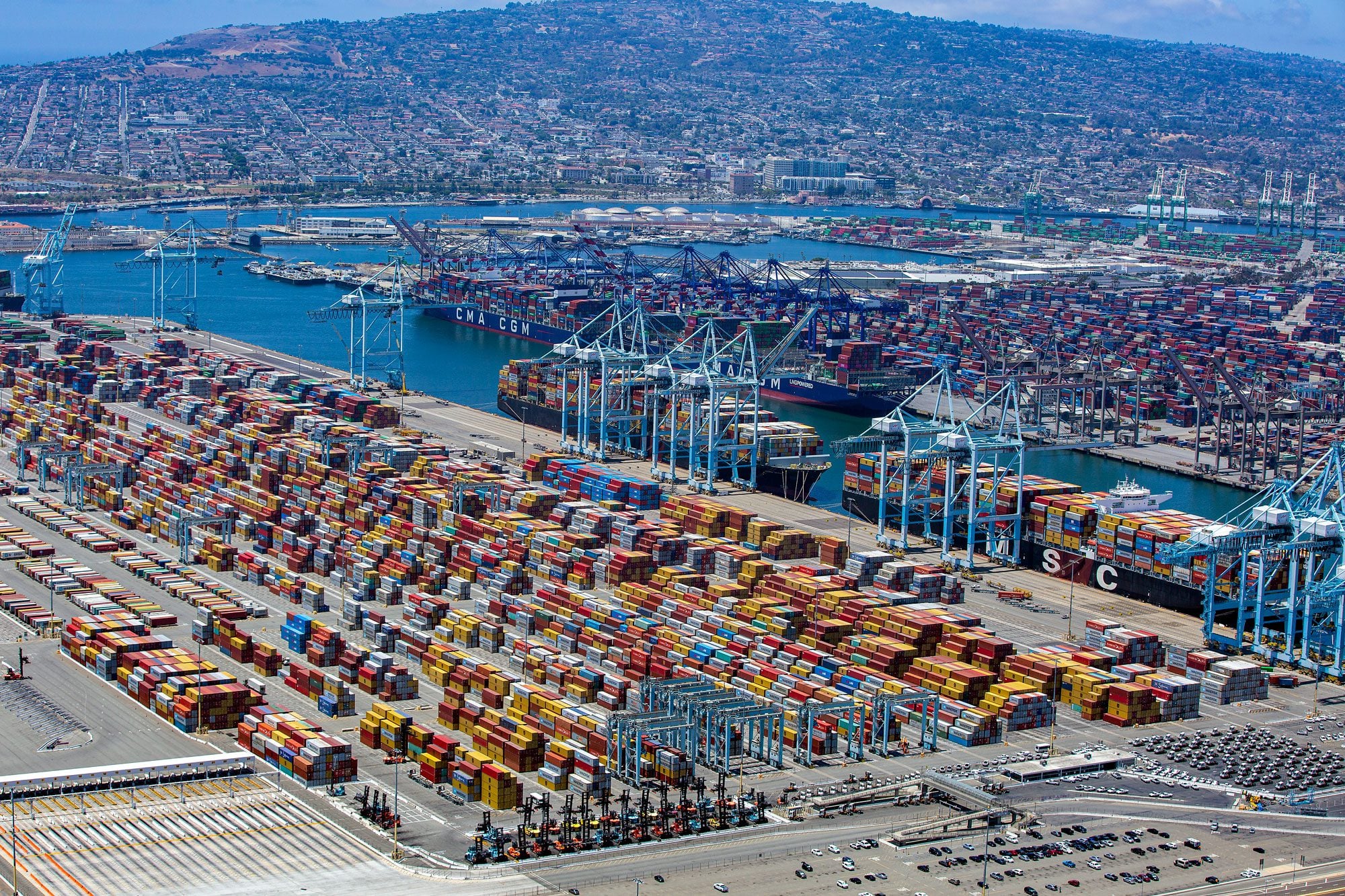
This frontloading is particularly noticeable at the largest U.S. port for trans-Pacific trade.
In June, the Port of Los Angeles processed 1,002,734 TEUs, marking its busiest June ever and only the third time in history that the port has surpassed one million container units in a month. Year-over-year, imports rose by 13% to 530,558 TEUs, with total cargo volumes increasing by 12%.
Nearby Long Beach also saw strong growth, processing 779,331 TEUs, a 10.6% increase from last year. Imports rose by 11% to 387,025 TEUs.
Port officials identified tariff uncertainty as a primary factor driving these changes.
“Businesses are preparing for unpredictability, not stability,” said Port of Long Beach CEO Noel Hacegaba during this week’s cargo briefing. “Retailers want to restock while keeping prices low, which fuels the frontloading we are witnessing.”
Gene Seroka, Executive Director of the Port of Los Angeles, mentioned that importers are moving away from traditional seasonal shipping patterns, responding instead to trade conditions whenever opportunities arise.
The recent announcement indicates that these opportunities may now be more limited.
The new tariff program initiated by the Trump administration took effect at 12:01 a.m. EDT on Friday, immediately replacing the temporary 10% tariff that had been in place since February, after the U.S. Supreme Court invalidated an earlier tariff strategy.
The new duties, enforced under Section 301, impose tariffs of 10% and 12.5% on goods from 60 trading partners, affecting 99.4% of U.S. imports, while exempting products like oil, gas, fertilizer, certain foods, aircraft and parts, critical minerals, and items already covered by Section 232 tariffs. Goods en route are exempt until July 28.
While import volumes remain strong historically, signs indicate that the early peak season might be tapering off.
The latest Drewry World Container Index dropped 4% this week to $4,374 for a 40-foot container, marking the second consecutive weekly decline as carriers increased capacity in the trans-Pacific amidst easing demand.
Spot rates from Shanghai to Los Angeles fell 6% to $5,878 per FEU, while rates from Shanghai to New York dropped 4% to $7,598 per FEU. Drewry linked these decreases to lower demand and more vessel capacity, noting that the number of blank sailings scheduled for next week in the trans-Pacific decreased from nine to six, affecting the supply-demand balance.
Although the tariffs were anticipated, their implementation reduces much of the uncertainty that led retailers to expedite imports during the first half of the year.
Freight markets are beginning to reflect this change. Drewry anticipates that trans-Pacific rates will remain stable next week, but evolving U.S. tariff policies and geopolitical tensions in the Middle East—such as new fuel surcharges announced by some carriers—will continue to impact market conditions.
Whether cargo volumes remain high in the second half of the year will depend more on actual consumer demand than on importers rushing to avoid tariffs. However, the strategy has already resulted in record cargo volumes at Southern California's twin ports for the first half of the year, potentially leading to the busiest July ever for U.S. container imports.