
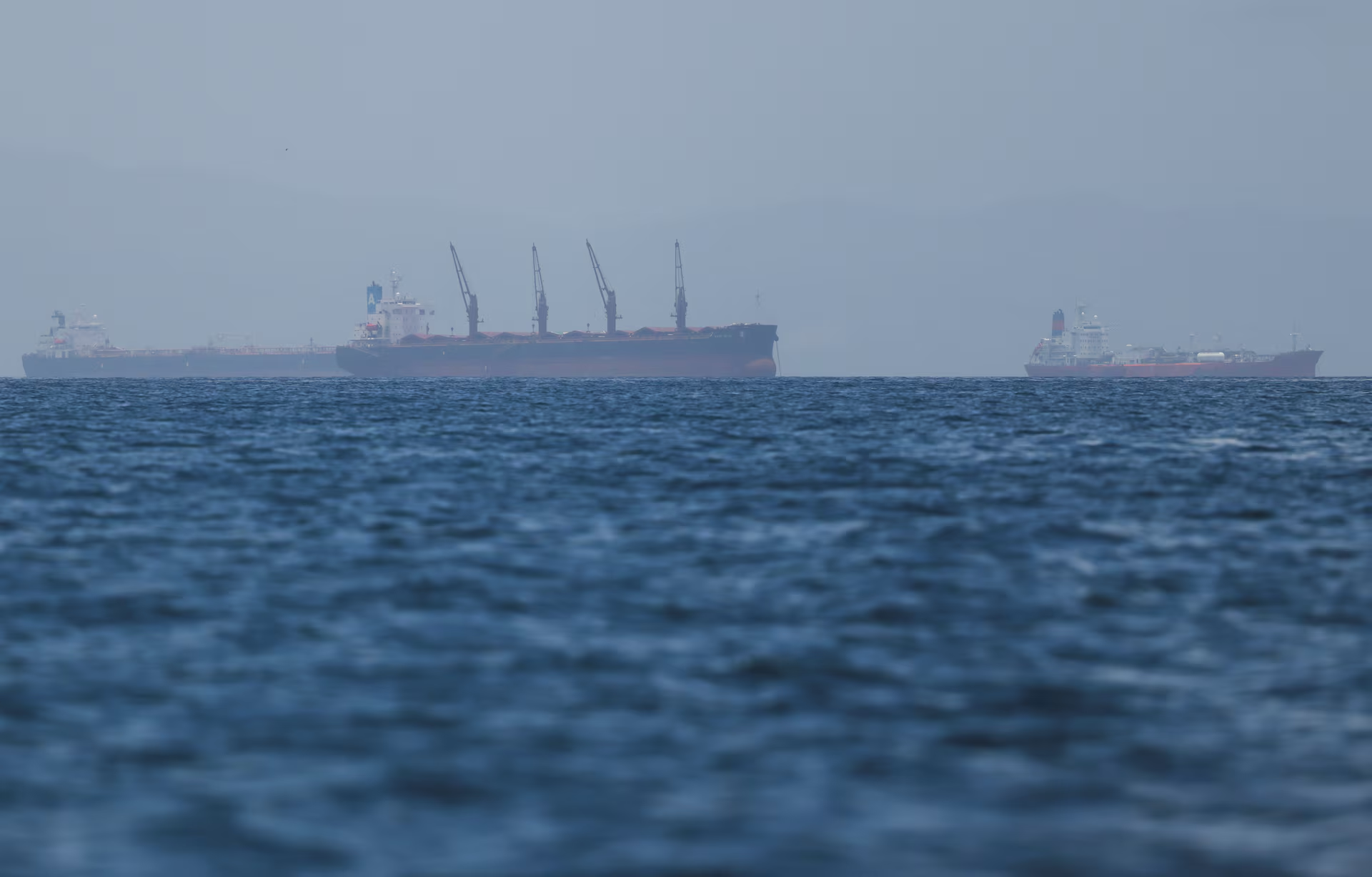
PUERTO LA CRUZ, Venezuela, Aug 21 (Reuters) - Venezuela's old oil port terminals are creating a practical limit on the country's recovering crude production. Tankers are waiting up to 30 days to load due to outdated infrastructure, power outages, and quality problems, as per shipping data and sources.
These delays are hindering a U.S. plan to rapidly increase Venezuela's oil exports after a significant agreement with global trading companies. The competition for infrastructure is expected to rise as many partners of the state energy firm PDVSA prepare to market their output independently under new contract terms.
The last time oil customers faced such long delays was during a U.S. naval blockade late last year, which aimed at capturing then-President Nicolas Maduro. Since then, interim leader Delcy Rodriguez has been following Washington's plan to revive oil exports.
However, in recent months, PDVSA and its partners have struggled to exceed 1.25 million barrels per day in exports, even with rising crude output, inventory reductions, and high global demand, according to vessel monitoring data.
Two decades ago, when output peaked at over 3 million bpd, the nation's terminals could handle more than 2.5 million bpd of exports, with vessels entering and leaving Venezuelan waters in less than a week.
The loading issues are leading to disputes over demurrage, crude quality, and ship contamination, based on maritime documents and multiple sources.
“The speed of transferring crude from tanks to vessels is very slow, making tankers occupy docks longer than their scheduled loading times. Also, when a ship arrives to unload imports, it takes even more time due to limited fuel storage capacity,” said a source from PDVSA.
Venezuela's oil ministry and PDVSA did not respond to requests for comments.
The delays are apparent as many tankers wait for oil at the country’s anchorages, especially near the Jose port, which accounts for about 70% of the country's total exports.
Shipping reports reviewed by Reuters indicated disruptions this year due to equipment malfunctions, quality issues, and power outages during loading and unloading at Jose.
Even companies like U.S. oil giant Chevron, which have long-standing partnerships with PDVSA and preferential dock access, are looking for ways to improve loading operations, including asking for access to ports previously reserved for domestic shipping, according to sources.
Chevron did not respond to a request for comment.
Venezuela's oil export agreement with the U.S., which has been extended multiple times, has enabled traders like Vitol and Trafigura to ship over 140 million barrels of crude and fuel this year. Most shipments head to the U.S., while others return to markets like Europe and India, which have not received Venezuelan oil in years, as U.S. sanctions loosen.
As Washington promotes a $100 billion energy reconstruction plan in Venezuela focused on increasing crude output, repairs to terminals and refineries are not being prioritized.
U.S. and Venezuelan officials acknowledged infrastructure challenges at two conferences in Houston this week, noting that these issues could be addressed with new investment.
“We are in a recovery phase now, but the infrastructure needs improvement,” said PDVSA's vice president Jovanny Martinez at one of the conferences.
BETWEEN RUST AND LEAKS
The congestion at the Jose and nearby Pozuelos anchorages existed before the current export increase. Venezuela's oil docks are cluttered with remnants from years of severe U.S. sanctions, including blacklisted tankers that arrived unnoticed and have not been able to leave.
One ship, flying a false Guyanese flag, is docked at PDVSA's Guaraguao port in Puerto La Cruz. Its hull and deck are visibly rusty from a distance. Once named Syrma and used for transporting oil to Cuba, it was renamed Consul and has been docked there for two years, avoiding a U.S. crackdown on illegal fleets, as indicated by shipping data and maritime records.
Many of these vessels are occupying valuable dock space, even as foreign companies aim to reactivate idle terminals to boost crude exports. As of mid-August, only two of Guaraguao's seven docks were fully operational, according to a terminal worker.
The competition for port capacity is forcing many customers to use terminals and ship-to-ship transfer areas where oil leaks that stain tankers' hulls are common, leading to further delays and costs.
Meanwhile, PDVSA faces charges of thousands of dollars for demurrage — a fee for each day a tanker waits beyond its allotted loading time — which it has agreed to pay only in crude.
The state company is also requiring new customers to pay for cargoes upon delivery without extending credit, complicating invoicing if customers dispute surcharges or quality-related discounts.
The migration of numerous oil contracts to new terms under a recent energy reform approved in late July is expected to heighten the competition for infrastructure.
However, sources noted that PDVSA has emphasized its intention to maintain control of its terminals, including all cargo scheduling, for the time being.