
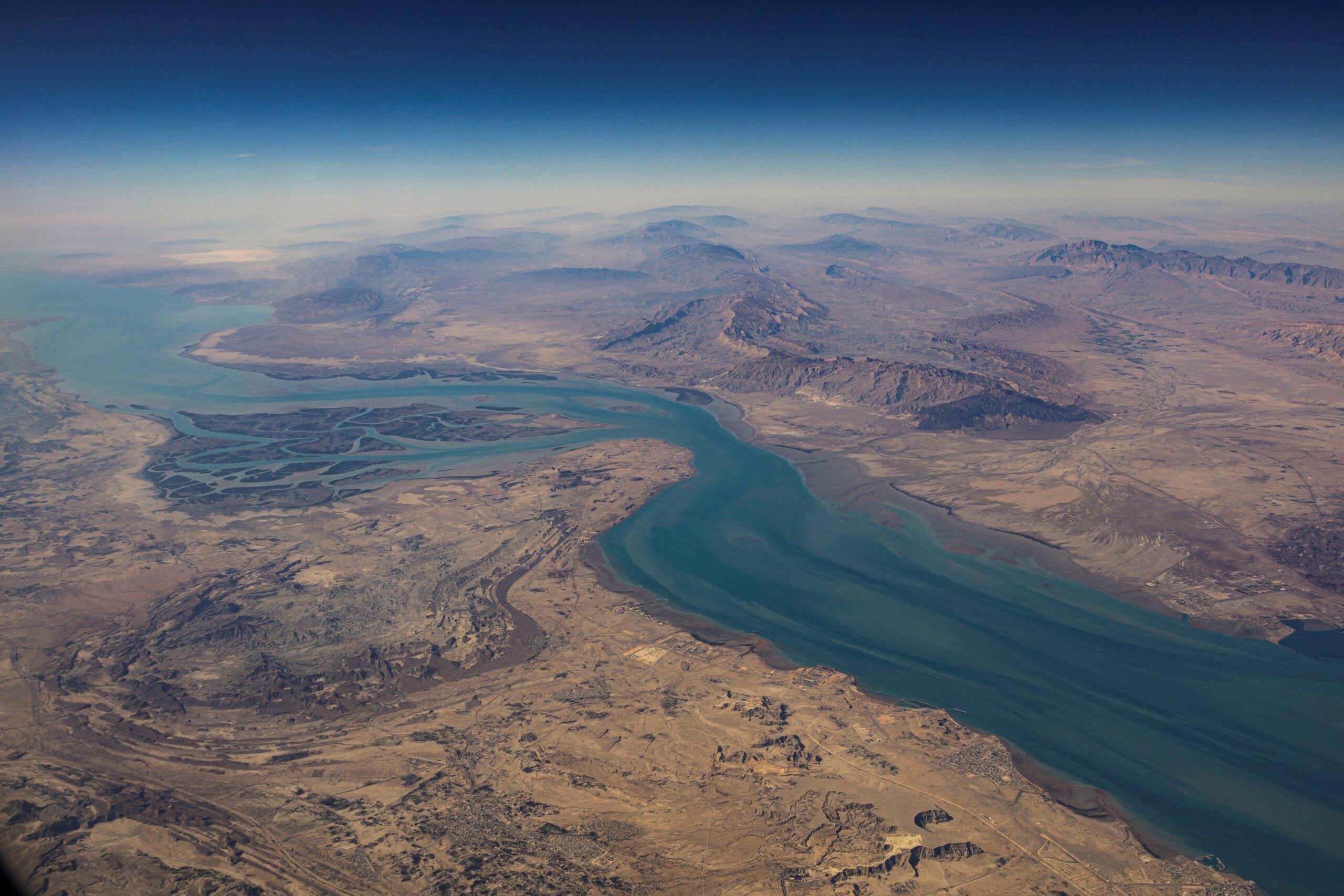
Recent tracking data for tankers shows how trade is being affected by the ongoing U.S./Israel strikes on Iran and Iran's responses.
According to a post on X, the intelligence service Skytek reported that there are over 100 container ships, 450 oil and gas tankers, and 200 bulk carriers currently navigating through the Strait of Hormuz.
Data from Kpler indicates that some tankers are turning back in the region.
In the past few hours, four Very Large Crude Carriers (VLCCs) have changed their routes: Orbiter, Universal Victor, Mitake, and Trikwong Venture. All of these tankers were empty and together they were set to load 1.1 million metric tons (8 million barrels) of crude oil between March 3-7.
Homayoun Falakshahi, Head of Crude Oil Analysis at Kpler, mentioned, “We’ve noticed some activity in the area that looks like spoofing, although it isn’t widespread yet. We see tankers parked just outside the Persian Gulf, and many have stopped entering the Strait of Hormuz. A lot of tankers are just waiting outside right now.”
Reports about the potential closing of the Strait of Hormuz are driving up oil prices. In 2025, about 13 million barrels of crude oil per day passed through the Strait of Hormuz, which is crucial as it accounts for around 31% of global seaborne crude flows.
Kpler has been monitoring tanker activities in the area for safety measures.
At 10:00 UTC (5 am EST), two cases of Global Navigation Satellite Systems (GNSS) spoofing were detected near Iran. By 14:00 UTC, traffic in the Strait of Hormuz dropped by about 20-25%.
Dimitris Ampatzidis, a senior risk and compliance analyst at Kpler, said, “From around 15:30 UTC (10:30 EST) onward, most vessels in the area either turned back, stopped moving, or diverted to alternative routes. Compared to 10-12 hours earlier, overall traffic in the region has already decreased by about 75%.”
Larsen commented that the closure is expected to be short-term.
“In a few days, U.S. air and naval strength will likely restore enough security for commercial shipping to resume normal operations in the Persian Gulf and nearby waters,” he stated.
Data from Vizion identified 135,000 Twenty-foot Equivalent Units (TEUs) moving through the region, with an estimated total cargo value of nearly $4 billion. Of these, only 22,000 TEUs, valued at approximately $877 million, are destined for the U.S. or Europe, according to Ben Tracey, Vizion's vice president of strategic business development.
In a threat circular, the global maritime safety group Ambrey noted, “Iran begins its retaliation following early morning U.S.-Iran strikes. Current targets are military assets. Shipping companies with strong connections to the region are advised to shelter within territorial waters and avoid the Persian/Arabian Gulf, the Strait of Hormuz, southern Red Sea, and Gulf of Aden.”
The U.S. has set up a maritime warning zone in the Persian Gulf, Gulf of Oman, North Arabian Sea, and the Strait of Hormuz.
Jakob Larsen, Chief Safety & Security Officer at BIMCO, explained, “The warning zone is to inform that dangerous military operations are occurring in these areas, and the U.S. Navy cannot guarantee the safety of neutral or merchant ships. Commercial vessels are advised to navigate cautiously and, if possible, avoid this zone.”
In a note to clients, Peter Sand, Xeneta’s chief shipping analyst, warned that military operations could further complicate global trade.
Sand stated, “This disrupts any hopes for a large-scale return of container shipping to the Red Sea in 2026. Plans for a gradual return will be postponed until the security situation improves.”
The rising security threats have prompted shipping companies CMA CGM and Maersk to announce they won’t be returning to the Red Sea anytime soon.
Sand noted that ocean freight rates, which had been declining globally, are now starting to rise again.
“Our Xeneta data shows that short-term market rates through the Strait of Hormuz have been increasing for the past 10 days, particularly between China and the UAE,” he said. “Average spot rates from China to the UAE have risen by 5% since February 15, reaching USD 1572 per FEU (40-foot equivalent container), driven by concerns over security and shippers' worries about getting their goods in and out of Persian Gulf ports.”
He cautioned that if the Persian Gulf becomes inaccessible, there aren't many alternatives for containerships to reach ports like Jebel Ali, prompting carriers to skip these stops on east-west routes.
“Instead, carriers will have to offload containers at less favorable ports for further transportation by road,” explained Sand. “This will lead to significant disruptions and congestion at regional ports, but the global impact will likely be minor compared to the major repercussions of conflict in the Red Sea.”