
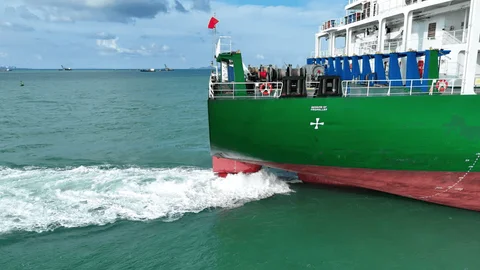
To achieve the emissions reduction goals set by the IMO, the maritime industry must go beyond mere pledges. It’s crucial to ensure data transparency and take measurable actions to prevent decarbonization projects from becoming just superficial efforts, says Esteve Servajean, Head of Marine at Aderco.
The maritime sector often talks about supporting the International Maritime Organization’s (IMO) goals for Net Zero by 2030 and 2050, but there’s often a gap between what is said and what is done. This industry is lagging compared to others when it comes to emissions, and it's essential to take a serious look at the situation or risk falling even further behind by relying on outdated ideas and technologies.
Traditionally, ship efficiency has been measured by fuel costs per tonne-mile. However, this method is becoming outdated. Nowadays, true efficiency involves multiple factors, including fuel costs, emissions, lifecycle emissions (covering fuel production and vessel disposal), real-time carbon visibility, and compliance with social and regulatory standards regarding ports, financial institutions, and cargo owners.
At Aderco, we witness this change every day. Five years ago, operators mainly focused on fuel savings; now, they seek verified solutions for emissions reduction, compatibility with future fuels, and measurable contributions to their ESG goals. Companies that still measure efficiency using only one metric are already falling behind.
The future is multi-fuel
Another outdated belief that needs to be addressed is the idea that one specific alternative fuel will enable the maritime industry to reach Net Zero in the next two decades. The reality is multi-fuel is the way forward. Shipowners need to embrace this approach, ensuring they remain flexible in their fuel choices.
It's also fair to question the point of investing in a specific fuel if the necessary infrastructure isn’t available in certain areas. Green methanol, bio-LNG, and ammonia are still not widely available, even at major ports that handle global trade. As a result, shipowners should lean towards dual-fuel configurations and avoid long-term contracts for a single fuel.
Fuel selection isn’t everything; optimizing operations is still the most effective action. This includes managing engine conditions, monitoring fuel consumption in real-time, and planning efficient voyages. Even simple solutions, like using high-performance anti-fouling coatings, wind-assisted propulsion, and underwater turbines, are now part of the discussion. Many practical solutions can be implemented right away, without waiting for new fuel infrastructure.
The industry should resist the urge to standardize too early. Instead, it needs to develop flexible strategies that can adjust as circumstances evolve. While uncertainty about future fuels is understandable, it should never justify inaction.
Regulatory fragmentation
On the regulatory front, initiatives like FuelEU Maritime, the Carbon Intensity Indicator (CII), and the IMO’s new greenhouse gas reduction strategy create a framework that shipowners must acknowledge. However, while they are practical investors, shipowners need a clear regulatory landscape and a long-term vision before committing their resources confidently.
Currently, regulatory fragmentation is a significant challenge. The IMO sets global goals, but the EU has its timeline and regulations that don't always align. This forces shipowners operating in various regions to navigate conflicting regulations simultaneously.
The gap in skills and data is frequently underestimated. To meet the milestones for 2030 and 2050, the industry will need not just new technology but also new skills in fleet management, data analysis, and carbon accounting. The maritime sector is only beginning to properly address this human capital challenge.
Investment in data infrastructure is equally important. Trustworthy data on energy use, emissions, and performance is essential for competitiveness, no matter what alternative fuel is chosen. Ultimately, any solution must also make economic sense.
Get off the sidelines
To tackle regulatory fragmentation, only the IMO can establish a global carbon levy framework. A reliable carbon credit system tailored for the maritime sector could facilitate financing, reward early adopters, and inspire real change throughout the supply chain.
This system, however, must be based on real, verifiable data — not theoretical models — and must connect effectively to financial incentives to have a genuine impact on the market. Other sectors have seen too much greenwashing, with initiatives often focusing on appearance rather than actual emissions reductions. The maritime industry must recognize its longstanding issues with emissions data quality and take immediate action to address them.
Fortunately, European green finance is driving significant progress. Instruments like green bonds, sustainability-linked loans, and the Poseidon Principles are becoming mainstream and influencing critical business decisions. While the risk of stranded assets is real, the risk of losing competitive edge is equally pressing. The best strategy is to focus on actionable solutions today, maintain flexibility in investment choices, and stay aligned with regulatory and customer needs. Achieving Net Zero will require a careful balance between regulation and market dynamics.
Companies that help set reliable standards will be better positioned than those who react later. However, it’s crucial to ensure that the standards are credible, emphasizing transparency, independent verification, and a direct link to measurable emissions outcomes. Without this, we could create more complexity without any clear benefits.