
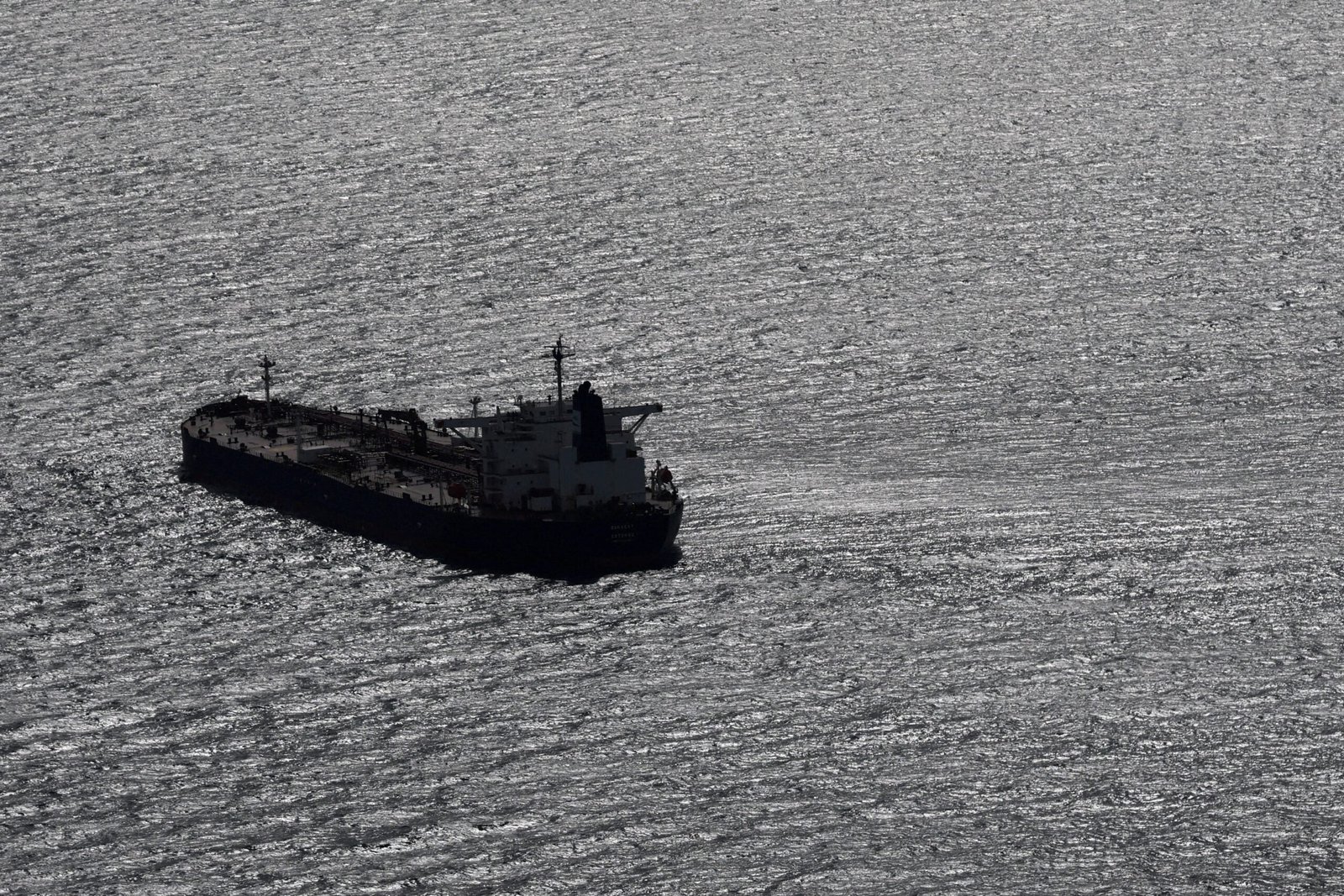
By Weilun Soon (Bloomberg) — Some supertanker operators are feeling anxious about rising tensions between the US and Iran, along with the potential risks to shipping in the Strait of Hormuz. As a result, they are hurrying their vessels through this critical area.
Very Large Crude Carriers (VLCCs) are traveling through the narrow and busy waterway—where about a quarter of the world's sea oil trade takes place—at speeds of up to 17 knots. Typically, a fully loaded VLCC travels at a maximum speed of about 13 knots. These tankers are large and can be difficult to maneuver, measuring around 330 meters (1,080 feet) long.
Some operators began taking precautions after Iran announced plans for live-firing drills last week, according to shipowners and brokers who manage ships through the waterway. This week, Iran issued at least two warnings about conducting live exercises in the area, though no drills have actually been observed, according to sources familiar with the situation.
This situation adds more uncertainty to already unstable freight markets, which have surged due to tensions with Iran and a limited supply of vessels. The US is also strengthening its military presence in the region, while talks between Washington and Tehran are set to begin in Oman later today. However, Iran has indicated that these discussions may not quickly resolve the issues between the two nations.
“Even if overall geopolitical risks decrease, the Strait of Hormuz remains a complicated area to operate in,” said Angelica Kemene, head of market strategy at Optima Shipping Services in Athens. “Shipowners are being cautious about journeys that could take several days to complete in this corridor.”
Iran has previously threatened to block the Strait of Hormuz, although it has never actually done so. Earlier this week, Iran reportedly "harassed" a US-flagged oil tanker while it was passing through the straights.
Meanwhile, some operators are having their vessels wait near the port of Fujairah in the United Arab Emirates before they travel through the chokepoint. They are finalizing docking and cargo-loading schedules within the Persian Gulf, which is home to the main oil-loading facilities for countries like Saudi Arabia, Iraq, and Kuwait.
Speeding up the movement of some supertankers increases the risks of navigating these crowded waters, especially with the heightened presence of warships and older vessels that often gather there. However, not all vessels are speeding; many appear to be traveling at typical speeds of 11 to 13 knots.
The DHT Jaguar is one of the supertankers that has increased its speed after loading nearly 2 million barrels of Kuwaiti crude on Sunday. According to ship-tracking data from Bloomberg, Kpler, and Vortexa, it reached nearly 16 knots while leaving Hormuz.
The V. Harmony, a VLCC on its way to pick up cargo from a Persian Gulf port in the UAE, approached Oman from Asia at about 11 knots this week before accelerating to almost 17 knots to enter Hormuz on Thursday.
A representative for DHT Management, which manages the DHT Jaguar according to the international maritime database Equasis, stated that the company does not comment on individual ship trading. Sinokor Merchant Marine, which is listed as the manager of the V. Harmony by Equasis, has not responded to requests for comment.
Overall, tanker traffic through the Strait of Hormuz has decreased slightly, with 135 crude and product carriers entering the waterway on a rolling seven-day basis as of Thursday, down from 182 on January 31. The number of vessels exiting the chokepoint also fell, from 120 to 113 during the same period.
Other supertankers looking to load cargoes in the Persian Gulf are waiting off Oman as fixers finalize docking and loading dates before entering the waterway. The number of Aframax-size and larger vessels waiting outside the Strait of Hormuz has increased daily since Iran announced its live-firing drills.
Having vessels wait outside the chokepoint allows shipowners to renegotiate additional war-risk premiums for insurance, although these fees have not yet seen an increase, according to some sources.