
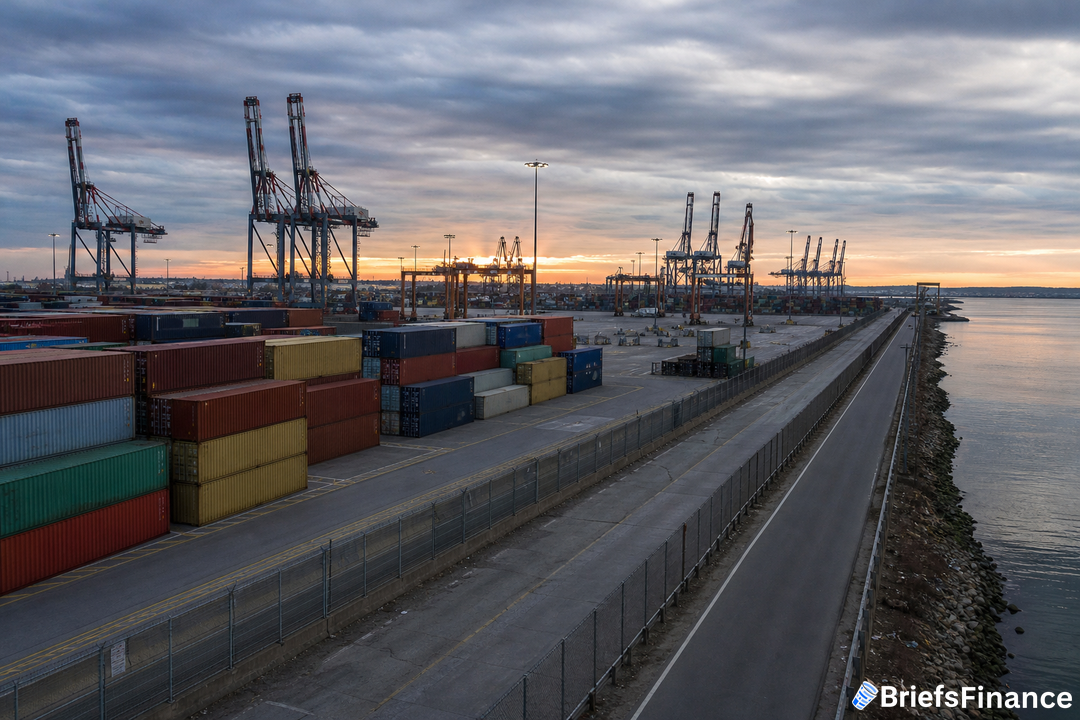
A possible strike at the busiest container port complex in the United States could happen soon, as contract talks between port employers and a union representing around 250 security workers did not reach an agreement.
The Pacific Maritime Association (PMA) announced on Wednesday that members of the International Longshore and Warehouse Union (ILWU) Local 26 might stop working as early as 12:01 a.m. on Saturday, November 21, when their current contract extension ends.
After negotiations on Tuesday showed little progress, PMA reported that the union is unwilling to accept another extension. The two sides plan to meet again on Friday, which leaves little time to prevent a possible disruption.
Although Local 26 accounts for only 2% of the ILWU workforce at the ports, its members provide security at six container terminals that handle over half of the cargo passing through the Los Angeles-Long Beach port complex. These terminals are responsible for about 85% of cargo in Long Beach and 33% in Los Angeles, according to PMA.
There are concerns that a strike by these security workers could lead to wider implications, affecting many others.
Thousands of longshore workers, marine clerks, and foremen who are under different labor agreements are expected to support the Local 26's picket lines, which could halt vessel operations, container movements, and truck access at the affected terminals.
This situation is especially concerning for the Southern California supply chain as the ports are busy with cargo ahead of the holiday shopping season. A prolonged strike could disrupt rail and trucking operations, delay imports and exports, and cause congestion that extends far beyond the waterfront.
Employers' Contract Proposal
PMA stated that its latest proposal includes a one-time bonus of $3,200 for each member of Local 26, along with wage increases that would boost the average annual earnings for full-time security workers from more than $170,000 to $198,000.
The proposal also aims to maintain fully employer-paid healthcare for active workers and retirees, valued at over $62,000 annually, while increasing annual pension benefits to as much as $93,200 for the longest-serving employees.
PMA criticized the union for making minimal progress on its demands despite more than a year of negotiations, which included assistance from the Federal Mediation and Conciliation Service.
The union has not yet provided a response to the latest employer proposals.
Members of Local 26 are responsible for verifying identification and credentials at terminal gates, conducting security patrols, and reporting safety issues. Their previous labor agreement expired in July 2025, and workers have been operating under several extensions since then.
This dispute is separate from the broader labor agreement affecting most West Coast dockworkers, which is in place until 2028.
Economic Impact
PMA referenced an analysis by maritime economist John Martin, which estimated that the six affected terminals processed about 6.2 million containers in 2025 and supported nearly 4.2 million jobs nationwide through both direct and indirect economic activity.
Last year, this analysis attributed $885 billion in economic activity to the cargo moving through these terminals. This figure reflects the economic activity linked to the terminals, not the potential losses from a strike.
PMA warned that losses could quickly escalate if ships cannot unload their cargo, and containers already in the terminals cannot be transported out.