
(Bloomberg) — A Japan-connected oil tanker has successfully passed through the Strait of Hormuz, which has been largely closed to international traffic for nearly three months.
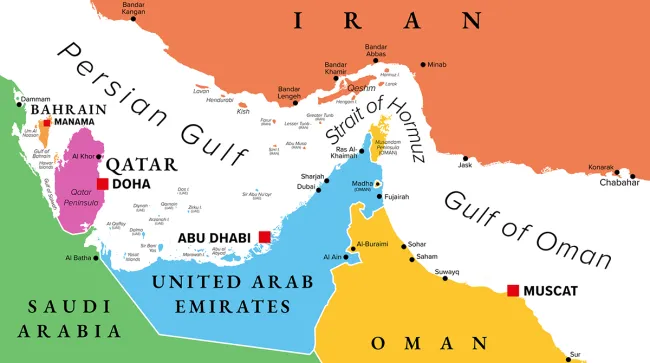
The supertanker Idemitsu Maru, carrying around 2 million barrels of Saudi crude oil destined for Japan, left the Persian Gulf on Tuesday. It followed a route authorized by Tehran, navigating close to Iran's Qeshm and Larak Islands. This marked it as the only non-Iranian very large crude carrier to depart the region in the last 10 days and the first Japan-linked tanker to cross since the strait began its effective closure in late February.
Tehran's decision to block this vital passage—previously used for about 20% of the world's oil and significant amounts of liquefied natural gas—continues into its third month without indications of relief. The US Navy's retaliatory blockade of Iranian shipping has almost completely halted traffic entering and exiting the Persian Gulf.
Because of the ban on Iranian shipping, mostly confined to the Persian Gulf and Gulf of Oman by US frigates, Iran has been forced to rely on an aging fleet of tankers to store crude oil that cannot be exported.
Diplomatic efforts to reduce tensions remain a focal point, even though US President Donald Trump has asked advisors to prepare for a prolonged blockade. Tehran insists it will not resume talks or reopen the strait unless the US naval restrictions are lifted.
Ship Movements
In addition to the one VLCC, three bulk carriers, a chemical carrier, an LPG tanker, and a container ship were the only other vessels to leave the Gulf since Tuesday morning, according to Bloomberg’s vessel-tracking data. Two bulk carriers entered the Gulf carrying food supplies for Iran.
The few Iran-linked ships that have recently exited the strait did not go beyond the eastern part of the Gulf of Oman. It remains unclear if these ships were intended for regional stops or if they were waiting out the current blockade.
Vessels crossing Hormuz with active Automatic Identification System signals over the past day only used the narrow northern lane approved by Tehran.
The US blockade may lead Iran-linked ships entering or leaving the Persian Gulf to turn off their signals to evade detection, complicating the ability to track traffic accurately. Therefore, transit figures could be revised upward when vessels show up far from the more dangerous waters.
Even prior to the latest restrictions from the US, it was common for Iran-linked ships to stop sending signals as they approached Hormuz to exit the Persian Gulf. They typically do not reactivate their signals until they reach the Strait of Malacca in Southeast Asia, which is about 13 days of sailing from Iran’s Kharg Island.